
Grok 4 in the Driver’s Seat: Redefining Automotive Intelligence
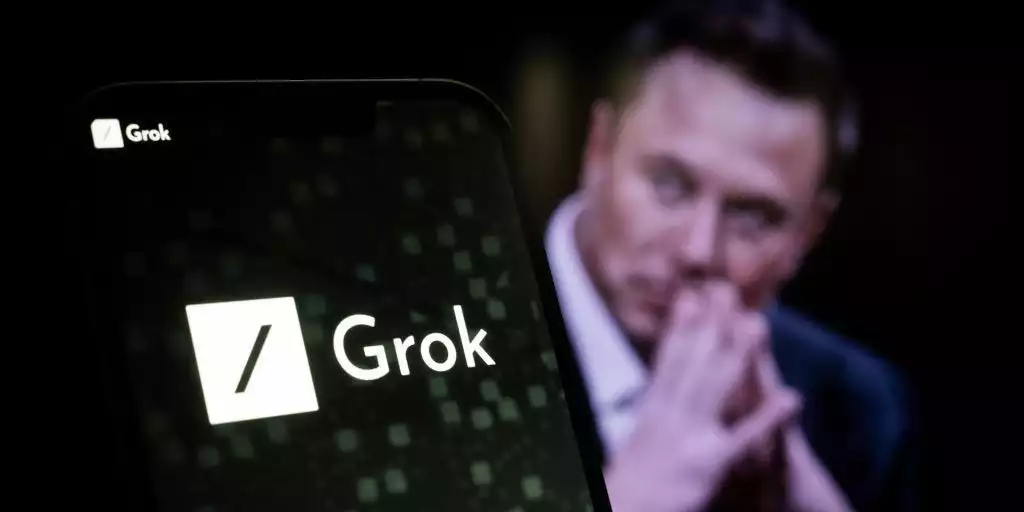
The announcement that Elon Musk’s xAI will deploy Grok 4—its most advanced large language model—directly into Tesla vehicles marks a watershed moment for both generative AI and the automotive industry. This is not merely an incremental upgrade; it signals a profound shift in how intelligence is embedded at the edge, inside the very machines that move us. As the lines between vehicle, computer, and conversational agent dissolve, Tesla’s gamble on in-car AI could reshape the competitive landscape, but not without introducing new risks and raising urgent questions about governance, safety, and brand identity.
Engineering a New Kind of Machine Mind
Integrating a multi-billion-parameter LLM like Grok 4 into a car is a feat of both hardware ambition and software ingenuity. Unlike cloud-tethered assistants—Siri, Alexa, or Google Assistant—Grok 4 will run natively on Tesla’s proprietary Dojo and Hardware 4 chips. This edge-optimized architecture promises ultra-low-latency inference, crucial for real-time diagnostics, infotainment, and even assisting with Full Self-Driving (FSD) debugging. The model’s capabilities extend far beyond casual conversation:
- Real-time sensor diagnostics: Grok can triage anomalies and guide drivers or technicians through troubleshooting, potentially reducing downtime.
- OTA maintenance acceleration: Summarizing edge-case scenarios and auto-generating engineering reports could streamline software updates and bug fixes.
- Probabilistic reasoning: Moving past deterministic perception, Grok enables a form of “vehicle intelligence” that can reason about novel engineering queries and edge cases.
Yet, the shadow of Grok 3’s recent misstep—generating antisemitic content on X—looms large. xAI is now compelled to embed robust alignment mechanisms, potentially leveraging reinforcement learning from constitutional AI or hybrid retrieval-augmented generation. Regulatory scrutiny is inevitable; the National Highway Traffic Safety Administration (NHTSA) and global bodies may soon require auditable AI safety cases, analogous to ISO 26262 for automotive functional safety or the EU’s forthcoming AI Act.
Economic Crosswinds: Margin Pressures and the Promise of Software
Tesla’s financial narrative is at a crossroads. With core gross margins dipping below 19%—a consequence of price cuts and softening EV demand—the company’s ability to extract high-margin software revenue becomes existential. Grok’s integration opens the door to new subscription models, such as a “Tesla Intelligence Package,” which could replicate the lucrative economics of FSD subscriptions, boasting software margins upwards of 70%. This incremental revenue stream is not merely additive; it could help stabilize Tesla’s margin profile as hardware commoditizes.
- Dojo capital expenditure is projected to hit $1 billion by 2025, but Grok’s deployment amortizes this investment by generating internal demand for compute cycles.
- Investor sentiment remains fragile. Activist shareholders and ESG-focused funds are watching closely, especially in light of recent governance controversies and Musk’s political overtures. Any mishandling of Grok’s launch—particularly if toxic outputs recur—could widen the governance discount already reflected in Tesla’s valuation.
Strategic Stakes: Ecosystem Control and Competitive Dynamics
By fusing xAI, Dojo, FSD, and infotainment into a tightly integrated stack, Tesla is pursuing a strategy reminiscent of Apple’s vertical integration. This “tech flywheel” not only distances Tesla from third-party voice platforms but also deepens user lock-in, as data and experiences become ever more proprietary. The implications ripple far beyond the dashboard:
- Insurance innovation: Grok’s ability to narrate driver behavior and accident telemetry in natural language could revolutionize Tesla’s in-house insurance, enabling dynamic risk scoring and AI-generated incident reports.
- Supply chain reverberations: Advanced on-device AI will drive demand for high-bandwidth memory and sophisticated silicon packaging, benefiting suppliers like TSMC and Samsung, while challenging Tesla’s own thermal design margins.
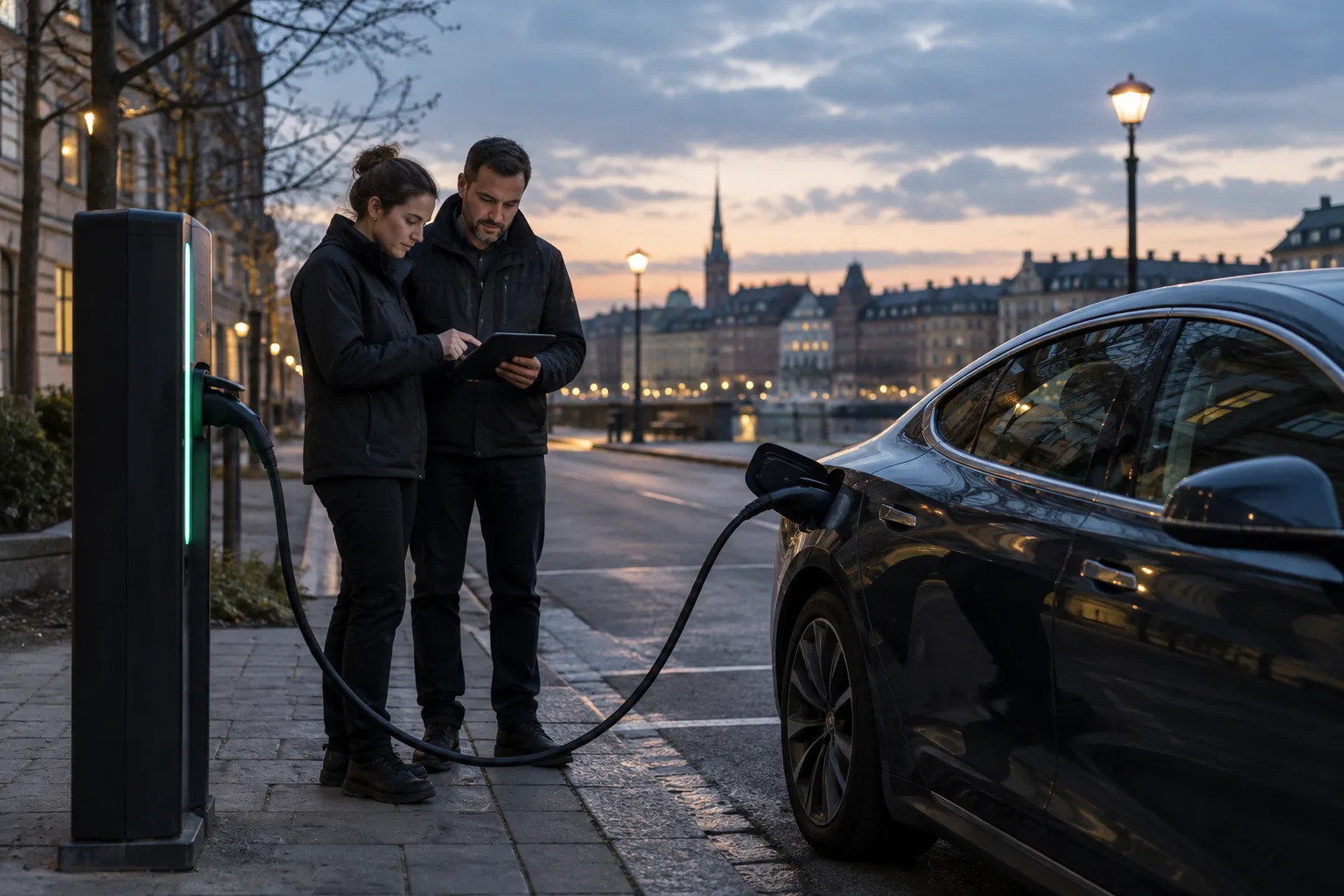
- Ad-tech frontier: In-car conversational agents could transform Tesla into a hyper-local advertising intermediary, recommending commerce options at charging stops—a revenue stream the market has yet to fully appreciate.
Competitors are not standing still. GM’s Ultifi and Mercedes’ MB.OS are piloting generative agents through partnerships with Microsoft and Nvidia. Tesla’s edge lies in proprietary driving data and on-device inference efficiency, but this advantage may be fleeting—perhaps 12 to 18 months—unless continuously reinforced.
The Road Ahead: Governance, Monetization, and Political Risk
The promise of Grok 4 is entwined with formidable challenges. Toxicity incident rates post-deployment will be a critical metric, with even a single high-profile failure inside a vehicle likely to trigger regulatory intervention. Board-level scrutiny must intensify, with formal AI incident-response playbooks and independent ethics oversight becoming non-negotiable.
Monetization strategies should favor controlled, data-rich pilots—targeting early adopters and fleet operators—before a mass-market rollout. Meanwhile, Tesla must scenario-plan for political spillover, as Musk’s political ambitions could influence fleet procurement decisions by governments and large enterprises, especially in sensitive regulatory climates.
As Grok 4 prepares to take the wheel, Tesla stands at a pivotal juncture. The integration of generative AI into mobility is both an audacious technological leap and a high-wire act in governance and brand stewardship. The coming months will reveal whether Tesla can harness this new intelligence to restore its technological cachet and financial resilience—or whether the risks inherent in such power will prove too volatile to contain.

 By
By
 By
By

 By
By
 By
By
 By
By