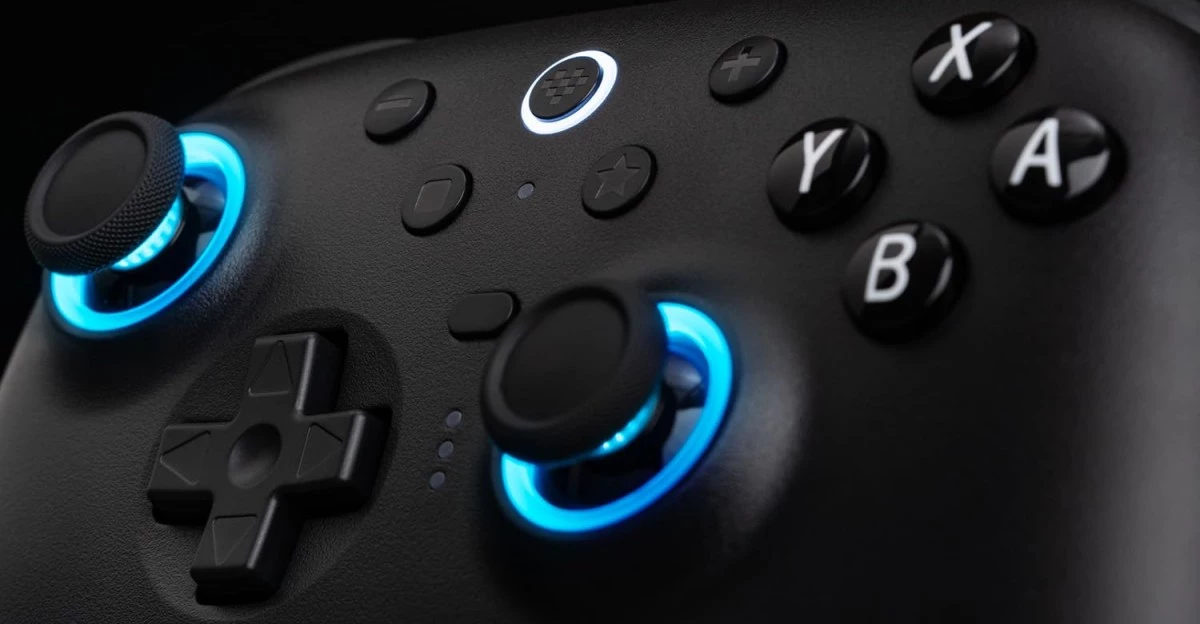

The Rise of Drift-Free Precision: Hall-Effect Sensors Redefine Controller Expectations
In the world of gaming peripherals, the 8BitDo Ultimate 2 Bluetooth Controller’s latest price drop is more than a fleeting Black Friday headline. It is a signal flare for an industry in flux—a moment when component innovation, platform fragmentation, and shifting consumer habits converge. The inclusion of Hall-effect joysticks and triggers is not merely a technical upgrade; it’s a response to a mounting tide of litigation and consumer frustration over “stick drift,” a problem that has dogged console giants and eroded brand trust. By deploying magnet-based sensing, 8BitDo and its peers are not just future-proofing against warranty claims—they are accelerating a migration that will soon make Hall-effect sensors the new baseline, not the exception.
This shift is poised to ripple across the value chain. Suppliers of traditional potentiometer joysticks face tightening margins as Hall-effect cost curves are projected to decline by up to 30% through 2025. Meanwhile, component makers specializing in precision sensors are finding themselves at the heart of a new gold rush, with design wins up for grabs across both gaming and emerging VR handsets. The controller is no longer a mere accessory; it is a showcase for sensor-driven differentiation, a harbinger of a future where pressure sensitivity, biometrics, and environment-aware haptics become standard fare.
Connectivity as Strategy: Multi-Protocol Design and the Cross-Platform Play
The Ultimate 2’s multi-protocol connectivity—Bluetooth, 2.4 GHz, and USB-C—reflects a shrewd reading of the contemporary gaming landscape. As households juggle an expanding array of devices, from consoles to PCs to cloud gaming platforms, the ability to seamlessly toggle between them is no longer a luxury. The inclusion of a low-latency 2.4 GHz dongle is a nod to the demands of esports and latency-sensitive scenarios, effectively raising the bar for what constitutes a “premium” third-party controller.
This strategy is not without broader implications. By arbitraging the fragmentation between console and PC ecosystems, 8BitDo is positioning itself as a brand for the device-agnostic era—one in which the boundaries between platforms blur and the controller becomes the persistent, personal interface. For Nintendo and other ecosystem owners, the risk is clear: third-party devices could become the de facto standard, eroding proprietary attach rates and prompting a reevaluation of licensing and certification programs.
Firmware-First Business Models and the Peripheral as Platform
Where once hardware was static, the new paradigm is firmware-first. Features like “shake-to-wake” exemplify a philosophy borrowed from the likes of Apple and Tesla: ship robust hardware now, then layer on differentiation through software updates. This approach transforms the controller from a one-time purchase into a recurring engagement platform, opening the door to new revenue streams—be it through firmware skins, haptic profiles, or digital collectibles.
The bundled wireless charging cradle is more than a convenience; it is a deliberate move to anchor the controller as a semi-permanent fixture on the desktop, fostering brand loyalty and creating accessory-attach opportunities. Echoing trends in the broader peripheral market, such as Logitech’s PowerPlay and Razer’s magnetic docks, the Ultimate 2 hints at a future where Qi-2 and modularity become industry standards, further entwining the user in a web of ecosystem lock-in.
Shifting Economics and the Battle for the Living Room
The timing of the Ultimate 2’s discounted launch is no accident. With Nintendo’s next hardware cycle on the horizon, third-party vendors are racing to seed households and capture wallet share ahead of the upgrade wave. The sub-$60 price point undercuts the official Pro Controller by a significant margin, leveraging inflation-driven price sensitivity while maintaining a premium perception through feature-rich design.
This is not just a battle for the present, but a positioning for the future. As the global controller segment outpaces console growth—driven by multi-device households and rising PC gaming penetration—vendors are rationalizing SKUs and optimizing inventory to weather volatile supply chains. Meanwhile, the absence of a traditional audio jack signals a bet on the wireless headset ecosystem, aligning with broader trends in Bluetooth audio and codec innovation.
For executives and strategists, the 8BitDo Ultimate 2 is a case study in how rapid component innovation, firmware-centric business models, and ecosystem thinking are reshaping not just gaming, but the wider consumer electronics landscape. The controller is no longer a passive accessory—it is a platform, a data source, and a touchstone for the next era of interactive entertainment.

 By
By
 By
By


 By
By