

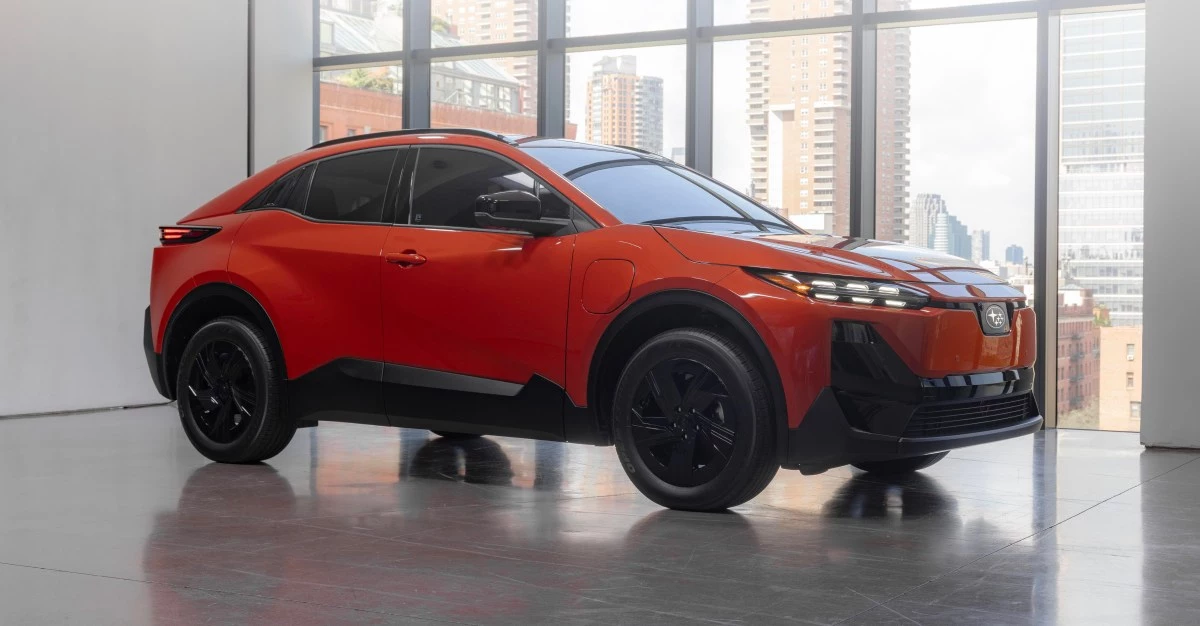

Subaru’s Electric Crossover Gambit: Navigating Platform Parity and Charging Consolidation
The North American electric vehicle landscape, long defined by Tesla’s gravitational pull and a parade of start-up hopefuls, is entering a new phase—one marked by pragmatic alliances, platform sharing, and a relentless focus on the everyday needs of mainstream buyers. Subaru’s unveiling of the 2026 Uncharted, an electric crossover SUV built atop Toyota’s E-TNGA modular architecture, is emblematic of this evolutionary moment. The Uncharted arrives not as a moonshot, but as a calculated step into a maturing market, promising over 300 miles of range, brisk acceleration, and a cabin designed for the digitally attuned driver.
Platform Convergence and the Economics of Scale
Subaru’s decision to anchor its electric ambitions in Toyota’s E-TNGA platform is less a capitulation than a shrewd reading of industry currents. The era of bespoke, single-OEM EV “skateboards” is ceding ground to multi-brand architectures that spread R&D costs, streamline battery procurement, and embed shared software stacks. Analysts estimate that such convergence trims bill-of-materials costs by 7–10 percent—a margin that can spell the difference between red ink and profitability in a segment where price sensitivity remains acute.
The Uncharted’s embrace of the North American Charging Standard (NACS), Tesla’s once-proprietary connector, is equally telling. By 2025, more than 80 percent of U.S. EVs are projected to ship with native or adapter-enabled NACS, effectively dissolving one of the last barriers to mass adoption: charging anxiety. Subaru’s move signals not just technological adaptation, but a recognition that the real battleground has shifted from hardware novelty to user experience and network ubiquity.
Performance, Positioning, and the Dance of Differentiation
At first glance, the Uncharted’s technical sheet reads like a checklist for the modern crossover buyer: dual-motor all-wheel drive, a 74.7 kWh battery, and a sub-5-second sprint to 60 mph on upper trims. Yet, beneath the surface, Subaru is making a series of deliberate trade-offs. The capped 150 kW charging rate, while trailing the 230–350 kW peaks of Hyundai’s E-GMP or GM’s Ultium, reflects a strategic choice—prioritizing battery-chemistry flexibility and thermal simplicity over headline-grabbing speed. For Subaru’s adventure-oriented clientele, the calculus is clear: reliable, long-range capability trumps the ability to shave a few minutes off a charging stop.
The competitive landscape is unforgiving. Subaru’s “price-ladder” approach—offering a lower-horsepower FWD entry point—caters to buyers squeezed by elevated auto loan rates, while preserving margin opportunities through AWD upsells. Yet, the looming specter of federal incentive volatility, driven by the Inflation Reduction Act’s tightening sourcing thresholds and surging tariffs on Chinese-origin components, threatens to upend the price equation. Unless Subaru localizes battery assembly or secures non-Chinese supply chains, the Uncharted could find itself at a disadvantage against IRA-compliant rivals.
Brand differentiation, in an age of platform homogeneity, becomes both art and necessity. Subaru is betting on suspension retuning for off-road articulation, cargo-first packaging, and a marketing narrative steeped in exploration to set the Uncharted apart from its Toyota, Lexus, and future Mazda siblings. The challenge: as platform-mates proliferate, the real battleground may shift to software—Starlink telematics, over-the-air ride profile updates—and to experiential ecosystems such as national park charging partnerships.
Macro Forces and the Shifting EV Value Chain
The Uncharted’s debut is set against a backdrop of industry-wide consolidation and volatility. NACS adoption is concentrating capital and user traffic around Tesla-anchored charging networks, pressuring independent CCS operators to reinvent themselves as fleet or depot specialists. Battery raw material costs, while temporarily subdued by a 60 percent drop in lithium carbonate prices, remain subject to the whims of nickel markets and looming EU carbon-border adjustments. Subaru’s mid-sized battery is a hedge—large enough for range, small enough to buffer against commodity swings.
Regulatory headwinds are intensifying. The EPA’s latest rules will require automakers to achieve a 56 percent EV mix by 2032. For Subaru, each new electric model is not just a product launch but a lever to mitigate corporate average fuel economy penalties—a compliance play as much as a consumer proposition.
For suppliers, the sweet spot is shifting toward 70–80 kWh pack modules, with flexibility for both cost-focused LFP chemistries and high-performance nickel-rich variants. The Subaru-Toyota alliance, with its eye on solid-state battery commercialization, offers a rare early-adopter pathway for next-generation cells—without the existential risk faced by smaller OEMs.
The Road Ahead: From Early Adopters to Everyday Utility
The 2026 Subaru Uncharted is less a revolution than a harbinger of the EV market’s next act: a world where platform partnerships, charging standardization, and lifestyle branding matter as much as technical specs. For automakers, the challenge will be to defend pricing power as hardware becomes commoditized, and to build loyalty through differentiated software and services. For investors, the real winners may be those who control the upstream mineral supply chain, rather than those who assemble the vehicles themselves.
As the EV market transitions from early-adopter halo products to utilitarian, brand-consistent workhorses, the Uncharted stands as a case study in adaptation—proof that, in the long arc of automotive innovation, it is not the boldest leap but the surest step that often carries the day.

 By
By
 By
By

 By
By
 By
By

 By
By
 By
By







