
A superconducting “magnetic engine” reaches orbit—and challenges propulsion orthodoxy
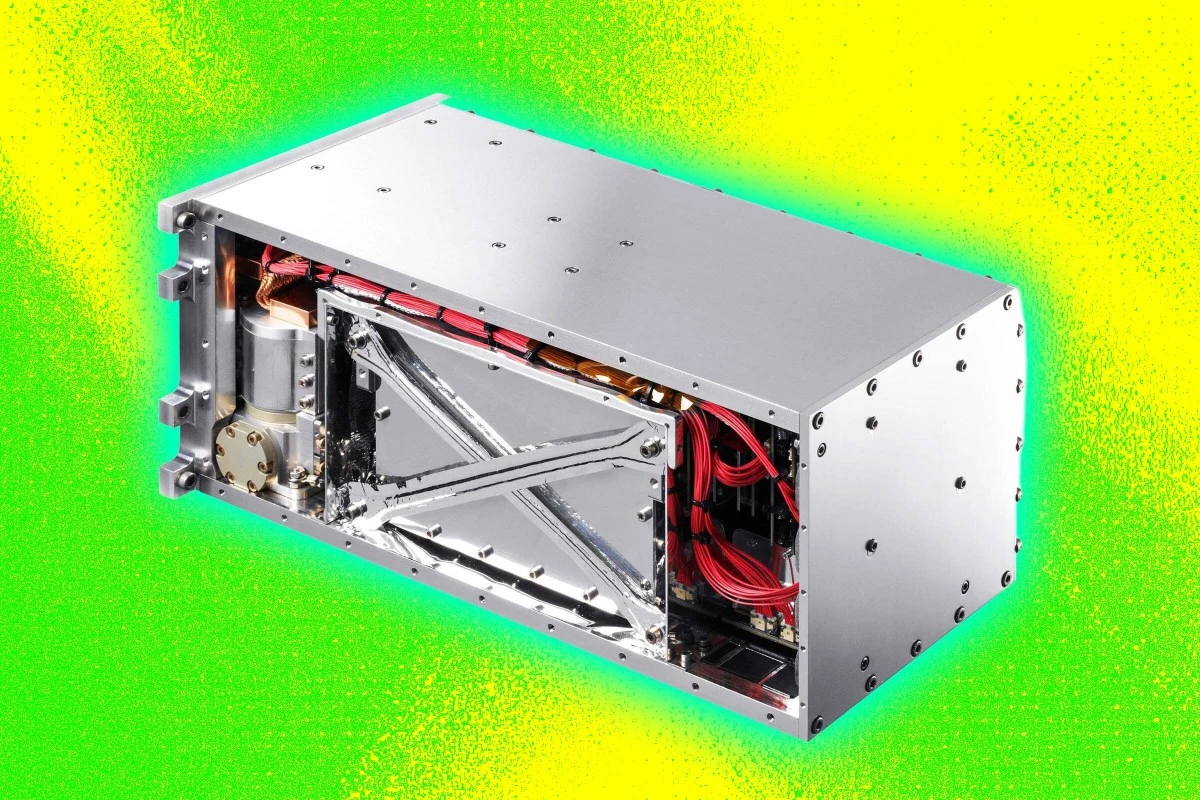
Zenno Astronautics’ on-orbit demonstration of its superconducting magnetic thruster, the Supertorquer, marks a notable inflection point in how the space industry thinks about propulsion, attitude control, and spacecraft longevity. Flown aboard the company’s Mira satellite after a SpaceX rideshare launch in November, the system departs from the familiar trade space of chemical propellant, pressurant tanks, valves, and plume dynamics. Instead, it converts solar-derived electrical power into controlled magnetic moments that couple with Earth’s geomagnetic field, producing torque for attitude control and—depending on operational mode and orbital regime—potentially enabling limited orbital energy management without expending onboard propellant.
At its core, the Supertorquer resembles the magnetic torquers long used on small satellites, but with a decisive twist: superconducting coils dramatically increase achievable magnetic dipole strength per unit mass and volume. If the performance scales as intended, the implication is not merely “better attitude control,” but a broader rebalancing of spacecraft design constraints—where consumables become less central, and electrical power plus thermal management become the primary currencies of maneuverability.
Cryocooling as the quiet breakthrough: making superconductivity practical in space
The most consequential engineering detail may be less about magnetics and more about temperature. Superconductors require cryogenic conditions; Zenno reports maintaining coils at roughly 77 K using a compact cryogenic heat-pump system, with peak power under ~50 W. This is strategically important because traditional cryogenic approaches—dewars, stored cryogens, boil-off management—impose mass, complexity, and mission-duration penalties that are especially punishing for small spacecraft.
By demonstrating a lightweight, electrically driven cryocooling architecture, Zenno is implicitly validating a broader class of space systems that have been constrained by thermal logistics. For the industry, the signal is that in-space refrigeration could become a platform capability rather than a bespoke science-instrument exception. That matters because superconductivity is not only about propulsion concepts; it can unlock higher-performance subsystems across the spacecraft stack.
Key technological implications that investors, integrators, and mission designers will be watching include:
- Propellant-less momentum management at higher torque density: Superconducting magnetic actuation can expand control authority, potentially improving pointing stability for payloads such as Earth observation, synthetic aperture radar, and laser communications.
- Power-system synergy with modern solar arrays: As solar power density improves and spacecraft electronics become more power-efficient, magnetic actuation becomes more viable—especially for missions that value endurance over high thrust.
- A pathway to superconducting-enabled spacecraft architectures: Cryocooling can also support advanced sensing and power systems, including high-sensitivity magnetometry and other superconducting electronics, if reliability and vibration constraints are managed.
The engineering caveat is equally important for objective assessment: coupling to Earth’s magnetic field is inherently environment-dependent. Performance varies with altitude, latitude, spacecraft orientation, and geomagnetic conditions. That makes the next phase of Zenno’s roadmap—publishing quantified torque, control authority, and any demonstrated orbital effects over time—central to evaluating whether this is a niche capability or a foundational one.
Business economics: why “no propellant” is more than a clever tagline
The commercial case for propellant-less systems is straightforward but profound: removing propellant reduces not only mass, but also the cascading complexity of tanks, plumbing, safety constraints, and integration overhead. For constellation operators, that can translate into either lower launch cost, more payload mass, or longer operational life—often the three variables that determine whether a business model closes.
From an industry-structure perspective, Zenno’s approach also lands at a moment when electric propulsion is mainstreaming. Large primes and established suppliers have invested heavily in Hall-effect and ion thrusters, which deliver efficient delta-V but still require propellant and can be constrained by plume interactions, contamination concerns, and finite consumables. A superconducting magnetic system could differentiate in mission profiles where:
- Long-duration attitude control is a primary driver of lifetime and data quality
- Station-keeping needs are modest but persistent
- Mass and integration simplicity are valued as much as raw thrust
- End-of-life compliance is increasingly enforced
The debris-mitigation angle is particularly salient. Regulators and insurers are tightening expectations around post-mission disposal. If higher torque authority and sustained control enable more reliable de-orbiting strategies—especially for small satellites that struggle with end-of-life maneuver margins—the technology could become part of a compliance toolkit, not just a performance upgrade.
Strategic stakes: autonomy, distributed space infrastructure, and the cislunar horizon
Beyond unit economics, the Supertorquer points toward a strategic theme: reduced dependence on consumables increases operational autonomy. In defense and national-security contexts, that can mean fewer constraints on mission duration and fewer vulnerabilities tied to refueling concepts or limited maneuver budgets. In commercial space, it supports the trend toward distributed architectures—constellations, on-orbit servicing, and incremental assembly—where many nodes must remain controllable for long periods with minimal operational friction.
Zenno’s stated ambition to scale toward rendezvous and even deep-space trajectories (cislunar and Mars-adjacent concepts) should be interpreted carefully. Earth-magnetic-field coupling is strongest in low Earth orbit; deep-space applications would require different field interactions or hybrid architectures. Still, the company’s work usefully reframes the design conversation: future spacecraft may blend propulsion modalities, using magnetic systems for continuous control and efficiency while reserving chemical or conventional electric propulsion for high-delta-V events.
A particularly forward-leaning extension—magnetically generated radiation shielding—adds a dual-use dimension. While still speculative at operational scales, the idea aligns with a growing recognition that radiation management is a gating factor for sustained human and high-value robotic activity beyond LEO. If superconducting magnetic field generation becomes practical and power-efficient, it could influence how habitats, transfer vehicles, and high-reliability platforms are architected.
For now, the market will reward evidence: repeatable on-orbit performance data, clear torque and power metrics, and integration pathways that fit existing satellite buses. Zenno’s demonstration suggests that superconductivity in space is moving from theoretical promise toward operational engineering—and that shift, if sustained, could redraw the boundaries of what “propulsion” means in the smallsat era and beyond.

 By
By
 By
By



 By
By
 By
By