
A wildfire prediction market arrives as climate risk becomes a tradable signal
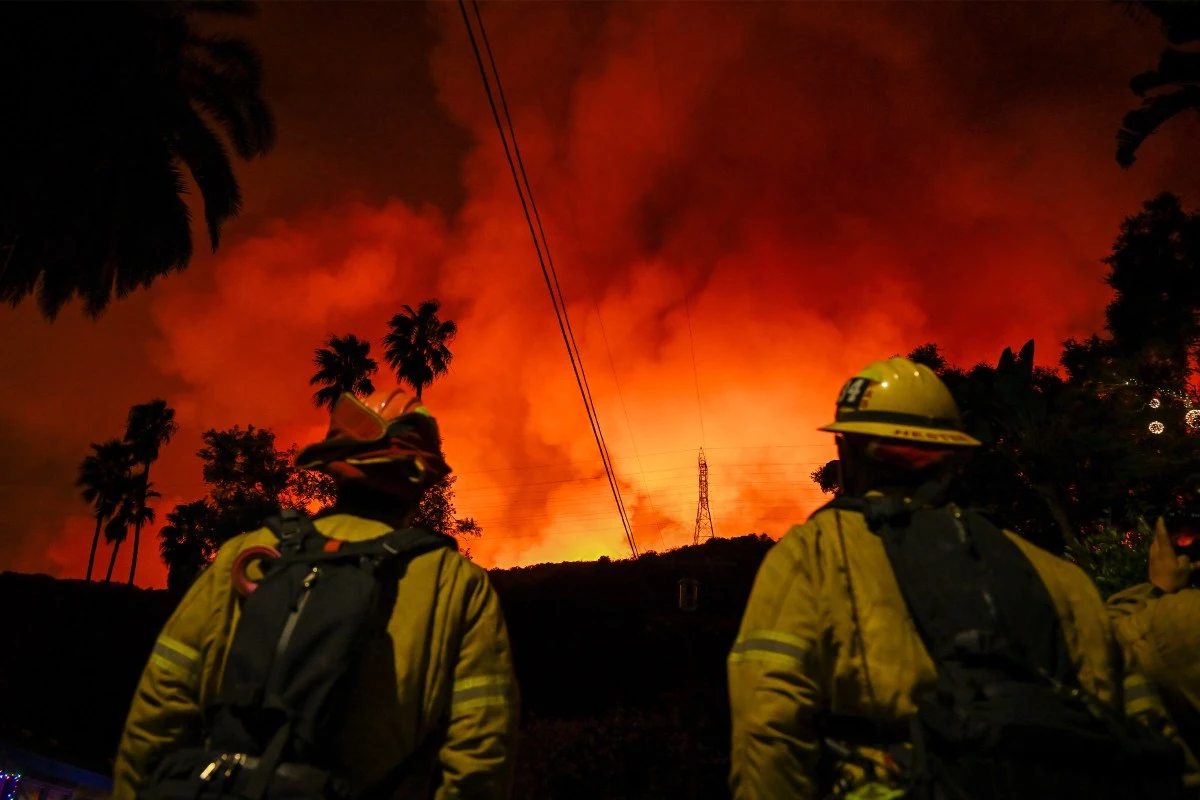
Wyldfyre’s launch—positioned as the first standalone prediction market focused exclusively on Southern California wildfire risk—lands at the intersection of climate volatility, data-rich forecasting, and an increasingly financialized approach to catastrophe. The premise is deliberately framed as *simulation*: users “trade” probabilities while role-playing as claims adjusters, using real-time satellite feeds and first-responder data to price the likelihood of fire outbreaks across a region that sees more than 7,000 blazes annually.
That design choice matters. Mainstream prediction and betting venues have grown cautious around disaster-linked markets, wary of regulatory scrutiny and reputational fallout. Wyldfyre is effectively testing whether a climate-risk market can be defended as public-interest forecasting—a tool for better preparedness and resource allocation—rather than a mechanism for profiting from harm.
The deeper story is that wildfire risk is no longer treated solely as an actuarial input or an emergency-management variable. It is increasingly being reframed as a continuous, tradable information stream—a price signal that can move faster than traditional underwriting cycles, municipal planning processes, or even official incident reporting. If Wyldfyre’s market prices prove meaningfully predictive, the platform could become a new kind of “soft infrastructure” for climate resilience: not a sensor network or a firebreak, but a real-time consensus engine for risk.
The data stack behind Wyldfyre hints at the next phase of InsurTech and parametric finance
At a technical level, Wyldfyre reflects the maturation of near-instant geospatial ingestion: satellite telemetry, incident updates, and operational signals from first responders are being translated into tradable probabilities. This is aligned with a broader shift in insurance and risk markets toward parametric models, where payouts (or triggers) are tied to measurable events rather than post-loss adjustment.
Several implications follow for business and technology leaders:
- Real-time risk modeling is becoming productizable. What used to be internal analytics—fire weather indices, fuel moisture estimates, wind forecasts—can now be packaged into consumer-facing interfaces with market dynamics layered on top.
- Crowd forecasting is being operationalized. The “wisdom of the crowd” can outperform individual experts under the right conditions—diverse participants, independent judgments, and well-designed aggregation. But prediction markets are also vulnerable to herding, thin liquidity, coordinated manipulation, and narrative-driven trading that can degrade signal quality.
- Architecture decisions today determine regulatory and commercial optionality tomorrow. Remaining simulated reduces immediate compliance burdens. Moving toward real-money settlement would require robust KYC/AML, payment rails, consumer-protection controls, and potentially auditable settlement logic (including smart-contract approaches). Those choices will shape whether Wyldfyre can credibly partner with insurers, reinsurers, utilities, or public agencies.
In practical terms, Wyldfyre is not just “a market.” It is a data product with a market interface—one that could eventually output wildfire risk indices, probabilistic maps, and time-bound forecasts that other industries might consume. Utilities managing grid shutoffs, real estate developers assessing build risk, and municipal planners prioritizing mitigation budgets all have reasons to care about a continuously updated probability curve—especially when traditional models lag behind rapidly changing climate conditions.
Disaster-linked markets face a hard ethical test: price discovery versus moral hazard
The ethical controversy is not peripheral; it is central to whether this category can exist at scale. Critics argue that tying incentives—financial or reputational—to the occurrence of a disaster introduces moral hazard. Even if Wyldfyre is currently simulated, platforms can still create status hierarchies, competitive dynamics, and social reinforcement that reward “being right” about catastrophe. The fear is not merely distaste; it is the possibility of adverse incentives, including malicious behavior such as arson, or more subtle forms of harm like misinformation campaigns that distort public perception during high-risk periods.
Supporters counter that markets can improve outcomes by sharpening forecasts, surfacing local knowledge, and creating a transparent signal that institutions can act on. The strongest version of that argument is that better probability estimates save lives and capital—by enabling earlier evacuations, smarter pre-positioning of equipment, and more accurate risk pricing that discourages unsafe development.
For Wyldfyre, the strategic challenge is to demonstrate that its design actively suppresses perverse incentives while preserving predictive value. That typically requires guardrails such as:
- Strict prohibitions and monitoring for manipulation, coordinated trading, or content that encourages harm
- Delayed or abstracted settlement mechanics that reduce the immediacy of “profit from disaster” narratives
- Transparent governance and auditability of data sources, market rules, and anomaly detection
- Clear separation between forecasting utility and entertainment framing, supported by credible partnerships (e.g., academic evaluators, resilience nonprofits, or public-sector observers)
Public perception will be decisive. A platform can be technically sophisticated and still fail if it is seen as commoditizing suffering. Conversely, if Wyldfyre can credibly position itself as a forecasting layer for resilience, it may help normalize the idea that climate risk deserves the same continuous price discovery that markets already apply to interest rates, energy demand, and supply-chain disruption.
Regulation, capital, and the emerging asset class of climate tail risk
Wildfire prediction markets sit in a regulatory gray zone: not cleanly “sports betting,” not traditional securities, and not obviously permissible under existing state-by-state gaming frameworks. That ambiguity invites scrutiny from gaming commissions, securities regulators, and consumer-protection authorities, especially if the platform evolves from simulated trading to real-money participation. The lesson from adjacent sectors—crypto derivatives, retail trading gamification, and event-based contracts—is that regulators tend to react sharply when products scale before rules are clarified.
Economically, Wyldfyre also arrives during a period of household strain—inflation, housing shortages, layoffs, and mental health pressures—conditions that can increase demand for speculative outlets. Even if the platform remains simulated, the pathway to micro-stakes real-money markets is an obvious commercial temptation, and one that would intensify both regulatory attention and ethical critique.
Yet the institutional upside is equally clear. If credible, wildfire probability curves could become valuable to:
- Insurers and reinsurers seeking faster signals for underwriting, reserving, and catastrophe scenario planning
- Catastrophe bond and ILS investors looking for alternative ways to understand and hedge tail risk
- Corporate risk leaders in energy, utilities, logistics, and real estate who need early-warning indicators that translate into operational decisions
Wyldfyre is effectively probing whether climate disasters can be treated as a domain of transparent risk discovery rather than opaque model outputs. If it succeeds, it won’t just create a new niche platform—it will help define how markets, regulators, and the public negotiate the boundary between forecasting as a civic good and speculation as a business model in an era where wildfire risk is no longer seasonal noise, but a persistent feature of the economic landscape.

 By
By
 By
By

 By
By
 By
By

 By
By