

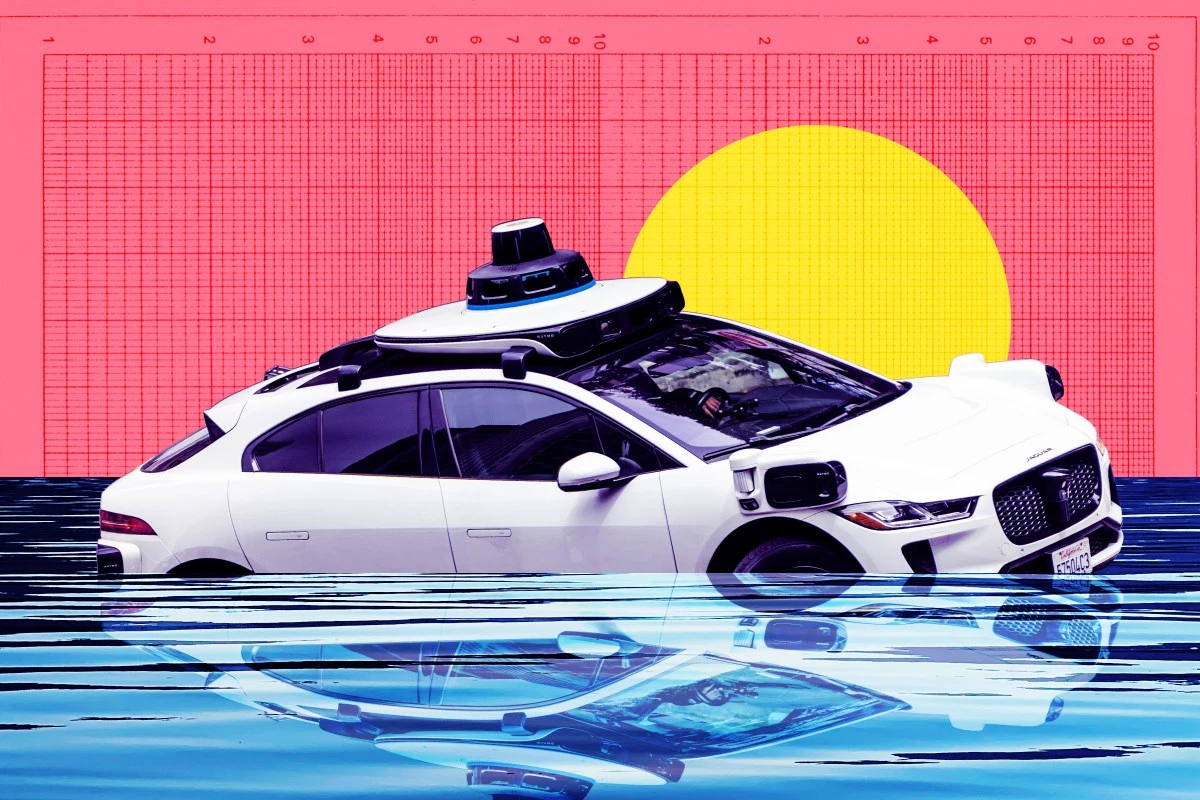

A floodwater incident that reframes autonomy as an “all-weather” promise
Waymo’s recall of 3,791 autonomous vehicles following a San Antonio robotaxi incident—where a vehicle entered floodwater on a 40 mph roadway, was swept into Salado Creek, and recovered days later—lands as more than a discrete operational mishap. It is a high-signal reminder that autonomous driving is not merely an urban convenience product; it is an implicit claim of reliability under real-world volatility, including flash floods, power disruptions, and degraded visibility.
While no passengers were onboard, the episode exposes a crucial boundary condition: the difference between “cautious driving” and “safety-first refusal.” Waymo’s own diagnosis—that its perception stack may reduce speed without executing a full stop when encountering potentially inundated lanes at higher speeds—highlights how autonomy can behave rationally within its internal logic while still failing the external, human expectation of hazard avoidance. In adverse weather, the public’s tolerance for probabilistic decision-making collapses; the standard becomes binary: stop, don’t proceed.
Waymo’s interim response—temporarily restricting operations on high-speed corridors prone to flash flooding while it develops a “final remedy”—also underscores a defining feature of commercial autonomy today: geofencing is not just a deployment strategy, it is a safety instrument. Similar events in San Antonio and Austin, including vehicles stalling in shallow water or braking abruptly, reinforce that this is not an isolated anomaly but a recurring class of edge cases that the industry has not fully domesticated.
What the recall reveals about sensor fusion, risk scoring, and safety architecture
At the technical level, the incident points to a familiar but unresolved challenge in autonomous vehicle (AV) engineering: perception is not the same as understanding, and detection is not the same as decision. Floodwater is particularly difficult because it can resemble benign roadway surfaces, change rapidly, and carry forces that are not easily inferred from appearance alone.
Key implications for autonomous driving systems include:
- Sensor fusion and classification thresholds
– Lidar and radar can detect surface irregularities, but classification confidence and threshold tuning determine whether the system treats the scene as “drivable with caution” or “non-drivable—stop.”
– The recall suggests a gap where the stack may downshift speed yet fail to trigger a hard stop at higher speeds—an outcome that can look like prudence in normal conditions but becomes dangerous in hydrological scenarios.
- Algorithmic risk assessment without hydrodynamics
– Many AV stacks rely on obstacle-centric models and static risk scoring. Floodwater is not a static obstacle; it is a dynamic medium with depth, flow rate, and unknown traction outcomes.
– A more resilient approach likely requires some combination of:
– Dynamic thresholding tied to speed and uncertainty
– Integration of real-time flood intelligence (weather feeds, municipal alerts, roadway sensors)
– Better predictive models for water depth and flow risk, whether via learned models or physics-informed estimation
- Safety architecture and the throughput bias
– The “slow but not stop” behavior hints at an architectural preference to maintain traffic flow unless a hazard is decisively confirmed.
– In adverse weather, safety engineering often demands the opposite: when uncertainty rises, the system should become more conservative, even at the cost of service continuity.
This is not unique to Waymo. Competitors have faced navigation failures in fog, bright sunlight, and flooded streets, and recent power outages in San Francisco reportedly disrupted dependencies such as traffic-signal behavior. The common thread is that autonomy is still brittle when the environment stops behaving like the training distribution—or when infrastructure signals degrade.
Business, liability, and the shifting economics of autonomous fleet operations
Recalls in software-defined mobility are not only engineering events; they are capital events. Even when the remedy is delivered over the air, the operational and reputational costs can be durable—especially for services positioned as safer than human driving.
Business leaders and investors will be watching several pressure points:
- Direct and indirect recall costs
– Engineering remediation, validation cycles, fleet restrictions, and potential regulatory engagement all translate into cost and delayed utilization.
– The larger exposure is contingent liability: if a similar event occurs with passengers or third parties involved, the legal and insurance consequences could escalate quickly.
- Insurance repricing and risk models
– Insurers price what they can model. Edge-case failures—especially weather-related—can lead to higher premiums or stricter underwriting until reliability metrics stabilize.
– That repricing flows into fleet economics, affecting unit margins and expansion pacing.
- Investor confidence and valuation narratives
– Autonomous vehicle valuation is tightly coupled to perceived safety momentum and scalability. High-profile incidents can shift the narrative from “inevitable rollout” to “prolonged hardening phase,” extending timelines and compressing near-term expectations.
- Total cost of ownership (TCO) recalibration
– AV proponents often cite labor savings and reduced accident rates. But recurring recalls, geofenced limitations, and weather-related downtime lengthen the payback period and complicate comparisons with human-driven fleets that can operate—albeit imperfectly—across a wider range of conditions.
Regulation, climate volatility, and the next competitive frontier in autonomy
The strategic backdrop is changing. As extreme weather becomes more frequent and infrastructure reliability is tested, regulators are likely to sharpen expectations around adverse-condition competence. The sector may move toward standardized certification regimes for scenarios such as floodwater detection, signal outages, and degraded visibility—less like consumer software and more like safety-critical aviation-style validation.
For the competitive landscape, the differentiator may shift from “best urban autonomy demo” to best resilience under stress. That could favor organizations with deep experience in sensor calibration and harsh-environment robotics, and it may accelerate partnerships across:
- Municipal infrastructure and traffic management
- Weather intelligence providers
- IoT roadway sensing and alerting networks
- Insurance and risk analytics firms
Waymo’s decision to restrict high-speed, flood-prone corridors is a pragmatic near-term safeguard, but it also signals a broader truth about autonomous mobility: the path to scale will be paved not only with better models, but with better systems thinking—where vehicles, infrastructure, weather data, and safety governance operate as a coordinated, real-time network. The companies that internalize that reality fastest will define what “driverless” truly means when the road itself becomes the variable.

 By
By
 By
By
 By
By

 By
By

 By
By








