

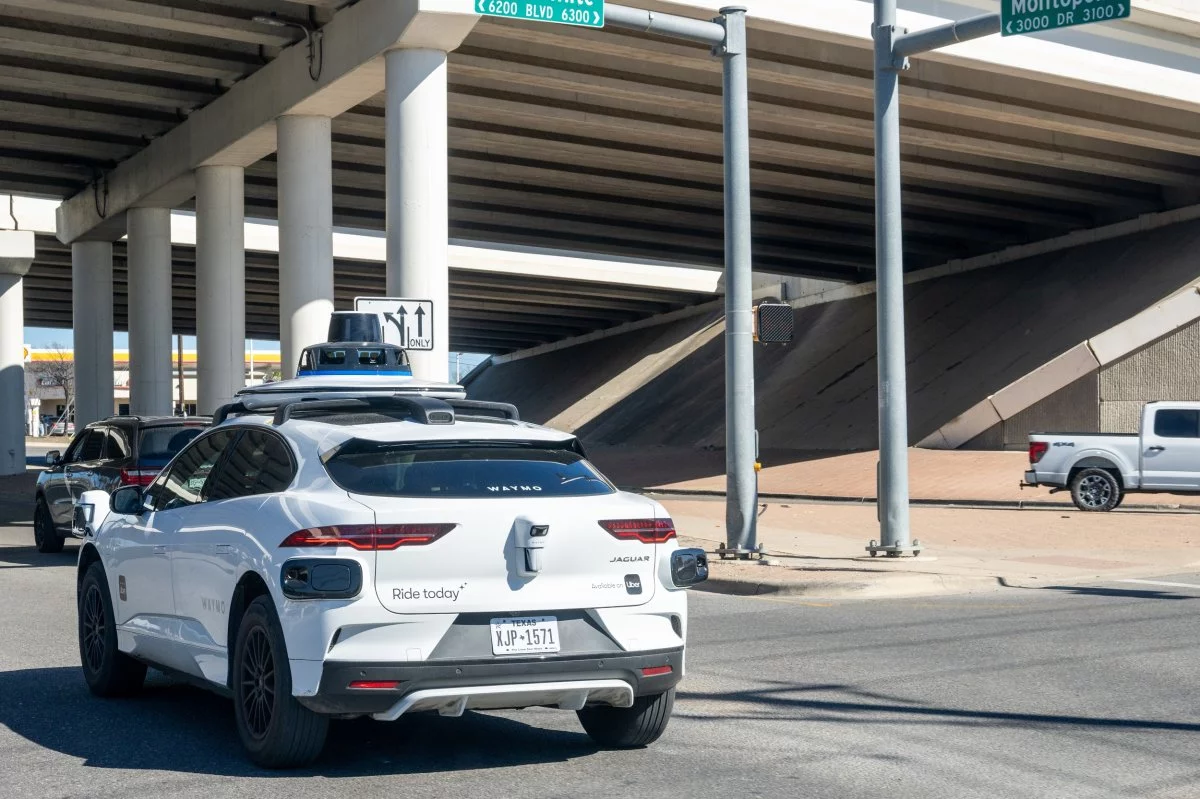

A single trunk mishap exposes the “last‑meter” reality of autonomous mobility
Waymo’s autonomous taxi service has spent years demonstrating that driverless navigation can be safe, repeatable, and commercially viable in constrained urban environments. Yet a recent passenger account—where a rider, Di Jin, arrived at San Jose Mineta Airport only to watch the robotaxi depart with his luggage still in the trunk—highlights a different frontier of autonomy: the handoff between machine execution and human intent.
The episode is notable not because it involves high-speed risk or complex roadway behavior, but because it underscores how customer trust is often won or lost in mundane moments: unloading bags, confirming a stop, recovering from a mistake. In traditional ride-hailing, a driver can interpret body language, respond to urgency, or simply wait when a passenger says, “Hold on—my suitcase.” In a fully uncrewed vehicle, those social cues must be translated into software logic, sensor interpretation, and service policy—and the failure modes can feel jarring precisely because they occur at the most human part of the trip.
The passenger’s reported inability to reopen the trunk, followed by the vehicle proceeding to a storage depot, frames autonomy’s persistent “last‑meter problem”: systems can be highly competent at route planning and obstacle avoidance while still underperforming at micro-interactions that require confirmation, patience, and reversible decisions.
Human–machine interface gaps are becoming the defining battleground
This incident points less to a deficiency in autonomy’s “driving brain” and more to the maturity of the human–machine interface (HMI) and operational safeguards around it. In practical terms, the trunk is not a peripheral feature; for airport runs, it is central to the product.
Several technical themes emerge that are likely to shape near-term development priorities across autonomous vehicle (AV) fleets:
- Intent verification and ambiguity handling: A rider standing behind a vehicle, reaching toward the trunk, or lingering near the rear bumper is a strong signal—yet it must be reliably detected and interpreted. The system needs to distinguish between “trip complete, safe to depart” and “trip complete, passenger still interacting with cargo.”
- Departure authorization logic: AVs tend to optimize for mission completion—clear the curb, proceed to the next task, reduce dwell time. Without robust checks, that optimization can override the customer’s immediate needs. A more resilient design would treat baggage retrieval as a hard gate before departure.
- Redundant fail-safes: Software prompts alone may not be enough. The strongest AV designs typically combine:
– Multimodal confirmation (in-app prompts, voice confirmation, visual detection of a person at the trunk)
– Timeout and escalation paths (alerts that intensify if the passenger indicates a problem)
– Physical interlocks or local controls that allow a passenger to reopen cargo access safely during a narrow window after arrival
The broader implication is that AV competition is shifting. As core driving stacks converge in capability within geofenced areas, differentiation increasingly comes from service design, edge-case recovery, and the “felt experience” of reliability—especially in high-stakes contexts like airport travel where the cost of delay is immediate.
Service economics, liability, and the real cost of customer friction
Waymo’s reported customer-service response—offering secure storage while placing shipping or retrieval costs on the passenger—brings the business model into focus. Autonomous ride services are not simply selling transportation; they are selling assurance. When assurance breaks, the remediation policy becomes part of the product.
From an economic and brand perspective, the incident surfaces three interlocking pressures:
- Trust as a measurable asset: In mobility, small frictions can create outsized reputational impact. A single story of “the car left with my luggage” travels faster than a thousand uneventful rides, particularly when it reinforces a latent fear that autonomy is indifferent to human needs.
- Unit economics versus service guarantees: Offloading retrieval costs may protect variable margins in the short term, but it risks undermining the premium positioning that robotaxi services often rely on. As fleets scale, operators may need explicit service-level agreements (SLAs) that define what happens when property is left behind, access fails, or the vehicle departs prematurely.
- Liability and insurance gray zones: Traditional auto insurance frameworks were built around human drivers and clear custody. Driverless fleets introduce novel questions: When the vehicle controls access to a trunk, and the passenger cannot retrieve property due to system behavior, where does responsibility sit—operator, manufacturer, insurer, or rider? Regulators and insurers will likely be pushed toward clearer definitions of custody, negligence, and remediation obligations for passenger property in uncrewed vehicles.
For AV operators, the strategic risk is not merely reimbursement cost. It is the possibility that consumers begin to price in a new category of inconvenience—autonomy-induced helplessness—where the rider cannot negotiate, persuade, or improvise with a human counterpart.
The strategic path forward: standards, partnerships, and data-driven recovery design
The most productive way to view this event is as a blueprint for what the next phase of autonomous mobility must operationalize: handoff protocols. This challenge is not unique to robotaxis; it parallels autonomous delivery lockers, drones, and last-mile robotics where the hardest part is the exchange point between human and machine.
Several forward-looking moves stand out as both technically feasible and commercially rational:
- Codify “handoff protocols” as a cross-industry standard: Collaboration with standards bodies (such as SAE or ISO), logistics providers, and travel partners could define best practices for unattended item transfer—timers, confirmations, physical affordances, and escalation steps.
- Build airport-specific operating models: Airports are structured environments with high baggage density and time pressure. Dedicated AV retrieval bays, buffer zones, or staffed kiosks could blend autonomy with targeted human oversight, reducing the reputational blast radius of edge cases.
- Turn micro-interactions into a competitive moat: The telemetry around this incident—how long the passenger stood at the trunk, how many reopen attempts occurred, what prompts were shown, what the vehicle “believed” was happening—can be transformed into a continuous improvement loop. Companies that learn fastest from these micro-failures will likely lead on real-world reliability.
Autonomous vehicles do not fail only at the limits of perception on busy streets; they can fail at the curb, at the trunk, in the final seconds of a trip. The companies that treat those seconds as mission-critical—engineering them with redundancy, empathy-by-design, and clear commercial guarantees—will define what “driverless” ultimately means to the public: not just a car that can drive itself, but a service that can take responsibility.

 By
By
 By
By

 By
By
 By
By
 By
By
 By
By
 By
By







