

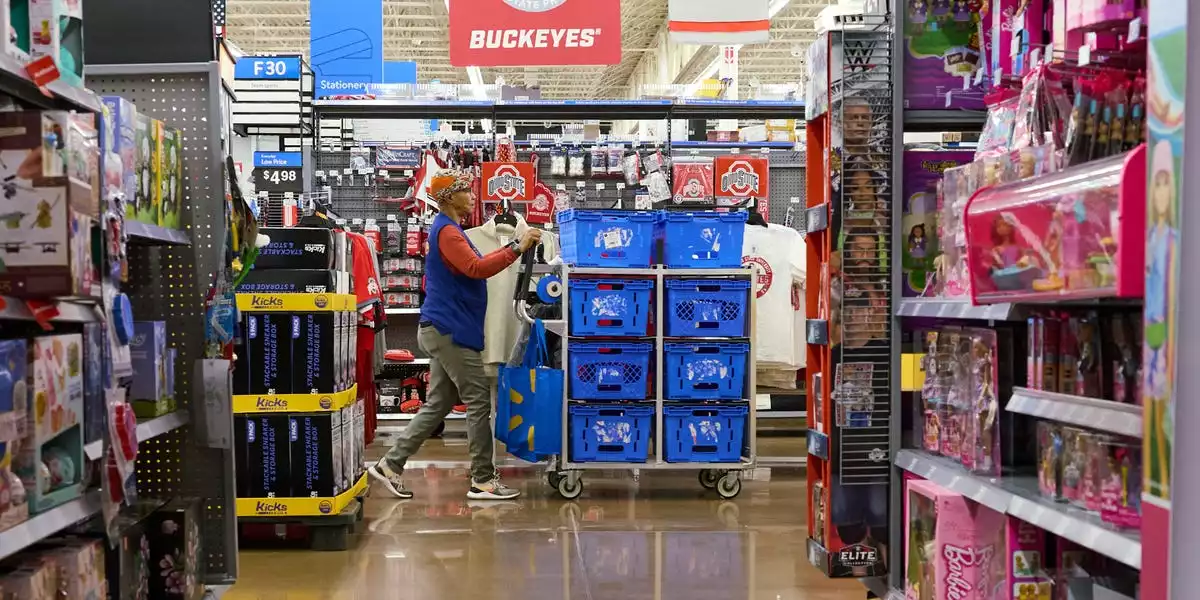

Walmart’s e-commerce surge is being powered by stores—and that changes everything inside them
Walmart’s latest quarter underscores a defining shift in modern retail operations: a 27% increase in e-commerce sales, marking the eighth consecutive quarter above 20% online growth. The engine behind that momentum is not a new fleet of mega-warehouses, but a familiar asset—roughly 4,600 U.S. stores increasingly functioning as hyper-local fulfillment hubs. For customers, the promise is compelling: grocery orders arriving within hours, often same-day, with the convenience of doorstep delivery.
For the business, this “store-as-fulfillment-center” model is a strategic advantage that leverages sunk real estate and proximity to households. Yet it also introduces a more complex operating reality: the store is no longer just a place where shoppers browse and buy. It is simultaneously:
- A retail floor optimized for customer experience and merchandising
- A high-velocity picking environment governed by digital order queues and time targets
- A last-mile logistics node requiring tight coordination across inventory, labor, and delivery capacity
That convergence is producing a new kind of operational tension. Associates are being asked to execute traditional in-store responsibilities while meeting fast-moving digital pick lists and performance metrics. Reports of physical strain and stress—along with a recent safety-related reversal on cart-handling procedures—highlight a central truth of omnichannel retail: speed is not just a customer feature; it is a labor system design challenge.
The technology stack: digital shelf labels, AI workflow tools, and the data flywheel effect
To compete in an online grocery market projected to reach $450 billion in the U.S. by 2028, and to respond to Amazon’s continued push into rapid delivery (including 30-minute options in some markets), Walmart is leaning into digital shelf labels and AI-driven workflow optimization. These tools are not cosmetic upgrades; they are foundational to running stores as real-time fulfillment engines.
Digital shelf labels can materially change execution by enabling:
- Dynamic pricing and rapid promotion updates, reducing manual labor and pricing errors
- Near-real-time inventory visibility at the shelf, improving pick accuracy and reducing substitutions
- SKU-level transparency that benefits both associates and potential future automation systems
Meanwhile, AI-driven labor and workflow tools aim to optimize the “hidden factory” of picking and staging. In practical terms, AI can:
- Recommend efficient pick paths through aisles to reduce wasted steps
- Balance workload across shifts based on forecasted order volume
- Anticipate store-level demand spikes tied to weather, promotions, and local events
The strategic payoff is a reinforcing loop: pick and fulfillment data improves demand planning, which improves in-stock rates, which improves customer satisfaction, which drives more digital orders. But the same loop can intensify pressure at the store level if the system is tuned primarily for throughput. Without safeguards, AI can inadvertently amplify what workers often describe as “metric fatigue”—the feeling that performance targets accelerate faster than the physical environment and staffing model can sustainably support.
The human-capital fault line: productivity metrics meet ergonomics, safety, and retention
Walmart’s omnichannel advantage depends on a delicate equilibrium: customer speed and reliability on one side, associate sustainability on the other. The recent rescinding of a cart-handling change after safety concerns is a telling signal. It suggests the organization is listening—but it also illustrates how quickly operational tweaks can create unintended ergonomic risk when scaled across thousands of stores.
From a business and technology perspective, the labor dimension is not a side issue; it is a core variable in unit economics. Online grocery fulfillment is labor-intensive, and even modest increases in attrition among pickers can trigger cascading costs:
- Wage inflation to stabilize staffing in high-turnover roles
- Training and onboarding costs that erode productivity gains
- Service degradation risk, including late deliveries and higher substitution rates
- Reputational and regulatory exposure if safety and scheduling practices draw scrutiny
This is where the next wave of retail automation becomes less theoretical and more inevitable. The strain on human pickers strengthens the near-term business case for:
- Shelf-scanning robots that improve inventory accuracy and reduce out-of-stocks
- In-aisle automation for repetitive tasks that slow pick rates
- Ergonomic augmentation, including potential exoskeleton support for high-weight categories
Notably, basic robotics pilots in other retail formats have shown ROI horizons in the 12–18 month range for targeted use cases like scanning and compliance. The more Walmart pushes toward faster delivery promises, the more it must decide which parts of the workflow should remain human-led—and which should be systematically mechanized.
Margin math and competitive positioning: Walmart’s asset leverage versus Amazon’s scalability
E-commerce growth is strategically valuable, but it often arrives with thinner margins due to picking, packing, and last-mile delivery costs. Walmart’s challenge is to scale online grocery while defending operating profit—an increasingly complex balancing act as it invests in digital shelf labels, AI platforms, and potentially automation.
The competitive contrast with Amazon is instructive. Walmart’s model is asset-heavy but locally advantaged: stores are close to customers, enabling rapid fulfillment without building entirely new infrastructure. Amazon’s approach is often more modular and scalable, leaning on a mix of fulfillment centers, partners, and flexible delivery networks. Walmart can win on proximity and asset utilization; Amazon can win on rapid replication and network effects.
The strategic question for executives is not whether omnichannel is the right direction—it is how to industrialize it without breaking the human system that makes it run. The retailers that lead the next phase of online grocery will be those that treat worker experience, safety engineering, and AI governance as part of the same operating model as delivery speed and inventory accuracy. In a market racing toward ever-faster fulfillment, the durable advantage may belong to the company that proves it can scale convenience without turning the store into an unsustainable pressure cooker.


 By
By
 By
By

 By
By

 By
By
 By
By







