

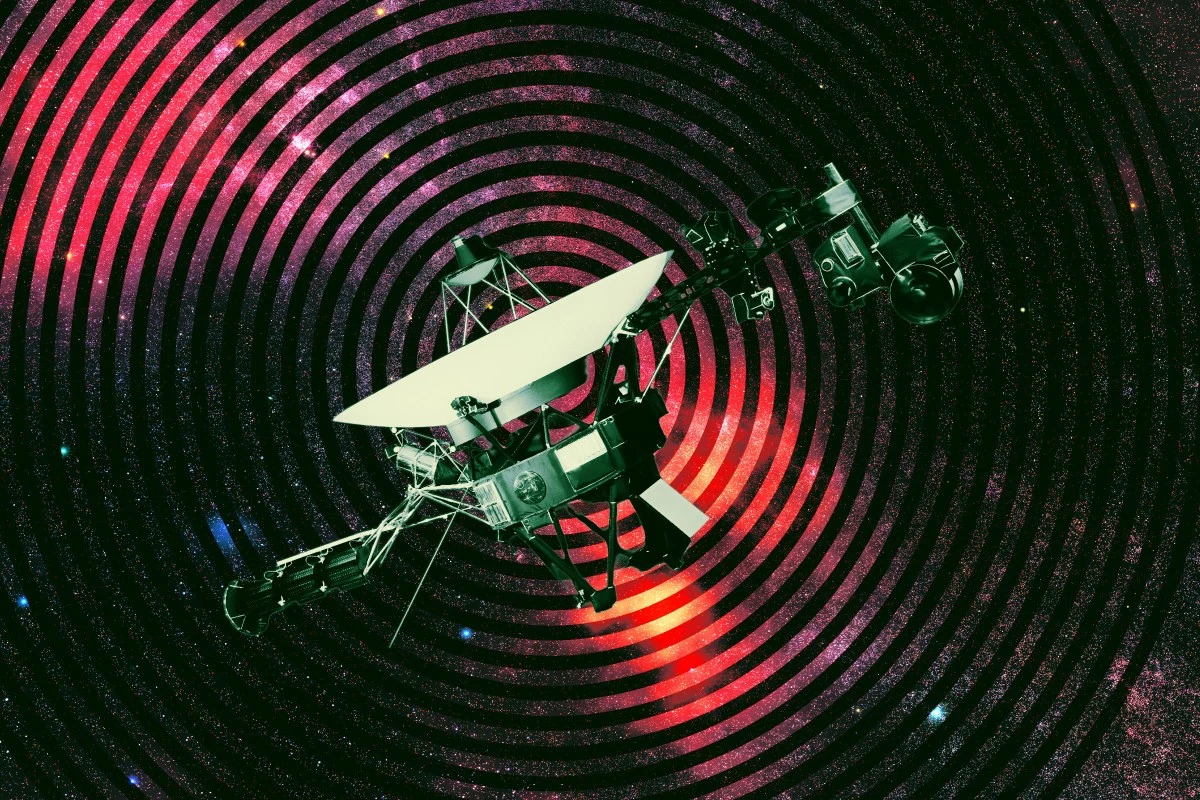

Voyager 1’s power triage: how a 1970s spacecraft is still being managed like a modern critical asset
Nearly five decades after launch, NASA’s Voyager 1 remains a working deep-space observatory—now more than 15 billion miles from Earth—but it is operating under a constraint that no software patch can reverse: a steady decline in electrical power from its radioisotope thermoelectric generator (RTG), driven by the natural decay of plutonium-238. The response from engineers at NASA’s Jet Propulsion Laboratory (JPL) has been deliberately methodical rather than dramatic: deactivate one instrument at a time, preserving core science while keeping the spacecraft safely above fault-protection thresholds.
The latest step is the planned shutdown of the Low-energy Charged Particles (LECP) instrument, a decision expected to conserve roughly four watts per year and extend Voyager 1’s operations by at least another twelve months. In deep space, where every watt is already “spent” on survival functions—communications, heaters, computing, attitude control—four watts is not marginal; it is strategic. It can be the difference between a controlled drawdown and an automatic protective shutdown that risks becoming unrecoverable at extreme distance and latency.
This is also a story of operational discipline under uncertainty. Voyager 1’s power level reportedly dipped unexpectedly during a routine maneuver on February 27, underscoring why JPL’s approach is less about squeezing out the last data point and more about preventing cascading failures. The spacecraft is being treated like a high-value industrial asset: reduce non-essential loads early, keep the system stable, and preserve the ability to command and diagnose.
The engineering lesson: graceful degradation, not heroic last stands
Voyager’s predicament is a masterclass in lifecycle management for long-duration systems, where the central engineering question becomes: *How do you design and operate for decline without losing control?* RTGs are famous for longevity, but they are also defined by a predictable downward slope—Voyager’s output falling by roughly 4 watts per year. That predictability enables planning, but it also forces hard prioritization.
The instrument-by-instrument retirement sequence reflects a philosophy increasingly common in safety-critical technology: graceful degradation. Rather than allowing the spacecraft to hit a power cliff and trigger automated safing behaviors, JPL is proactively shaping the decline so that Voyager remains communicative and scientifically useful for as long as physics allows.
Key technical principles on display include:
- Fail-safe design under constrained power: preserving command, telemetry, and thermal stability ahead of “nice-to-have” science loads.
- Phased decommissioning: a structured shutdown roadmap that reduces risk compared with abrupt, reactive decisions.
- Redundancy as a long-horizon investment: the revival of dormant thrusters after roughly 20 years illustrates the enduring value of conservative thermal management and the ability to “wake” backup subsystems when primary pathways degrade.
- Operational testing before fleet-wide changes: a major power-savings plan—described as a “Big Bang” approach—is slated for testing on Voyager 2 in May and June before being applied to Voyager 1, reflecting a cautious, evidence-driven rollout.
Today, only two of Voyager 1’s original ten instruments remain active: plasma wave sensors and magnetometers. That narrowing of capability is not merely a sign of age; it is the logical endpoint of a strategy that protects the highest-value measurements—those most essential to understanding the heliosphere’s boundary and the interstellar environment.
Why this matters to business and technology leaders: ROI, resilience, and the economics of longevity
From a public-investment perspective, Voyager 1 is an outlier in the best sense: a capital asset that continues to generate unique scientific returns at low incremental cost, long after its primary mission objectives were met. Extending operations by a year through a targeted shutdown is a striking example of return on R&D investment—not by adding new hardware, but by extracting additional value through disciplined operations.
The parallels to industry are direct. Many sectors face the same structural challenge: assets outlive their original business case, but still produce valuable output if managed intelligently. Voyager’s approach maps cleanly onto:
- Industrial plants and critical infrastructure (refineries, power stations, pipelines): staged retirement plans that prioritize safety and high-value monitoring.
- Satellite operators and remote networks: power budgeting, load shedding, and fault protection as core business competencies.
- Edge computing and IoT deployments: designing for ultra-low-power operation, predictable decay curves, and remote diagnosis where physical intervention is impossible.
Voyager also highlights a broader strategic reality: as budgets tighten and scrutiny rises, organizations are pressured to show near-term value without abandoning long-term capability. The spacecraft’s power triage is effectively a governance model—one that treats decline as manageable, measurable, and optimizable rather than as a sudden failure event.
The next frontier: digital twins, predictive maintenance, and “decommissioning by design”
The most forward-looking aspect of Voyager 1’s story is not the shutdown itself, but the planning culture behind it. Predefined sequences of instrument deactivations, contingency testing, and careful validation resemble what industry now calls digital twin operations: modeling system behavior under different “states of health” to guide real-time decisions.
For technology and business leaders, the transferable playbook is clear:
- Institutionalize phased decommissioning for legacy systems—whether spacecraft instruments or enterprise IT—so retirement is a controlled process, not a crisis response.
- Invest in ultra-low-power design and energy-harvesting R&D, especially for remote or high-latency environments where maintenance is costly or impossible.
- Build predictive maintenance into governance, using simulations and “what-if” scenarios to prevent unplanned outages and preserve recovery paths.
- Treat redundancy as a strategic asset, not an inefficiency—because the ability to reactivate dormant capability can be the difference between continuity and total loss.
Voyager 1’s dwindling watts are not simply a countdown; they are a demonstration of how disciplined engineering, risk management, and value-based prioritization can keep a mission—and the insights it delivers—alive far beyond any reasonable expectation.

 By
By
 By
By
 By
By

 By
By
 By
By
 By
By
 By
By







