

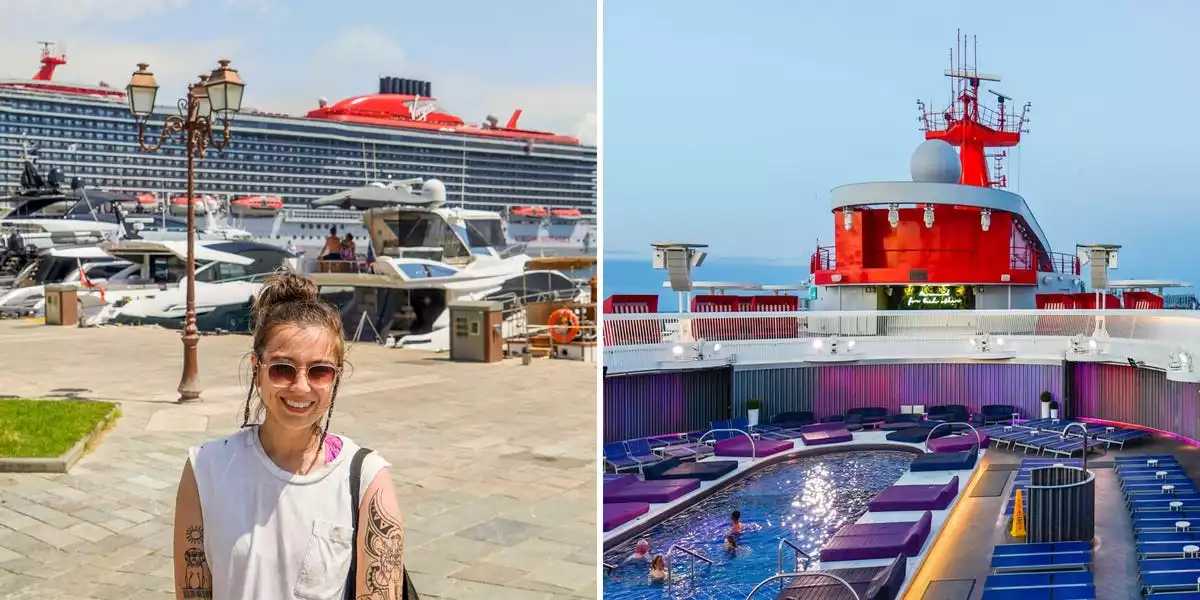

A floating, adults-only luxury resort—and a live testbed for smart hospitality
Virgin Voyages’ Valiant Lady, launched in 2022 and sailing a seven-day Mediterranean itinerary from Barcelona through ports in Italy and France with an overnight in Ibiza, reads less like a conventional cruise ship and more like a digitally orchestrated lifestyle campus at sea. With 1,408 staterooms and suites across 17 decks and capacity for roughly 2,700 guests, the vessel’s proposition is built around design-forward spaces, curated social venues, and a deliberate adults-only positioning that reshapes everything from entertainment programming to dining cadence.
What stands out from a business and technology perspective is how the ship blends premium hospitality cues—boutique retail, high-touch service zones, and “exclusive access” suite tiers—with an operational backbone increasingly defined by software, data, and mobile-first guest journeys. The result is a product that competes simultaneously with mass-market cruising and land-based luxury resorts, while also functioning as a platform for experimenting with new revenue categories and personalization mechanics.
Key onboard elements underscore that strategy:
- Digitally controlled cabins (lighting, temperature, entertainment via panels and app)
- App-based booking and wayfinding, enabling real-time itinerary and spend decisions
- 20+ dining venues included in the base fare (with exclusions such as premium alcohol and specialty items)
- Nontraditional amenities like Squid Ink, billed as the first onboard tattoo studio
- Luxury retail boutiques (e.g., Louis Vuitton, Dior), reinforcing premium brand adjacency
- Tiered exclusivity for suite guests via private lounges and upper-deck cabanas
The pricing signal is equally clear: a mid-tier balcony stateroom around $5,910 per couple positions the experience as aspirational, but not ultra-elite—an important distinction for a brand targeting affluent, experience-driven adults rather than legacy “white-glove” cruisers.
The tech stack behind the vibe: IoT cabins, mobile orchestration, and yield science
Valiant Lady’s most consequential differentiator may be invisible to many guests: the ship’s smart-suite integration and mobile engagement layer. Digitally controlled staterooms are not just a comfort feature; they are part of the broader Internet of Things (IoT) trend reshaping premium hospitality. When lighting, HVAC, and entertainment are mediated through software, operators gain a stream of real-time behavioral and operational data—a foundation for both efficiency and monetization.
From an operations lens, this architecture can support:
- Energy optimization (HVAC and lighting tuned to occupancy patterns)
- Smarter staffing (housekeeping and maintenance informed by usage signals)
- Faster service recovery (issues surfaced through app interactions and telemetry)
From a commercial lens, the same digital layer enables experiential yield management. App-based activity booking, dynamic inventory for dining and spa slots, and targeted prompts can all be tuned to demand. In practice, this is the cruise equivalent of airline-style revenue management—except applied to onboard experiences rather than seats.
This matters because modern cruise economics increasingly hinge on the ability to shape spend onboard, not merely sell cabins. A mobile-first experience also reduces friction at precisely the moments where guests decide whether to upgrade—spa treatments, premium beverages, special events, or retail purchases. The ship becomes a controlled environment where personalization, pricing, and availability can be adjusted in near real time.
Revenue architecture: inclusive dining as a trust signal, upsells as the margin engine
Virgin Voyages’ model blends inclusive bundling with carefully designed à la carte upsells. Including a broad set of dining venues, fitness options, and entertainment in the base fare functions as a trust-building mechanism—reducing “nickel-and-dime” anxiety that can undermine premium positioning. At the same time, the business model preserves high-margin expansion through categories that are both discretionary and identity-driven.
Several revenue levers stand out:
- Premium alcohol and specialty items: classic high-margin cruise economics, but framed within a more transparent “included vs. extra” structure.
- Luxury retail partnerships: boutiques from brands like Louis Vuitton and Dior diversify revenue and reinforce the ship’s premium narrative, while also buffering the operator from volatility in ticket pricing.
- Squid Ink tattoo studio: a particularly telling innovation—tattoos are high-yield, highly personal, and socially shareable. They also transform the ship into a place where guests don’t just consume experiences; they permanently commemorate them.
This is not novelty for novelty’s sake. It reflects a broader shift in travel toward hyper-personalized, high-margin services that guests perceive as meaningful rather than transactional. For operators, these categories can deliver stronger unit economics than traditional onboard retail because they monetize identity, memory, and status—powerful drivers in the premium leisure market.
Competitive positioning amid post-pandemic demand and rising sustainability scrutiny
The adults-only segmentation is more than a branding flourish; it is a strategic filter that shapes the entire product. By excluding families with children, Virgin Voyages narrows its addressable market but gains sharper differentiation: nightlife-forward venues, design-centric public spaces, and programming calibrated for a younger, lifestyle-oriented cohort. In a crowded cruise landscape, that clarity can reduce direct price competition and increase loyalty among guests who want a resort-like social atmosphere at sea.
Yet the macro backdrop is complex. The post-pandemic travel upswing has supported pricing power, but operators face inflationary pressures, supply-chain constraints, and higher expectations from travelers who now benchmark “luxury” against both service and convenience. Digital orchestration and inclusive value can help justify premium fares—but only if execution remains seamless.
The longer-term pressure point is sustainability and regulation. The cruise industry is under intensifying scrutiny around emissions, waste management, and port impacts. Even when not foregrounded in onboard storytelling, investments in efficient propulsion, advanced waste systems, and shore-power connectivity are becoming central to brand equity—particularly with affluent travelers who increasingly evaluate luxury through the lens of environmental stewardship.
Valiant Lady, viewed through a business-and-technology lens, signals where premium travel is heading: software-mediated hospitality, experience-led monetization, and tight lifestyle segmentation—all operating under the rising expectation that indulgence and responsibility must eventually coexist on the same itinerary.

 By
By
 By
By


 By
By

 By
By
 By
By







