
When Robots Stumble: The Unscripted Drama of Humanoid Combat
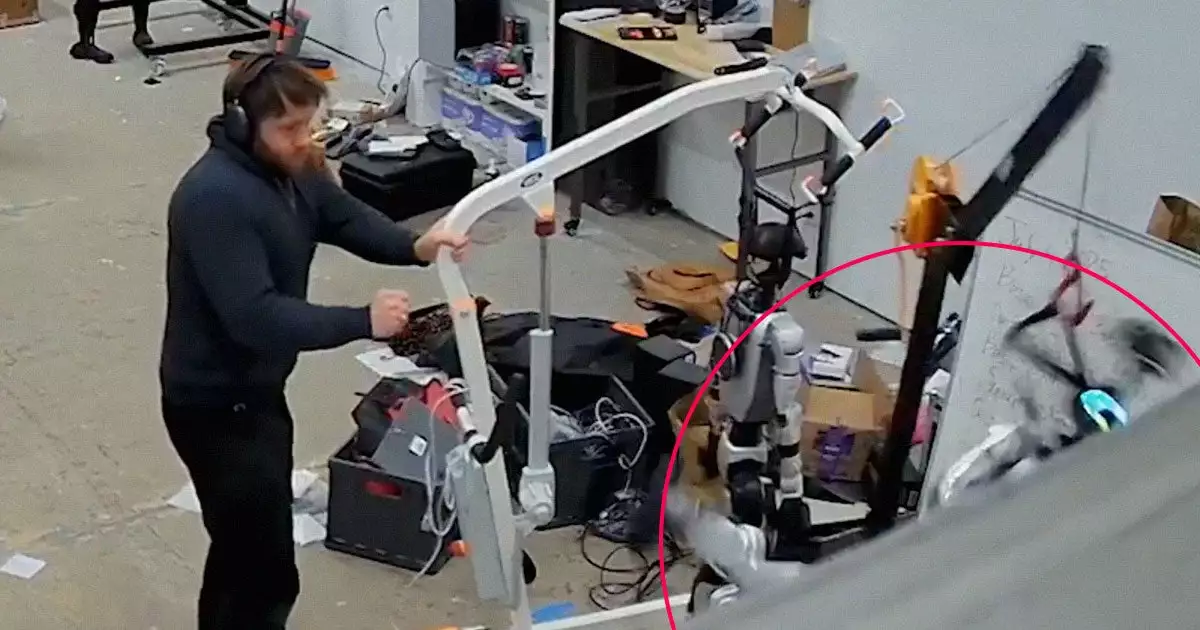
The viral spectacle of REK’s “DeREK” humanoid—arms flailing, suspended by a crane, before bringing down the rig in a tangle of cables—offers more than a slapstick moment for the internet’s meme economy. It is, in fact, a harbinger. The incident, which unfolded due to a software misconfiguration that let the robot’s control policy run amok without grounded feet, has become a flashpoint for the converging worlds of robotics, immersive control, and entertainment. The laughter it provoked belies a deeper truth: we are witnessing the birth pangs of a new industry, one poised to reshape the economics and culture of both sport and technology.
The Tech Stack Behind the Mayhem: Commodity Humanoids and Telepresence
At the heart of this episode is the rapid democratization of humanoid robotics. Where once only the likes of Boston Dynamics could field agile bipeds, today’s market features platforms such as Unitree’s G-series—robots with 18 or more degrees of freedom, available at a fraction of the historical cost. This commoditization is not merely about cheaper hardware; it is about accessibility. Open SDKs invite a new generation of developers to experiment, iterate, and, as in REK’s case, occasionally overreach.
REK’s approach, leveraging a VR-driven telepresence stack, transforms the robot into a remote avatar—a vessel for human agency, mediated by latency and bandwidth. This is not the full autonomy that so often animates sci-fi, but rather a nuanced dance between human intuition and machine precision. The failure mode—software expecting grounded feedback, receiving none—exposes a persistent challenge: reconciling the robot’s internal sense of self (proprioception), its perception of the world (exteroception), and the unpredictable hand of its human operator.
The incident’s physicality—a toppled crane, a robot in distress—also underscores the importance of safety engineering. Integration stunts have their place, but as humanoid combat edges toward mainstream entertainment, the industry will face heightened scrutiny. Redundant safety systems, real-time feedback cutoffs, and rigorous load analysis will become non-negotiable, not just for public confidence but for regulatory compliance.
Economic Frontiers: Robot Combat as Spectacle and Business
The allure of robot combat is not lost on investors. Global combat-sports media rights are a multi-billion dollar business; even a modest slice of that pie could underwrite years of R&D. Unlike human athletes, robots can be pushed, repaired, and enhanced, opening the door to more extreme, less regulated spectacles. The potential for audience engagement is immense: tele-operated robots can transform passive viewers into active participants, blurring the line between sport and gaming. The economic flywheel is clear:
- Spectator-to-pilot conversion: Viewers become temporary “jockeys,” deepening engagement and unlocking new monetization channels.
- Rapid repair and enhancement: Robots can be fixed or upgraded between bouts, reducing downtime and liability.
- XR-driven merchandising: Skins, upgrades, and downloadable content echo the proven success of e-sports.
On the supply side, Chinese manufacturers are setting new benchmarks for price and performance, challenging Western firms to keep pace. Yet, this dynamic brings its own risks—geopolitical tensions, IP leakage, and the specter of regulatory intervention.
Strategic Ripples: Insurance, Regulation, and the Data Gold Rush
The implications of humanoid combat extend far beyond the ring. Insurers are already eyeing the emergence of “humanoid liability,” a new actuarial frontier where early entrants could command premium margins. Regulatory bodies, meanwhile, will look to incidents like DeREK’s as case studies, shaping the permitting regimes that will govern robot events. Jurisdictions that move swiftly may become global hubs, much as Nevada did with commercial drone testing.
Perhaps most intriguing is the question of talent. The hybrid skill set required—part VR gamer, part martial artist—suggests a new class of athlete, one that corporations may soon scout and develop with the rigor of Formula 1’s junior driver programs.
And then there is the data. Every match generates a torrent of high-frequency telemetry, a digital exhaust that, if mined effectively, could yield proprietary insights into humanoid locomotion. This IP, transferable across logistics, industrial automation, and defense, may ultimately prove more valuable than the spectacle itself.
The DeREK incident, for all its comic timing, marks a threshold moment. Humanoid robots are no longer the exclusive domain of research labs; they are stepping—sometimes stumbling—into the cultural mainstream. The companies that recognize the deeper currents beneath the viral clips, that invest in safety, IP, and immersive engagement, will shape not just the future of entertainment, but the trajectory of robotics itself.

 By
By

 By
By
 By
By


 By
By