


America’s hyperscale build-out becomes an “AI infrastructure race” with real-world constraints
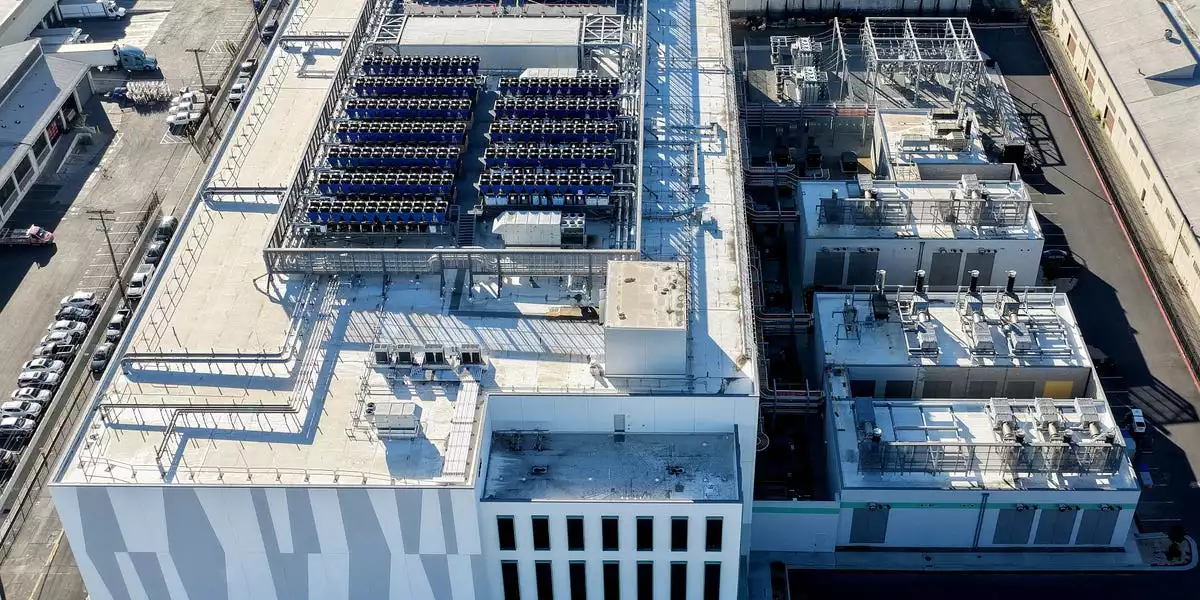
The United States is entering a new phase of industrial expansion—one measured less in smokestacks and rail lines than in hyperscale data center campuses rising across exurban corridors and energy-rich regions. What began as an arms race for cloud capacity has rapidly evolved into a race for AI compute, with facilities increasingly designed as high-density “AI factories” optimized for training and serving large language models, generative AI systems, and real-time analytics.
This shift is not merely architectural; it is systemic. AI workloads demand extreme parallelism, sustained power delivery, and advanced cooling at a scale that strains local infrastructure. As major technology firms commit tens of billions of dollars—and in some cases more than $100 billion annually—to capital expenditure, the data center is becoming a central node where technology strategy, energy policy, and financial markets collide.
Several forces are reinforcing hyperscale momentum even as edge computing expands:
- Centralized training gravity: The largest models still favor massive, power-dense clusters of GPUs/TPUs that are difficult to distribute.
- Latency-sensitive inference at the edge: Enterprises want local responsiveness, but the “brains” are often trained centrally and then deployed outward.
- Specialized infrastructure: High-bandwidth networking, advanced memory, and optimized cooling create economies of scale that smaller sites struggle to match.
The result is a dual-track compute topology: edge for immediacy, hyperscale for intensity—and a growing debate over who pays for the physical consequences.
Satellite imagery and machine learning reshape transparency—and accountability
A notable development in this cycle is the rise of satellite monitoring as a practical accountability tool. High-resolution imagery, paired with machine learning, now enables observers to track construction progress, estimate site expansion, and infer operational intensity through proxies such as thermal signatures and equipment staging. This is a meaningful change in information symmetry: communities, regulators, investors, and journalists can evaluate the pace and footprint of development before official announcements or ribbon cuttings.
This emerging “remote audit” capability has several implications:
- Earlier risk detection: Stakeholders can spot rapid build-outs, land-use changes, and infrastructure stress signals ahead of formal disclosures.
- More rigorous ESG scrutiny: Environmental claims can be tested against observable expansion and resource patterns.
- Market signaling: Construction velocity can serve as a forward indicator of demand expectations—useful for supply-chain forecasting and credit analysis.
In effect, hyperscale development is becoming legible from orbit. That visibility raises the bar for corporate commitments on sustainability, grid upgrades, and community impact—because the physical evidence is increasingly difficult to obscure.
Water, power, and air quality: the resource calculus behind AI compute
The most immediate friction point is not demand for AI—it is the resource intensity required to satisfy it. Hyperscale facilities can draw enormous electricity loads and, depending on cooling design and climate, substantial water volumes. In drought-prone regions, particularly parts of the American Southwest, water use becomes a political and economic flashpoint, competing with municipal needs and agriculture.
Key pressure areas are converging:
- Electricity demand and grid readiness: Many operators pledge to fund or underwrite grid upgrades, but execution depends on regulatory approvals, utility timelines, and equipment availability. Delays can strand capacity and inflame local skepticism.
- On-site generation tradeoffs: Gas-turbine co-generation offers resilience and speed-to-power, yet it can introduce NOx and particulate concerns, especially in regions already sensitive to air-quality degradation.
- Cooling strategy scrutiny: Water-based cooling can be efficient but contentious; air cooling reduces water reliance but may increase energy consumption and heat management complexity.
These are not abstract ESG debates—they are permitting realities. Communities weighing data center proposals increasingly ask: What is the net local benefit relative to the local burden? Tax revenue and construction jobs are persuasive, but they compete against fears of higher utility rates, constrained water allocations, and environmental externalities.
A more durable social license is likely to require transparent, standardized reporting on metrics such as:
- Water use per unit of compute (e.g., per petaflop-hour)
- Carbon intensity per rack or per workload
- Peak load profiles and demand-response participation
- Local air-quality impacts where on-site generation is used
Capital expenditure, credit markets, and supply-chain bottlenecks define “Data Center Economics 2.0”
The financial dimension is becoming as consequential as the engineering. With hyperscale capex surging, investors are increasingly attentive to credit risk and the possibility of demand miscalculation. If AI adoption slows, model economics shift, or semiconductor pricing corrects, the reverberations could extend beyond tech equities into corporate bond markets and even municipal finance, particularly where data centers constitute a major tax base.
At the same time, the industry is navigating a web of structural constraints:
- Equipment lead times: High-voltage transformers, gas turbines, and advanced memory modules can face multi-year waits, inflating budgets and delaying go-live dates.
- Supplier concentration risk: Dependence on a narrow set of manufacturers increases vulnerability to geopolitics, export controls, and trade-policy shifts.
- Ecosystem financing scrutiny: Circular investment dynamics—where chip vendors subsidize labs that become committed buyers—may accelerate adoption but can also concentrate power and amplify downside if assumptions break.
This is where “Data Center Economics 2.0” begins to take shape: a shift from pure expansion to optimization and risk-adjusted build-out. The next competitive frontier may be less about who builds the most, and more about who can operate flexibly—aligning workloads with renewable availability, using AI-driven scheduling to reduce peak strain, and adopting modular designs that scale with real power delivery rather than speculative demand.
For the companies building America’s AI backbone, the strategic mandate is widening. Success will hinge not only on GPUs and real estate, but on grid diplomacy, supply-chain strategy, and measurable stewardship of local resources—because the era of invisible infrastructure is over, and hyperscale footprints are now visible in budgets, in permits, and increasingly, from space.

 By
By
 By
By
 By
By

 By
By
 By
By
 By
By
 By
By







