


Uber’s Dallas Robotaxi Gambit: A New Chapter in Autonomous Mobility
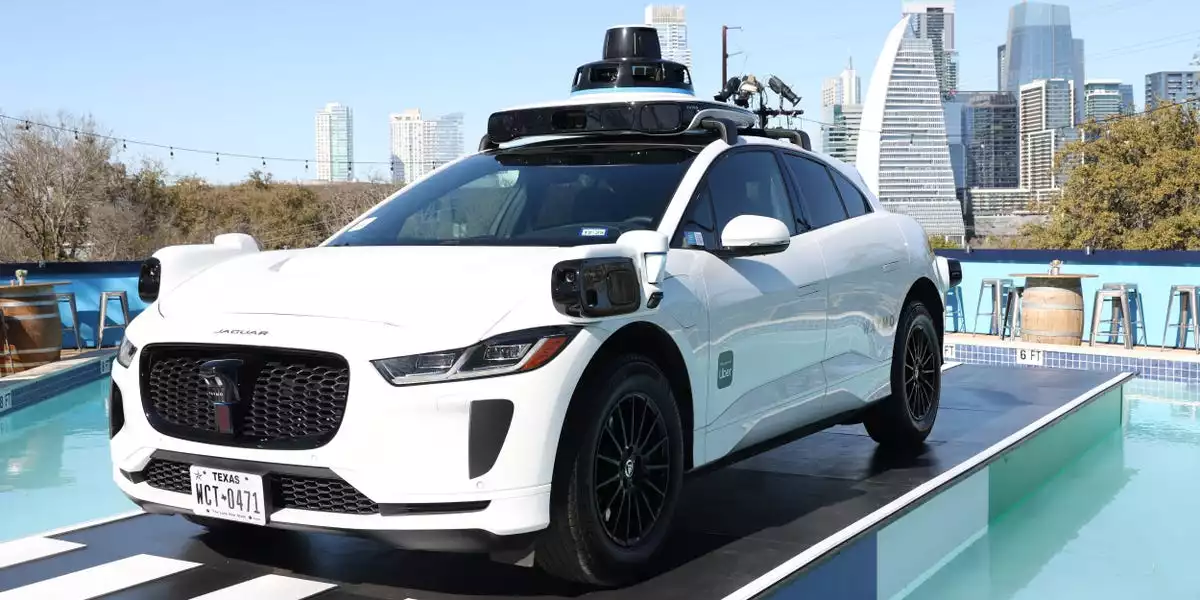
Uber’s latest foray into autonomous vehicles, marked by the launch of a safety-driver–supervised robotaxi service in Dallas, signals a pivotal evolution in the ride-hailing giant’s strategy. This move—executed in partnership with Avride and leveraging Hyundai’s Ioniq 5 EV platform—arrives at a moment when the competitive landscape of self-driving mobility is both crowded and rapidly shifting. Dallas, now Uber’s third U.S. testbed for autonomous rides, becomes a crucible for the company’s asset-light, federated approach to autonomy, even as Alphabet’s Waymo accelerates its own multi-city expansion targeting the same region.
The Federated Model: Orchestration Over Ownership
Uber’s pivot from in-house autonomous R&D to a partnership-driven model is not merely a tactical retreat from the capital intensity of building self-driving cars. It is, in fact, a calculated bet on the power of orchestration. By treating each autonomous vehicle (AV) fleet—whether operated by Avride, Waymo, or WeRide—as a modular supply node within its vast marketplace, Uber is positioning itself as the connective tissue of urban mobility. The company’s focus is on aggregating demand, optimizing routing, and managing payments, while outsourcing the heavy lifting of vehicle autonomy, capital expenditure, and regulatory certification to specialized partners.
This federated autonomy thesis resembles the Android ecosystem: heterogeneous hardware, centralized demand, and a platform owner that sits atop the value chain. Uber’s multi-partner approach hedges against single-vendor failure risk, creates pricing leverage, and, crucially, allows the company to diversify its technology pipeline—a prudent move amid rising geopolitical and supply-chain uncertainties. Deals with global players like Pony.ai and WeRide (notably in Abu Dhabi) underscore Uber’s intent to insulate itself from regional volatility and to tap into a broader spectrum of autonomy innovation.
Economics, Technology, and the Sun Belt Advantage
The economics of this new robotaxi era are defined by capital-expenditure arbitrage and operational elasticity. By shifting vehicle ownership and depreciation to AV specialists, Uber limits its own balance-sheet exposure at a time when high interest rates and uncertain robotaxi cash-flow timelines make such prudence essential. The trade-off: partners claim a larger share of gross booking value, pressing Uber to demonstrate that incremental AV supply genuinely enhances marketplace liquidity and take-rate.
Technologically, the convergence of sensor stacks—LiDAR, radar, and camera arrays—across leading AV platforms is driving down costs, aided by semiconductor over-capacity and falling silicon carbide prices. Hyundai’s E-GMP architecture, with its native 800-volt charging, enables the high utilization rates that are critical for robotaxi profitability. Retaining safety drivers, for now, offers a dual benefit: it accelerates real-world data capture under commercial insurance coverage and satisfies Texas’s permissive yet data-driven regulatory regime, while shortening the validation cycle for Dallas’s unique traffic patterns.
The geographic clustering of AV launches in Sun Belt metros like Dallas, Austin, and Atlanta is no accident. Favorable regulatory environments (Texas SB 2205, Florida SB 2020), benign weather, and wide arterial roads create a “barbell” of regulatory pull and operational push. Early movers enjoy a data advantage, but this also delays exposure to the snow and ice edge cases that will be essential for scaling robotaxi services to northern markets.
Platform Economics and the Next Phase of Autonomy Competition
Uber’s ambition is to abstract away the underlying differences between AV vendors, creating an API-normalized “autonomy layer” that can seamlessly integrate diverse fleets. This approach not only enhances supply flexibility but also positions Uber as a meta-network, owning the customer relationship and the invaluable data exhaust generated by every trip. Each completed AV ride feeds Uber’s cross-vertical data lake—spanning rides, deliveries, and freight—sharpening its predictive algorithms and operational optimization in ways that pure-play AV firms cannot easily replicate.
Yet, this federated model is not without risk. Success could commoditize autonomy suppliers, potentially driving industry consolidation or exclusive-access contracts. Meanwhile, regulatory diplomacy will be paramount: as Dallas becomes a proving ground, Uber must navigate evolving data-sharing mandates and AV-specific congestion pricing, even as municipalities seek revenue parity with traditional ride-hailing.
The strategic stakes are high. Uber’s Dallas deployment is less a local experiment than a proof-point for a global thesis: that the future of mobility will be won not by those who build the smartest car, but by those who orchestrate the most resilient, scalable, and data-rich platform. As the industry pivots from pure technology races to platform economics and ecosystem control, the outcome in Dallas may well foreshadow the next decade of urban transportation.

 By
By

 By
By
 By
By
 By
By
 By
By
 By
By


 By
By


 By
By







