


Washington’s Clean-Energy U-Turn and the New Cost of Policy Volatility
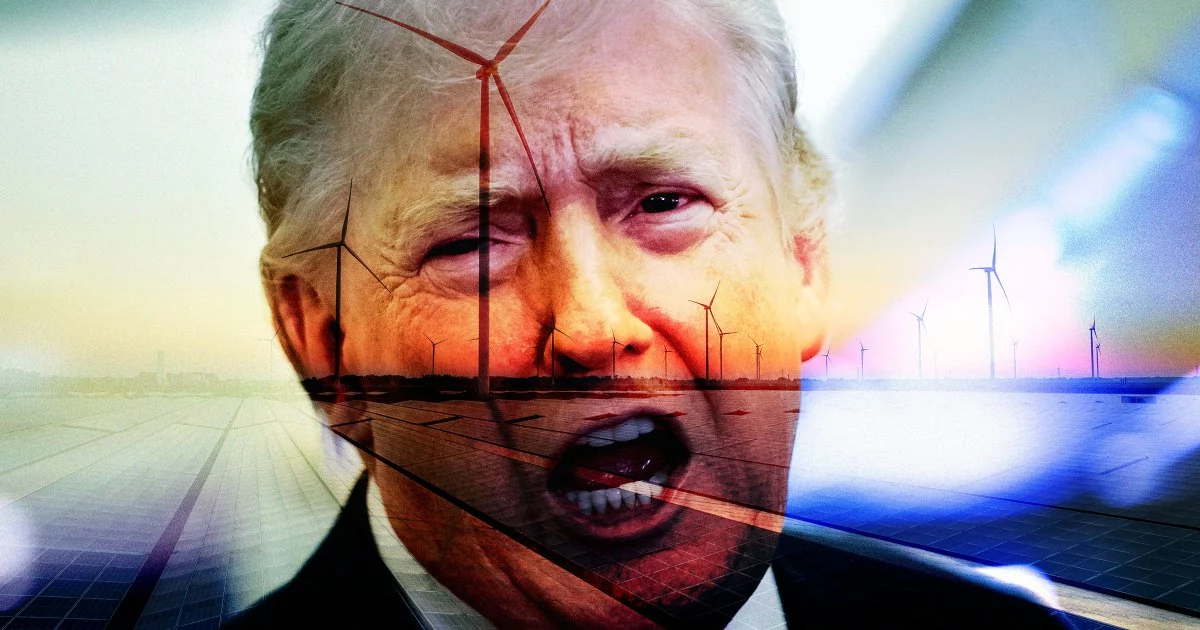
The U.S. renewable-energy sector is confronting a sharp re-pricing of political risk under President Trump’s second term, as the administration moves to unwind more than $600 billion in tax incentives that had supported electric vehicles, solar, and wind deployment. In parallel, targeted breaks for oil and gas producers signal a deliberate rebalancing toward legacy hydrocarbons—an approach that may deliver near-term relief to incumbent industries while reshaping capital allocation across the power, transport, and industrial landscape.
The market impact is not merely theoretical. The reported near-$1 billion settlement to cancel a planned offshore wind project off the East Coast functions as a high-visibility marker of the new regime: contracts, permitting expectations, and long-cycle infrastructure bets can be reversed—at scale—by political decision. For global investors and developers, particularly international partners, the episode raises a practical question: how should U.S. policy credibility be priced into project finance when the regulatory and fiscal foundation can shift dramatically between administrations?
For corporate boards and institutional investors, this is the central disruption. Clean-energy economics have improved for years through technology learning curves and scale, but the sector’s cost of capital remains sensitive to policy stability. When incentives are withdrawn abruptly, the penalty is not only fewer projects—it is a broader chilling effect on:
- Long-duration infrastructure investment (offshore wind, transmission buildout, grid-scale storage)
- Supply-chain localization plans that depend on predictable demand signals
- Workforce development tied to multi-year project pipelines and manufacturing commitments
In this environment, energy policy becomes less a technocratic debate and more a determinant of whether the U.S. is perceived as a reliable venue for long-horizon industrial investment.
Energy Security Returns—Via Hormuz, Not a Climate White Paper
As Washington pivots back toward fossil-fuel preference, geopolitics is delivering an uncomfortable reminder of what hydrocarbon dependence entails. Heightened tensions with Iran and the persistent vulnerability of Gulf infrastructure and shipping routes—especially the Strait of Hormuz—underscore that oil and gas are not just commodities; they are strategic assets exposed to chokepoints, sabotage, sanctions, and conflict spillovers.
This matters for U.S. energy strategy even in a world where domestic production is strong. Global oil pricing is set at the margin, and shipping disruptions or infrastructure attacks can transmit volatility rapidly into:
- Fuel prices and consumer inflation expectations
- Industrial input costs for chemicals, manufacturing, and logistics
- Defense and national security planning, where energy supply assurance remains foundational
Against that backdrop, the renewable-energy argument is increasingly being reframed away from climate messaging alone and toward resilience and risk diversification. Distributed solar, storage, microgrids, and grid-edge management do not eliminate exposure to global markets, but they can reduce the economy’s sensitivity to external shocks by expanding domestic, modular generation capacity.
The strategic contrast is becoming clearer: centralized hydrocarbon supply chains are efficient but exposed; decentralized clean-energy systems can be less geopolitically entangled, particularly when paired with storage and demand response. The policy question is whether the U.S. will treat that resilience dividend as a national asset—or as collateral damage in a broader ideological contest over energy.
Clean-Energy Capital Learns to Fight Like an Incumbent Industry
One of the most consequential developments is not technological—it is political. High-profile investors, including Ripple co-founder Chris Larsen and the Clean Break Fund, are reportedly escalating campaign spending to target elected officials seen as obstructing renewables, including seven-figure ad buys aimed at Rep. Chip Roy (R-TX) and involvement in high-stakes contests such as the Texas attorney general race.
This marks a maturation of clean-energy advocacy into a more disciplined, power-aware model—one that resembles the tactics long associated with oil and gas: targeted expenditures, message testing, coalition building, and pressure applied at the level of individual races rather than abstract national debate. The implications are twofold:
- Policy outcomes may become more contested at the district and state level, where permitting, interconnection, and utility regulation often decide project viability.
- The clean-energy sector is signaling it will defend its economic interests as aggressively as incumbents, reframing renewables as an industry with jobs, tax base, and local economic multipliers—not merely an environmental cause.
Perhaps the most underappreciated data point in the current debate is political, not financial: surveys indicating roughly three-quarters of Trump voters support expanded solar investment. That suggests a latent cross-partisan constituency, especially for distributed energy that aligns with consumer choice, property rights, and local reliability. If that support can be translated into durable coalitions—farmers leasing land for solar, rural co-ops modernizing grids, manufacturers seeking stable power pricing—the politics of renewables may prove less ideologically fixed than Washington rhetoric implies.
China’s Scale Advantage Widens as the U.S. Debates the Rules of the Game
While U.S. policy oscillates, China continues to compound its advantage in clean-energy manufacturing and deployment. The ability to produce more than one terawatt of solar panels annually is not simply a statistic—it is a demonstration of industrial scale that drives down unit costs, accelerates iteration, and tightens control over upstream inputs and downstream pricing power. China’s experimentation with airborne wind turbines further signals a willingness to pursue unconventional pathways to capture future categories of generation technology.
For U.S. firms, the challenge is not only competition; it is strategic dependency. Even if American demand rebounds, a supply chain dominated by a geopolitical rival creates exposure to:
- Price and margin pressure for domestic developers and installers
- Trade-policy whiplash (tariffs, restrictions, exemptions) that complicates procurement
- National security concerns around critical components and grid infrastructure
The emerging picture is a three-way contest among policy credibility, geopolitical risk, and industrial capacity. The U.S. can subsidize hydrocarbons and still face global oil volatility; it can cut clean-energy incentives and still import the technologies it needs; it can pursue energy independence rhetorically while ceding manufacturing leadership to competitors that treat clean tech as a strategic export industry.
What happens next will be shaped less by any single election-cycle headline than by whether clean-energy advocates can convert their new political sophistication into stable rules—and whether U.S. leaders can reconcile short-term energy politics with the long-term imperatives of competitiveness, resilience, and national power in an electrifying global economy.

 By
By
 By
By
 By
By
 By
By

 By
By









