
A dietitian’s shopping list as a window into Trader Joe’s private-label engine
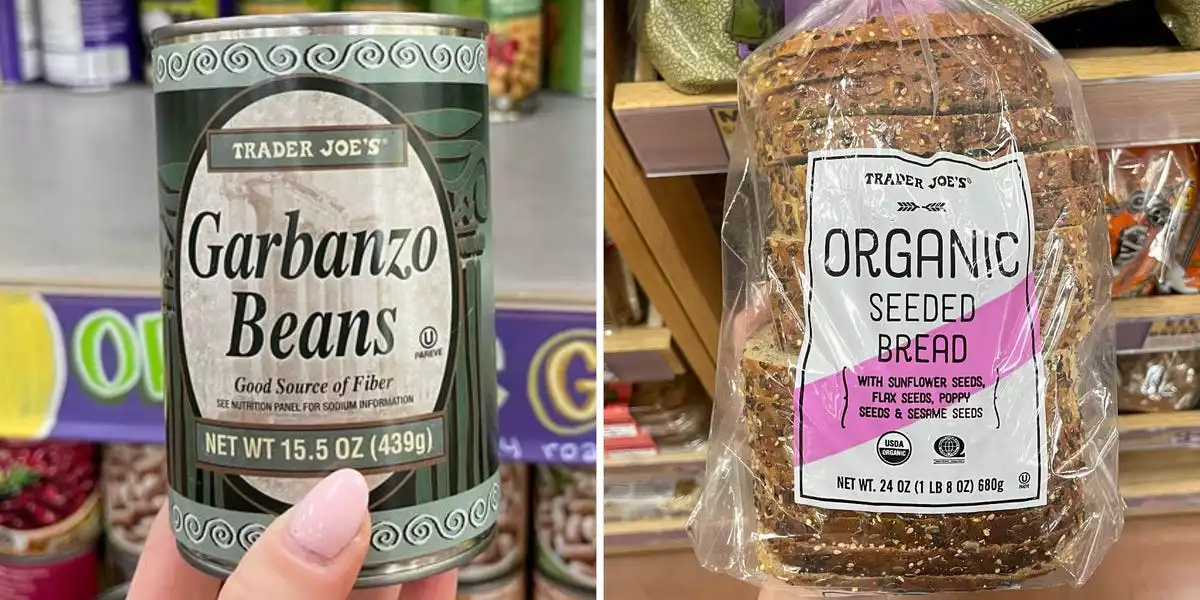
Registered dietitian Serena Pratt’s curated Trader Joe’s picks—roasted-garlic hummus, plain nonfat Greek yogurt, strawberry kefir, frozen rice medley, canned garbanzo beans, steamed lentils, a sesame-crunch salad kit, frozen turkey burgers, and nutrient-dense add-ons like edamame and frozen fruit blends—read like practical meal-planning advice. Yet they also map neatly onto the retailer’s defining business strategy: a tightly controlled, predominantly private-label assortment designed to deliver convenience, perceived quality, and price discipline.
What stands out is how these items cluster around modern consumer priorities without requiring premium complexity. Many are:
- Shelf-stable, canned, or frozen, reducing spoilage risk and enabling predictable replenishment
- High-protein or high-fiber, aligning with satiety, weight management, and metabolic health narratives
- Fermented or probiotic-adjacent (Greek yogurt, kefir), reflecting the mainstreaming of gut health
- Modular “platform foods” (rice medley, legumes, salad kits) that consumers can customize quickly
For Trader Joe’s, this is more than merchandising. It’s a repeatable playbook: curate a limited set of products that feel discovery-driven in-store, while quietly optimizing the economics behind the shelf.
Why private label remains a durable moat in an inflation-sensitive grocery market
Trader Joe’s long-running reliance on private label functions as a margin stabilizer and brand differentiator in a sector where national brands often compete through price promotions and expensive advertising cycles. By controlling product specifications, packaging, and sourcing relationships, the retailer can shape value perception while sidestepping some of the most punishing dynamics of branded CPG competition.
Several structural advantages emerge from the product mix Pratt highlights:
- Pricing power through differentiation: A proprietary hummus or salad kit is harder to comparison-shop than a nationally branded equivalent, reducing direct price wars.
- Margin management: Private-label economics typically allow retailers to capture more value per unit, especially when the assortment is curated and turns quickly.
- Operational simplicity: A limited SKU count lowers complexity across procurement, planograms, and store labor—an underappreciated advantage as wage pressure persists.
- Waste reduction: Emphasis on frozen and shelf-stable items can reduce shrink, a critical lever in grocery profitability.
This is also a strategic hedge against uneven consumer sentiment. When inflation squeezes discretionary spending, shoppers often “trade down” from national brands—but still want products that feel intentional and health-forward. Trader Joe’s private label is positioned to capture that trade-down without signaling compromise.
Cold-chain modernization and the quiet technology race behind “easy, healthy” staples
Pratt’s list leans heavily into frozen and refrigerated staples—rice medleys, frozen fruit, edamame, turkey burgers, peppers and onions, kefir, yogurt—which underscores a broader industry shift: the grocery battleground is increasingly defined by cold-chain resilience, forecasting accuracy, and waste-aware logistics.
For retailers, frozen and chilled categories are no longer just convenience; they are infrastructure-dependent growth engines. The strategic implications include:
- Investment in hardened cold-chain capacity: More robust refrigeration, regional distribution nodes, and temperature-controlled handling reduce spoilage and protect product integrity.
- Demand forecasting as a margin lever: AI-assisted forecasting can reduce out-of-stocks (lost sales) and over-ordering (waste), particularly for high-velocity refrigerated items.
- Micro-fulfillment and modular warehousing: As consumer expectations tilt toward faster availability, localized fulfillment can compress time-to-shelf and improve inventory turns.
- Automation in distribution: Robotic palletizing and smarter case-picking can offset labor constraints while improving throughput consistency.
Trader Joe’s has historically resisted third-party e-commerce and broad delivery models, preferring an in-store “treasure hunt” experience. But the operational logic of its assortment—especially the frozen and ready-to-assemble components—fits naturally with click-and-collect, reserve-ahead, or limited digital ordering if the company chooses to expand. The strategic question is not whether technology can support that shift, but whether it can do so without diluting the brand’s curated, discovery-first identity.
Gut health goes mainstream—and grocery becomes a data-rich health interface
Greek yogurt and kefir are not just popular items; they are signals of the functional-food convergence now shaping product development and consumer decision-making. Gut health has moved from niche wellness circles into everyday shopping behavior, reinforced by social media, clinician content, and a broader cultural shift toward preventive health.
This creates a new competitive frontier: retailers that can connect food choices to outcomes—credibly and responsibly—stand to deepen loyalty. The opportunity set for business and technology leaders spans:
- Personalized recommendations: Digital prompts that translate intent into action (e.g., “add lentils for extra fiber” or “pair hummus with cucumbers for a higher-fiber snack”).
- Partnerships with health-tech ecosystems: Integrations with nutrition-tracking apps, telehealth providers, or employer wellness programs can turn grocery baskets into longitudinal insights.
- Private-label innovation pipelines: Collaborations with food-tech startups working on shelf-stable probiotics, fermentation, plant proteins, or AI-optimized flavor development can accelerate differentiated launches.
- Privacy-preserving analytics: As personalization grows, so does regulatory and reputational risk—making consent, data minimization, and secure analytics central to sustainable innovation.
Pratt’s list is, on the surface, a set of practical staples for busy consumers. At a strategic level, it reflects how modern grocery winners are being built: private-label discipline, cold-chain competence, and health-forward product architecture that fits real life. The retailers that thrive next won’t merely stock “better-for-you” items—they’ll operationalize them, forecast them, fulfill them efficiently, and increasingly translate them into trusted, privacy-aware consumer value.

 By
By
 By
By

 By
By
 By
By

 By
By
 By
By