


A Mother’s Day promotion that doubles as a platform land-grab in smart nature tech
Birdfy’s Mother’s Day pricing push is more than a seasonal retail moment—it reads like a deliberate bid to accelerate adoption of a connected wildlife ecosystem that blends IoT hardware, AI bird identification, cloud video services, and solar-powered autonomy. The company is using promotional pricing to widen the top of its funnel while positioning premium devices as the on-ramp to more sophisticated analytics, including its forthcoming OrniSense AI layer.
The tiered lineup is calibrated to meet consumers at multiple price points:
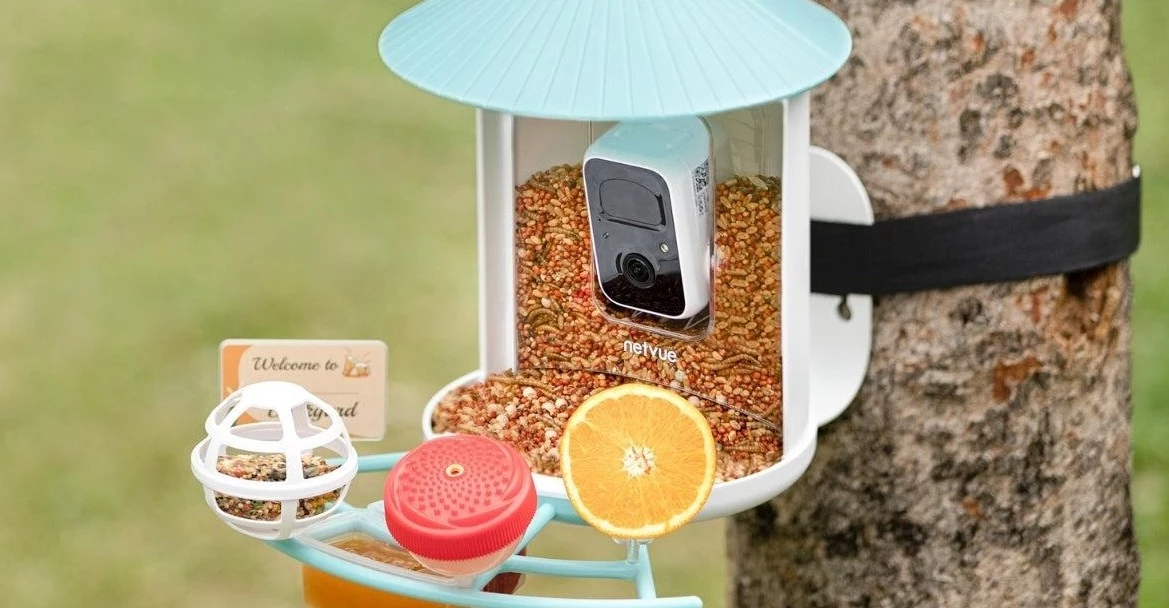
- Birdfy Feeder Metal 2 (4K) at $259.99 (–$50): a premium, weather-ready feeder with 4K video, metal housing, built-in solar charging, and planned compatibility with OrniSense AI for deeper bird analytics.
- Birdfy Feeder (1080p) at $99.99 (–$100): a mass-market entry with 155° field of view, color night vision, a rechargeable battery (claimed ~3 months), an optional solar module ($29.99), and cloud clips (20 seconds for 30 days). AI species identification is introduced via one week free, then subscription.
- Birdfy Bath Pro at $259.99 (–$90): a dual-lens smart birdbath that extends the concept beyond feeders into broader backyard “habitat” monitoring.
- Feeder Rookie at $49.99: an entry-level gateway product with AI recognition and optional solar—effectively a low-friction trial for the ecosystem.
Taken together, the portfolio signals a company optimizing for household penetration: get more devices into more yards, then deepen engagement through software features, storage, and analytics.
Where Birdfy’s product design mirrors the broader shift to edge AI + outdoor IoT
Birdfy’s feature set reflects a maturing consumer IoT market that increasingly values real-time interpretation, not just recording. The strategic emphasis is visible in two technical directions: edge intelligence and energy independence.
Key technology themes emerging from the lineup include:
- Edge AI as a differentiator: When identification and event detection move closer to the camera, users get faster insights and fewer “false positives,” while the vendor reduces cloud compute costs and bandwidth dependency. The Metal 2’s positioning—premium build, 4K, and OrniSense readiness—suggests Birdfy is preparing for a future where the device is not merely a sensor, but an on-site analyst.
- Solar as an expectation, not an accessory: Outdoor smart devices live or die by maintenance burden. Optional solar panels and built-in solar charging reduce friction, improve retention, and align with consumer demand for sustainable, low-touch devices. This is especially relevant for birdwatching, where the experience is meant to be calming and continuous—not interrupted by battery swaps.
- Multi-camera “habitat coverage”: A dual-lens birdbath expands the narrative from a single feeding station to a backyard ecosystem. That matters because it increases the number of meaningful moments captured—bathing, drinking, social behavior—creating more reasons to open the app and, ultimately, more reasons to subscribe.
The result is a product strategy that treats the backyard as a data-rich environment—one where the consumer’s emotional payoff (seeing wildlife up close) is tightly coupled with the company’s technical payoff (more labeled imagery, more model improvement opportunities, more service attach).
The business model underneath: discounted hardware, recurring software, and the economics of attention
The pricing architecture strongly resembles the classic “razor-and-blades” playbook in consumer technology: reduce the upfront barrier, then monetize ongoing usage. Birdfy’s steep discount on the 1080p feeder—cut to $99.99—is particularly telling. That price point is giftable, impulse-friendly, and competitive with non-smart feeders, while still serving as a conduit into paid services.
Several commercial dynamics stand out:
- Subscription-led monetization: The one-week AI identification trial is a familiar SaaS pattern—let users experience the “magic,” then convert them to recurring revenue. Cloud clips and AI recognition are not just features; they are retention levers.
- Feature tiering as segmentation: 1080p vs 4K, optional vs built-in solar, single-lens vs dual-lens—these are not merely specs. They are price discrimination tools that let Birdfy capture value across different willingness-to-pay segments.
- Experiential gifting as demand catalyst: Mother’s Day promotions aren’t only about volume; they are about positioning. Smart feeders and wildlife cameras sell an experience—quiet, personal, and repeatable—at a time when many consumers prefer gifts that feel meaningful and interactive rather than ornamental.
The strategic bet is that once a household starts receiving AI-labeled wildlife clips, the product becomes part of a daily routine. In subscription economics, routine is the precursor to renewal.
Data, trust, and the next competitive frontier for AI wildlife cameras
Beyond hardware margins and subscription revenue sits a longer-term asset: wildlife imagery and metadata at scale. If Birdfy’s installed base grows, the company accumulates a dataset that can improve model accuracy and potentially support adjacent opportunities—ranging from biodiversity monitoring to partnerships with education and conservation organizations.
At the same time, scaling camera-based AI in residential outdoor spaces raises non-trivial governance questions. The companies that win this category are likely to be those that treat privacy, consent, and transparency as product features—not legal afterthoughts.
Forward-looking considerations that will shape Birdfy’s trajectory include:
- Data stewardship and user trust: Clear user controls, retention policies, and transparent AI training disclosures can become competitive advantages as consumers grow more cautious about always-on cameras and cloud storage.
- Scientific credibility of advanced analytics: As OrniSense-style features expand into richer interpretations (such as condition or demographic inference), Birdfy will need rigorous validation to avoid overclaiming and to maintain credibility with both hobbyists and potential institutional partners.
- Ecosystem partnerships: Integration with smart-home platforms (voice assistants, security ecosystems) could expand distribution and daily utility, while alliances with NGOs or educational institutions could strengthen brand legitimacy and open B2B channels.
- Subscription fatigue risk: With consumers increasingly selective about recurring payments, Birdfy’s long-term retention will depend on whether paid tiers deliver unmistakable value—better identification, smarter alerts, richer insights—without feeling like essential functionality is being held hostage.
Birdfy’s Mother’s Day lineup ultimately illustrates a broader truth in consumer technology: the next wave of smart devices won’t compete on connectivity alone, but on interpretation, autonomy, and the compounding value of data—turning a backyard hobby into a durable, software-powered relationship.

 By
By
 By
By


 By
By
 By
By

 By
By







