
The rise of “tokenmaxxing” and what it signals about AI’s new operating reality
A subtle but telling workplace metric is spreading through Silicon Valley: measuring productivity by AI tokens consumed—a practice some employees have started calling “tokenmaxxing.” On its face, it’s a quirky proxy for modern knowledge work: more prompts, more iterations, more automated drafting, more “work” done. But beneath the meme-like label sits a serious shift in enterprise behavior and vendor economics.
Tokens are becoming the metered unit of AI labor, analogous to minutes on a phone plan or kilowatt-hours on an electric bill. As major AI providers such as OpenAI and Anthropic move away from flat-rate or “unlimited” usage and toward pay-as-you-go token billing, organizations are being pushed—sometimes abruptly—into a world where AI usage is no longer an ambient benefit but a line-item expense that can be audited, capped, and optimized.
This is why token consumption is creeping into management dashboards. When AI becomes both indispensable and expensive, companies naturally seek measurable controls. The risk, however, is that token volume can become a misleading stand-in for value—rewarding verbosity, experimentation, or tool-chaining rather than outcomes like revenue impact, cycle-time reduction, customer satisfaction, or defect rates. The emergence of tokenmaxxing is less a fad than a symptom: AI has crossed from novelty to infrastructure, and infrastructure always gets metered.
Compute is no longer “cheap enough”: the economics behind the pricing pivot
The industry’s pricing shift is not simply a monetization choice; it reflects a structural change in AI cost curves. The era of abundant, near-free compute—subsidized by venture capital, promotional credits, and aggressive land-grab strategies—is giving way to an environment defined by capacity constraints and rising marginal costs.
Several forces are converging:
- Compute intensification: Frontier model development and high-quality inference increasingly demand dense GPU/TPU clusters and specialized accelerators. With Moore’s Law tapering, the historical expectation that compute gets cheaper per unit of performance is weakening.
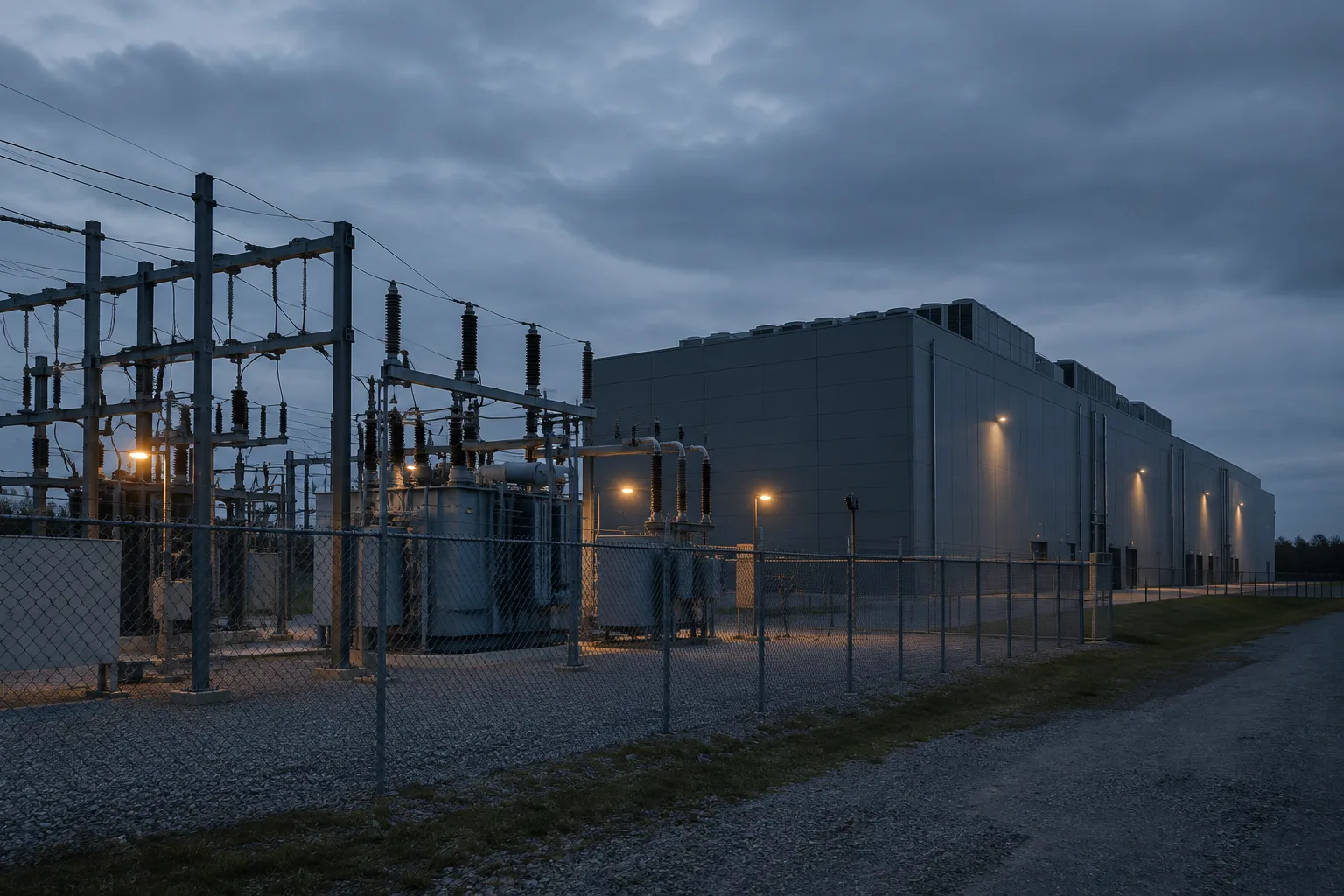
- Data-center bottlenecks: AI-optimized facilities require liquid cooling, higher power density racks, and upgraded networking, raising both CAPEX and OPEX. Power availability and grid constraints are becoming strategic variables, not background assumptions.
- Energy and supply-chain sensitivity: Elevated energy prices, semiconductor supply volatility, and financing conditions can all inflate the cost base—especially for firms scaling infrastructure aggressively.
Against this backdrop, Gartner’s forecast that AI providers may need to generate nearly $2 trillion in annual revenue by 2029 to sustain current growth trajectories reads less like hype and more like a warning about the scale of the economic machine being built. If token usage must expand by orders of magnitude to meet demand, then either efficiency must improve dramatically, or pricing must rise, or both. Otherwise, margins compress and the business model strains under its own success.
This is the strategic impasse now facing AI leaders: keep pushing the frontier—which is compute-hungry and capital-intensive—or retreat to more affordable, narrower offerings that can be delivered sustainably at scale.
Efficiency becomes the competitive battleground: from model size to model economics
As token billing becomes the norm, the industry’s center of gravity shifts from “bigger is better” to “better per token.” The next wave of differentiation is likely to be defined by unit economics, not just benchmark scores.
Key efficiency directions gaining prominence include:
- Quantization and pruning to reduce compute requirements while preserving acceptable performance
- Low-rank adaptation (LoRA) and related fine-tuning methods that avoid full retraining costs
- Knowledge distillation to transfer capabilities from large models into smaller, cheaper ones
- Sparsity and routing techniques that activate only parts of a model per request
- Inference optimization such as dynamic batching, caching, early-exit architectures, and token caps
These approaches can materially reduce per-request costs, but they introduce trade-offs: engineering complexity, new failure modes, and sometimes degraded performance on edge cases. Still, as AI becomes embedded in high-volume workflows—customer support, sales enablement, software development, analytics—the economics of inference will increasingly dictate product design. In practical terms, enterprises will demand:
- Predictable spend controls (budgets, alerts, throttles, and governance)
- Workload-aware routing (use the smallest model that meets the task)
- Clear ROI attribution (cost per resolved ticket, cost per qualified lead, cost per shipped feature)
Tokenmaxxing, in this light, is a crude early attempt to operationalize AI usage. The more mature endpoint is FinOps for AI: disciplined measurement of cost, performance, and business impact across models, teams, and vendors.
The strategic endgame: pricing architectures, consolidation pressure, and ecosystem power
As AI becomes more capital-intensive—echoing industries like telecom and utilities—market structure may tilt toward players with deep balance sheets, preferential chip access, and energy-secured data-center footprints. That dynamic raises the likelihood of industry consolidation, while also creating openings for open-source ecosystems and specialized providers.
Several strategic patterns are emerging:
- Pricing architecture evolution: Expect hybrid models—baseline subscriptions, metered token tiers for advanced workloads, and enterprise contracts with committed-use discounts. Consumer experiences may reintroduce ad-supported or partner-subsidized compute to preserve accessibility.
- Vertical integration and partnerships: Custom silicon, preferred hyperscaler capacity, and energy procurement deals can become durable advantages. Yet over-integration risks rigidity as workloads diversify across clouds, on-prem, and edge.
- Portfolio rationalization: Vendors will balance flagship frontier models with lightweight, domain-specific, or on-device variants to expand markets without exploding token costs.
- Ecosystem moats: Open-source LLMs and platforms (Hugging Face, Llama and others) pressure proprietary pricing, while enterprises that embed AI deeply into workflows build stickier, data-rich environments that are harder to displace.
The deeper story behind tokenmaxxing is not that companies have discovered a new productivity KPI—it’s that AI has entered its metered era, where every additional capability must justify its compute footprint. The winners will be those who treat tokens not as a vanity metric, but as a scarce resource to be engineered, governed, and converted into measurable business value.

 By
By
 By
By
 By
By

 By
By
 By
By
 By
By
 By
By