

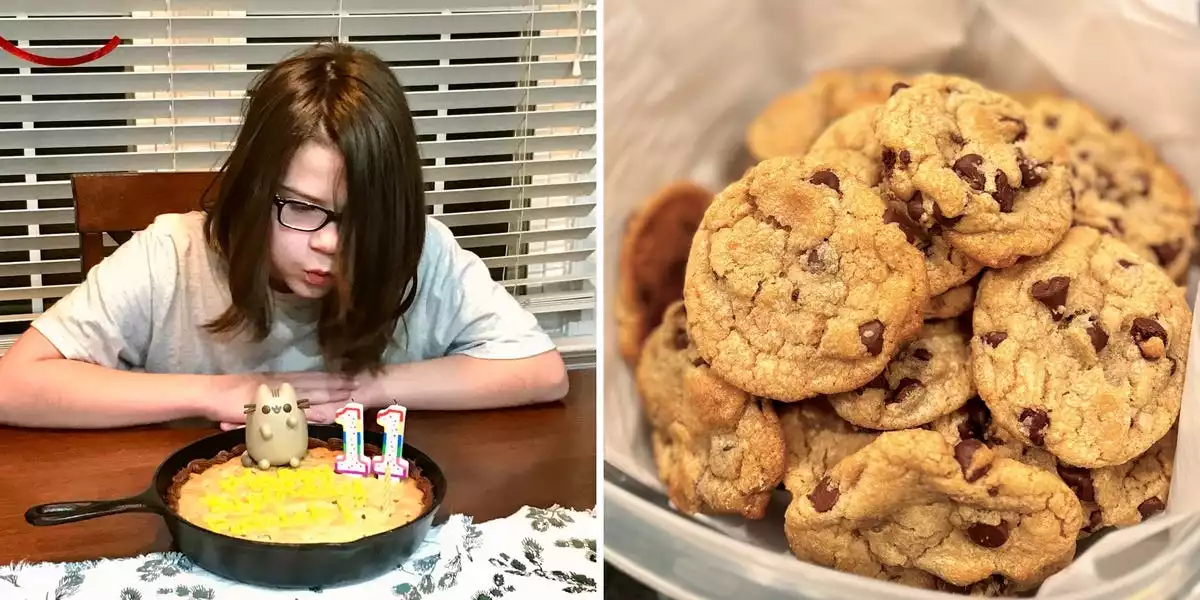

A 25-year cookie recipe as a case study in emotional brand equity
A homemaker’s chocolate-chip cookie—born from a women’s magazine clipping and refined over decades—reads like a small domestic story. Yet, viewed through a business-and-technology lens, it functions as a precise illustration of how emotional resonance becomes a durable differentiator in the modern consumer economy.
The recipe’s evolution is not merely culinary. It is narrative engineering through repetition: school lunches, road trips, holiday rhythms, and the quiet moments when children seek comfort. Over time, the cookie becomes less a product than a ritualized experience—so potent that an 11-year-old requests a giant cookie instead of a birthday cake. That substitution is telling: when a family chooses a familiar sensory anchor over a conventional celebration format, it signals that the “brand” of the cookie has surpassed the category norms.
For consumer packaged goods (CPG) leaders, this is the strategic takeaway: taste is table stakes; meaning is margin. The cookie’s “value proposition” is inseparable from memory, identity, and belonging. This aligns with broader market dynamics, including reported findings such as Nielsen’s indication that 55% of consumers are willing to pay more for products that evoke positive emotions or memories—a data point that underscores why nostalgia and comfort have become premium positioning tools across food, beverage, and household staples.
Key implications for brand strategy and product marketing:
- Emotional loyalty outlasts functional differentiation: competitors can copy ingredients, but not a family’s story.
- Ritual creates retention: repeated use occasions (lunchboxes, holidays) build habit loops that resemble subscription economics.
- “Best in the world” is often a narrative claim: consumers frequently rank products by context, not objective performance.
Iterative personalization: the “software mindset” arrives in home baking
The cookie’s step-by-step modifications—bread flour, extra vanilla, doubled chocolate chips, omitted nuts—mirror a pattern familiar to technology companies: continuous iteration driven by user feedback. In this case, the “users” are her sons, and the “product manager” is a parent responding to real-time preference data. It is co-creation in its most authentic form.
This is not a quaint exception; it is a consumer behavior model that has scaled across digital platforms. Recipe-sharing communities, creator-led food channels, and smart kitchen ecosystems increasingly enable what amounts to A/B testing for taste—adjusting ratios, bake times, textures, and presentation until a household reaches its own optimized version.
For CPG and food-tech operators, the strategic parallel is direct: personalization is no longer a niche feature; it is an innovation pipeline. Companies that treat consumers as collaborators can shorten development cycles and expand addressable segments without bloating SKU counts.
What this suggests for product development and go-to-market design:
- Open innovation can be structured: brands can invite “tweak culture” rather than fight it, using digital communities to surface winning variants.
- Micro-segmentation becomes practical: instead of one “perfect” cookie, brands can support multiple preference clusters (chewy vs. crisp, nut-free, extra-chocolate).
- Agility beats perfection: iterative improvement—borrowed from software—can outperform traditional long-cycle R&D, especially in trend-sensitive categories like indulgent snacks.
The memory economy: when recipes become digital assets and identity infrastructure
As the sons near adulthood, the author’s decision to formally document the recipe is more than prudent household administration. It reflects a broader shift toward digital archiving as legacy-building—a hallmark of the emerging “memory economy,” where photos, journals, letters, and personal narratives become valuable artifacts.
Technology companies have already recognized that memory is sticky: it drives engagement, retention, and willingness to pay. The next frontier is not simply storing memories, but certifying provenance and enabling transfer—from family to family, or from creator to consumer. This is where concepts like blockchain-based authentication, tokenized collectibles, and even NFTs (however uneven their consumer adoption has been) enter the conversation: they offer mechanisms to prove origin, track ownership, and preserve attribution for culturally meaningful items, including recipes.
For brands, the opportunity is to connect products to story in ways that are verifiable, portable, and immersive:
- QR codes or NFC tags on packaging can link to audiovisual narratives—origin stories, baking tutorials, family traditions—turning a commodity into an experience.
- Branded memory platforms can invite user-generated content (photos, “first bake” stories), creating a community archive that compounds over time.
- AI curation can transform scattered moments into structured keepsakes—timelines, recipe journals, or personalized “family cookbook” compilations.
The underlying business logic is clear: when a product becomes a vessel for identity, it becomes harder to replace—and easier to premiumize.
Where this points next: AI-personalized taste, nostalgia-led wellness, and scalable “homegrown” IP
The cookie story also foreshadows where food, technology, and consumer behavior are heading. AI-augmented recipe personalization is poised to move from novelty to norm as smart ovens, connected scales, and kitchen apps mature. The likely trajectory is hyper-specific tuning—adjusting sweetness, texture, bake curves, and portioning based on household preferences and sensor feedback.
At the same time, the market is converging two forces that once seemed at odds: indulgent nostalgia and functional wellness. Expect growing demand for “feel-good” foods that also signal health utility—from ingredient swaps to functional add-ins—without sacrificing the emotional comfort that makes the product worth returning to.
For entrepreneurs and incumbents alike, there is also a monetization lesson embedded in this family narrative: high-emotion recipes can become scalable intellectual property. The path runs from kitchen ritual to:
- direct-to-consumer baking kits and subscriptions,
- limited-edition collaborations powered by community voting,
- boutique retail or hospitality partnerships that license “signature” recipes and their stories.
What begins as a cookie can become a platform—because the real product is not flour and chocolate, but the repeatable ability to make people feel something specific, reliably, and on demand.

 By
By
 By
By
 By
By

 By
By
 By
By

 By
By







