


Photorealistic text-to-video AI moves from novelty to infrastructure-grade capability
In less than three years, text-to-video generative AI has shifted from jittery, distorted experiments to sequences that can pass as documentary footage at a glance. The inflection point is not merely aesthetic; it is structural. As models converge on photorealism, synthetic video is becoming a general-purpose production layer—one that can translate a prompt into camera motion, lighting, facial performance, and scene continuity with startling coherence.
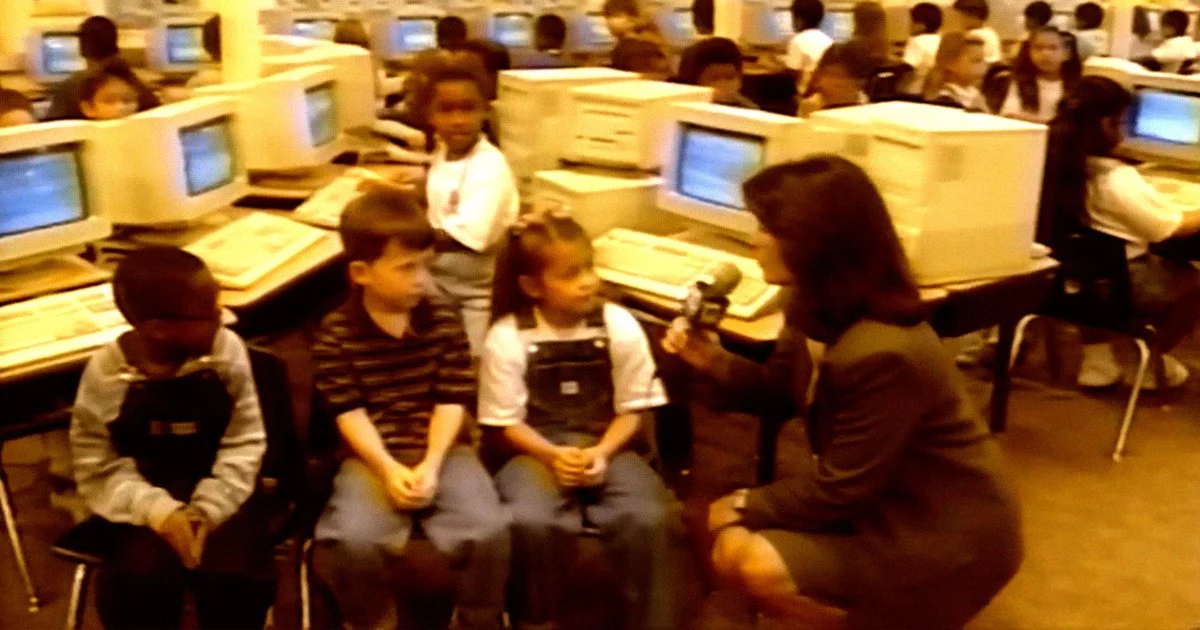
A widely circulated example comes from Black Forest Labs’ Flux 3, highlighted by Andreessen Horowitz partner Justine Moore, which can fabricate convincing “historical” clips—such as fictional 1990s schoolchildren offering predictions about future technology. The significance lies in how easily the output can be framed as archival truth. When a model can reproduce the grain, color science, and cultural cues of a specific era, the line between *period recreation* and *historical record* becomes dangerously thin.
Under the hood, several forces are compounding:
- Scalable diffusion and transformer architectures that better model motion, temporal consistency, and scene geometry
- Cheaper cloud compute and optimized training pipelines, accelerating iteration cycles and lowering the barrier to entry
- Real-time inference stacks and edge-capable GPUs, pushing text-to-video toward consumer apps rather than specialist studios
This is why the story is no longer “AI can generate video.” The story is that AI is becoming a video engine, and engines reshape industries.
The authenticity crisis: when synthetic footage becomes a geopolitical instrument
As realism improves, the risk profile changes from “misleading edits” to manufactured events. Critics warn of an Orwellian drift—less about censorship than about rewriting the evidentiary substrate of public life. The concern is not hypothetical: OpenAI disclosed state-sponsored disinformation campaigns in 2024, and authoritarian regimes have already demonstrated how generative media can be operationalized for propaganda, intimidation, and narrative control.
The strategic danger is twofold:
- Speed and scale: synthetic video can be produced faster than institutions can verify it, especially during crises.
- Plausible deniability: once deepfakes are common, authentic footage can be dismissed as fake, eroding accountability and trust.
This creates an “authenticity arms race” in which verification must evolve from artisanal fact-checking to cryptographic and automated provenance. Emerging countermeasures—watermarking, blockchain-backed registries, and AI forensics—are promising but unevenly adopted and technically fragmented. Watermarks can be stripped or degraded; registries require broad participation; detectors face adversarial pressure as models learn to evade them.
For democracies, the operational challenge is immediate: digital literacy and real-time detection must be treated as civic infrastructure, not optional media hygiene. For enterprises, the risk is equally acute: a fabricated executive statement, counterfeit product recall video, or synthetic “leak” can move markets before legal teams even assemble.
Media, venture capital, and the new economics of production
In media and entertainment, photorealistic text-to-video is not simply a new tool—it is a cost structure shock. Automated set design, virtual actors, and AI-driven post-production can compress timelines and reduce spending, with some projections pointing to 30–50% savings in targeted workflows. That kind of delta forces strategic decisions: defend legacy pipelines, or rebuild around AI-native production.
The disruption is likely to be uneven. High-end filmmaking will still prize human direction, taste, and performance nuance. But advertising, social content, product demos, training simulations, and localized variants of the same campaign are primed for automation. The competitive edge shifts toward teams that can orchestrate script-to-screen workflows, blending:
- Prompting and storyboarding
- Synthetic cinematography and motion generation
- Voice, music, and sound design integration
- Rapid iteration, A/B testing, and localization at scale
Venture capital is responding with a familiar pattern: capital concentrates where distribution and defensibility are clearest. Rather than funding only generalist foundation models, investors are increasingly backing verticalized generative video startups—historical reenactment, immersive training, e-commerce product visualization, and game-adjacent content pipelines. Strategic investors in telecom, gaming, and commerce are also exploring M&A and minority stakes to secure content throughput and data partnerships.
The labor market implications are substantial but not one-dimensional. Roles in editing, VFX, and voice work face pressure, yet new demand rises for AI supervision, model fine-tuning, rights clearance, and compliance. The most durable careers may belong to professionals who can combine creative judgment with technical fluency—knowing not only how to generate footage, but how to validate it, document it, and ship it responsibly.
Governance, regulation, and the playbook for resilient adoption
The policy environment is moving toward transparency mandates, with the EU AI Act poised to shape global norms around labeling, metadata, and traceability for synthetic media. In the United States, debate continues across agencies and Congress, but a patchwork regime risks regulatory arbitrage—where bad actors route production and distribution through the weakest jurisdictions.
For organizations adopting text-to-video AI, the most pragmatic posture is neither hype nor fear, but operational readiness. Several measures are emerging as baseline expectations for responsible deployment:
- Corporate governance and ethical guardrails
– Cross-functional AI ethics boards
– Misinformation risk impact assessments embedded into R&D and marketing workflows
- Verification-by-design
– Adoption of watermarking standards where feasible
– Integration of provenance checks into content management systems
– Participation in open forensic toolkits and standards bodies
- Crisis preparedness
– Red-team exercises simulating deepfake-driven incidents
– Executive training on rapid verification and authenticated decision-making
- Strategic positioning
– Investment in adjacent markets such as digital rights management and AI forensics
– Monitoring convergence with AR, virtual production, and interactive storytelling engines
The central tension remains unresolved but clarifying: the same photorealism that unlocks creative abundance also enables industrial-scale deception. The winners in this next phase of generative AI will not be defined solely by model quality or compute access, but by who can pair innovation with provenance, accountability, and a verification stack strong enough to keep reality legible.


 By
By

 By
By
 By
By
 By
By
 By
By
 By
By







