
Tesla’s valuation crossroads: from EV scale to “machine-AI” optionality
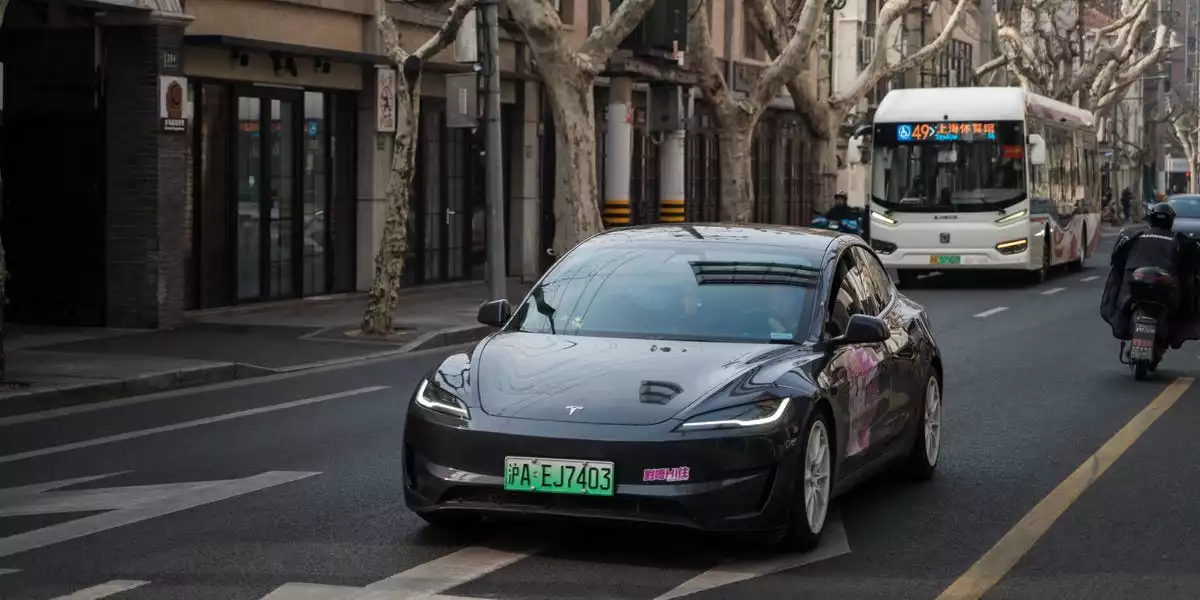
Tesla enters 2026 facing a familiar market test: how long investors will underwrite a future that is strategically compelling but financially unproven. With the company valued around $1.2 trillion and shares down roughly 12% year-to-date, the immediate signal is not collapse but recalibration—an adjustment to the gap between Tesla’s legacy identity as an EV manufacturing powerhouse and its newer ambition to be a platform company for AI, robotics, and autonomous mobility.
The pivot is visible in product and messaging choices. Tesla has reportedly discontinued certain offerings while emphasizing robotaxis, humanoid robotics, and on-board AI. The challenge for public-market investors is straightforward: these initiatives remain immaterial to current revenue and profit, yet they increasingly dominate the narrative that supports Tesla’s premium multiple.
From an operating perspective, Tesla is now being evaluated on two tracks at once:
- Core EV economics: pricing power, margins under competitive pressure, manufacturing efficiency, and demand elasticity in a maturing market.
- Frontier monetization: the timeline and credibility for autonomy, fleet-based AI learning, and robotics to become scalable businesses rather than perpetual R&D.
This dual-track identity can be powerful—if execution is crisp. It can also be destabilizing if the market perceives that the company is de-emphasizing near-term fundamentals before the next growth engine is ready to carry the weight.
SpaceX’s IPO gravity: a $2 trillion narrative with real backlog behind it
While Tesla absorbs the scrutiny that comes with being a liquid, widely held stock, SpaceX—still privately held—appears to be positioning for an eventual IPO that could reach a valuation as high as $2 trillion. The contrast is instructive. SpaceX is also a story stock in spirit, but it is anchored by a different kind of evidence: launch cadence, reusable-rocket cost advantages, and contracted demand from government and commercial customers.
SpaceX’s appeal rests on a combination of high barriers to entry and expanding addressable markets:
- Orbital launch services with a demonstrated reusability edge
- Government relationships (NASA and defense-related programs) that can provide multi-year visibility
- Satellite broadband economics that, while capital-intensive, can scale into recurring revenue if execution holds
For capital markets, an IPO would do more than create liquidity. It would force a sharper public accounting of SpaceX’s unit economics, capital intensity, and cash-flow profile—metrics that private investors can tolerate being opaque for longer. If SpaceX can translate its operational dominance into a public-market story with credible free-cash-flow pathways, it could become one of the defining listings of the decade.
Yet the very prospect of a SpaceX IPO also changes the gravitational field around Musk’s portfolio. A public SpaceX would compete—directly or indirectly—for investor attention, institutional capital, and media oxygen. That dynamic matters because Tesla’s valuation has long benefited from being the primary public proxy for Musk’s frontier ambitions.
The hidden connective tissue: AI, rapid iteration, and cross-domain engineering spillovers
A key element often implied but rarely formalized is the potential synergy between Tesla and SpaceX at the technology level. Both organizations share a cultural operating system: rapid prototyping, iterative deployment, and systems engineering under real-world constraints. Tesla’s “fleet-as-supercomputer” concept—using a large deployed base of sensor-rich vehicles to train perception and decision models—rhymes with aerospace’s relentless feedback loops, where each test flight informs the next design revision.
The most plausible cross-domain spillovers sit in three areas:
- Perception and autonomy software: advances in computer vision, sensor fusion, and real-time decisioning developed for Tesla’s driver-assistance stack could, in principle, inform SpaceX applications such as docking, in-orbit servicing, or autonomous operations.
- Materials and manufacturing: lightweight materials, thermal management, and high-throughput production techniques can migrate between automotive and aerospace contexts, even if the constraints differ.
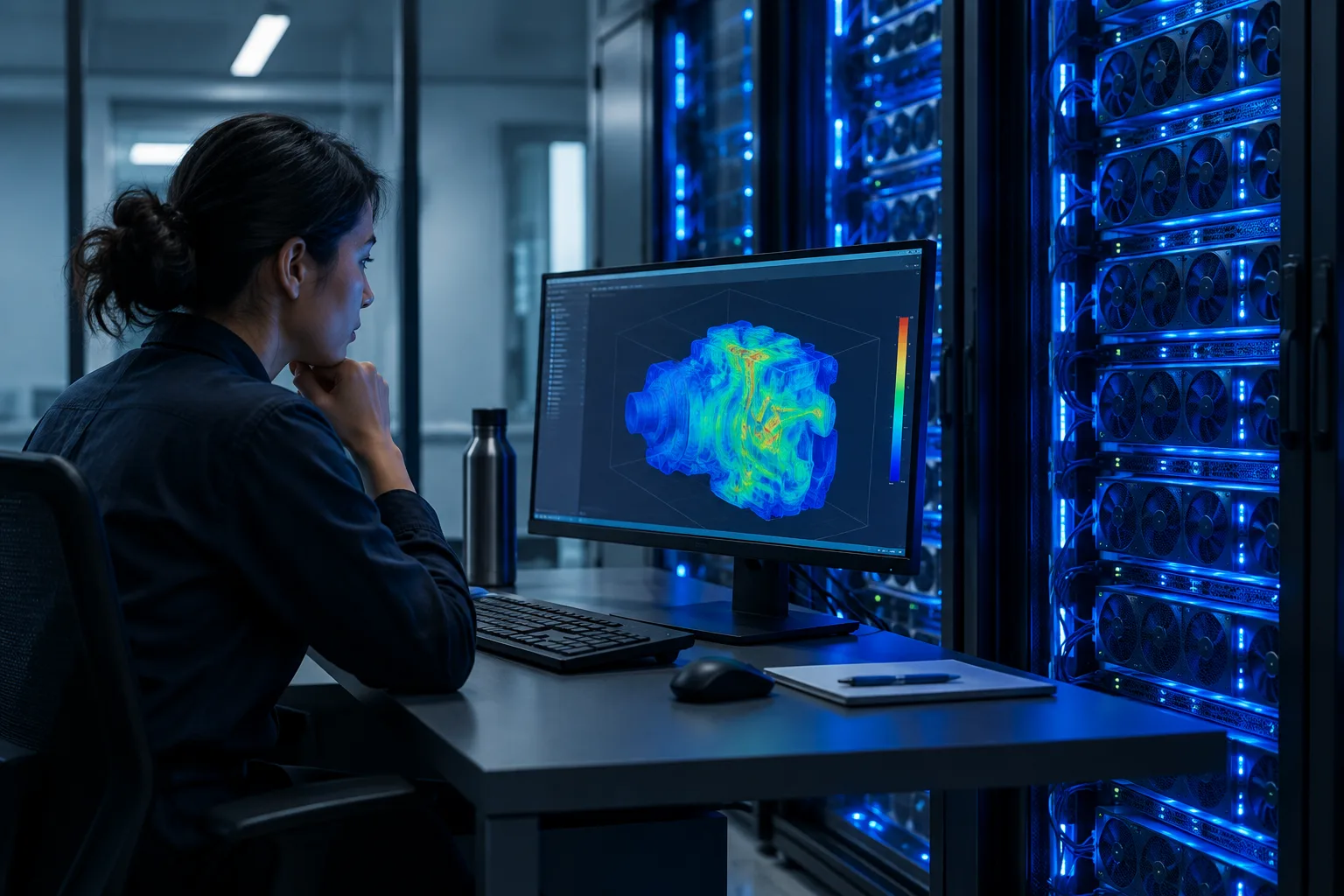
- Simulation and validation: both domains require rigorous testing regimes; improvements in simulation tooling and verification methods can reduce iteration cost and improve safety margins.
Still, markets tend to discount “synergy” unless it is operationalized. Investors typically want to see explicit collaboration frameworks, shared R&D platforms, or measurable cost and time advantages—not just thematic overlap. Without that clarity, synergy becomes a rhetorical bridge rather than a valuation support.
Investor expectations, governance bandwidth, and the next quarter’s real scoreboard
The central strategic risk highlighted by current sentiment is not simply competition or macro pressure—it is bandwidth. Musk’s time is a finite asset, and the market increasingly treats leadership focus as a measurable input to execution probability. With Tesla pushing into autonomy and robotics while SpaceX potentially prepares IPO logistics and continues its Mars-oriented roadmap, investors are forced to price a portfolio-wide question: can multiple moonshots be run at full velocity without diluting operational excellence?
This is where governance and capital allocation become decisive. For Tesla, the market’s near-term scoreboard is likely to emphasize:
- Margin resilience and cash generation in a tighter monetary environment
- Capital allocation discipline: how much is reinvested into robotics/robotaxis versus strengthening manufacturing and service economics
- Credible milestones for autonomy and robotics that are concrete enough to model
For SpaceX, the scrutiny—especially if IPO preparations intensify—will center on:
- Launch reliability and cadence
- Backlog quality and contract durability (NASA/DoD and commercial)
- Capital intensity versus recurring revenue potential, particularly around satellite broadband
Retail investors may continue to view Tesla as a “value” EV play relative to its highs, while institutions increasingly demand unit-economics clarity rather than narrative momentum. The next phase for Musk’s empire may hinge less on charisma and more on whether both companies can translate engineering audacity into financial legibility—proving that the future they are selling is not only possible, but investable on schedule.

 By
By

 By
By

 By
By

 By
By
 By
By