


Tesla’s Robotaxi Gambit: The Race to Autonomy and Its Unfolding Urban Consequences
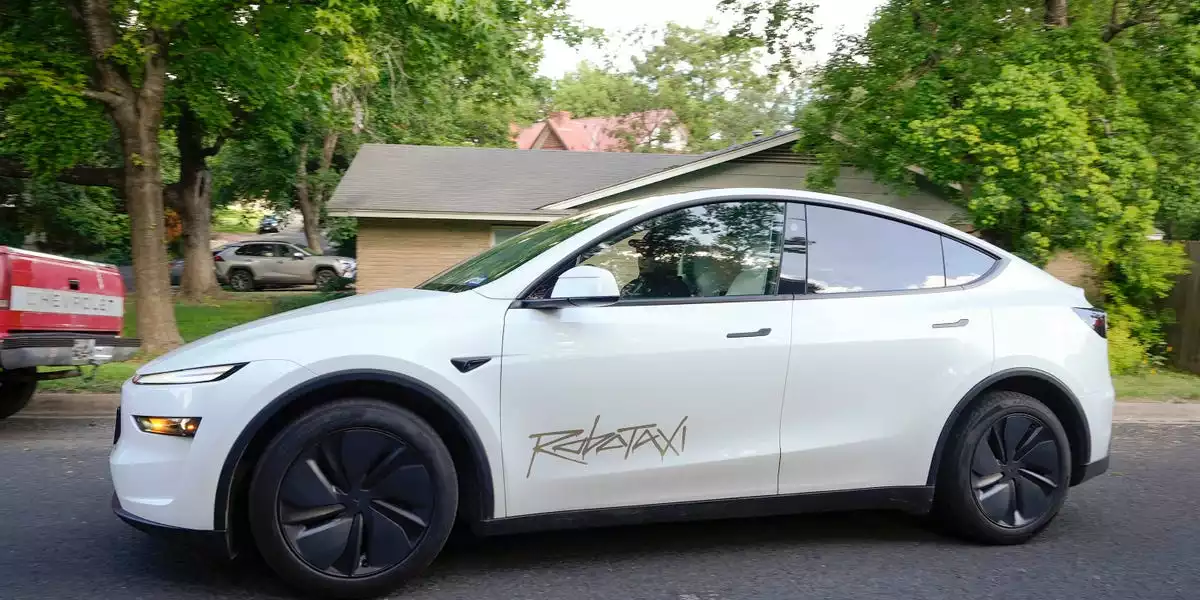
Tesla’s latest maneuver—a rapid doubling of its Austin-based robotaxi fleet, with ambitions for 500 vehicles in the Texas capital and 1,000 in San Francisco by year’s end—signals not just a scaling operation, but a deliberate reshaping of the urban transportation landscape. The move comes in response to surging demand following the public launch of Tesla’s ride-hailing app, and a chorus of user frustrations over excessive wait times. Yet beneath the surface, this expansion is less about immediate market share and more about seizing a strategic, data-driven high ground in the evolving contest for autonomous mobility.
The Data-Network Flywheel: Tesla’s Hidden Engine
At the heart of Tesla’s robotaxi strategy lies a virtuous cycle: every additional vehicle on the road becomes a sensor-laden node feeding real-world driving data into the company’s Full Self-Driving (FSD) neural network. This “data-network flywheel” is Tesla’s true moat. As the Austin fleet grows from 30 to 60, and soon to 500, the exponential increase in edge-case scenarios accelerates the neural net’s learning curve. For Tesla, the short-term costs—retail-priced vehicles, advanced hardware, and the burden of in-cabin safety monitors—are justified by the long-term compounding value of a proprietary, ever-expanding dataset.
Yet, the need for human supervisors in Austin exposes a gap: the vision-only autonomy stack, while technologically audacious, has not yet won full regulatory confidence. This hybrid approach—machines learning in real time, humans poised to intervene—complicates the economics of scale. Labor costs remain, and hardware refreshes risk fragmentation across cities, especially as Tesla’s Model Y-based robotaxis undergo incremental upgrades. In contrast, rivals like Waymo sidestep such issues by deploying purpose-built autonomous platforms, avoiding the pitfalls of a mixed hardware fleet.
Economic Disruption and the Ride-Hailing Substitution Effect
Tesla’s robotaxi rollout is poised to disrupt not just the ride-hailing market, but the economics underpinning urban mobility. A 500-vehicle fleet in Austin, for instance, could theoretically handle 25,000 rides daily—about a quarter of Uber and Lyft’s combined local volume. This level of penetration hints at a coming displacement of incumbent drivers, and potentially, a downward pressure on gig-economy earnings.
The financial calculus is equally nuanced. While Tesla’s gross margins have felt the squeeze of recent EV price cuts, the robotaxi business promises software-like profitability—provided the company can phase out human monitors. However, the capital expenditure required for rapid fleet expansion, coupled with specialized insurance and regulatory compliance, strains short-term cash flows. Macro forces add further complexity: rising interest rates elevate Tesla’s cost of capital, even as federal clean-transport incentives and city-level zero-emission mandates offer tailwinds.
Regulatory Patchwork and the Battle for Urban Autonomy
Tesla’s ambition to launch robotaxis in 8–10 major U.S. metros by December is as much a regulatory chess match as a technological sprint. Austin’s insistence on in-cabin safety monitors, contrasted with San Francisco’s “take-over” drivers, underscores the fragmented nature of state and municipal oversight. While states like Nevada and Arizona have granted waivers, federal legislation remains stalled, injecting a layer of uncertainty into Tesla’s expansion calculus.
The liability paradigm is also shifting. As vehicles inch toward full autonomy, insurance obligations migrate from individual drivers to the manufacturer. Tesla’s captive insurance arm, once a niche experiment, could become a strategic lever—reshaping risk pools and challenging traditional carriers. For city transportation departments, the calculus is equally fraught: early partnerships with Tesla may yield infrastructure investments and data-sharing opportunities, but also risk locking in a single vendor’s standards.
Competitive Dynamics and the Road Ahead
Tesla’s aggressive expansion is forcing a recalibration across the autonomous vehicle landscape. Waymo, with its higher autonomy maturity and cautious scaling, offers a counterpoint: a focus on reliability over rapid data accumulation. GM’s Cruise, still recovering from high-profile incidents, cedes ground that Tesla is eager to occupy. Meanwhile, tier-one suppliers and global OEMs watch closely—if Tesla’s vision-only thesis proves commercially viable, it could upend prevailing assumptions about the necessity of lidar and HD mapping.
For decision-makers, several imperatives emerge:
- Negotiate early for data access—the marginal value of autonomy data compounds rapidly.
- Treat hybrid labor models as transitional—reskill teams for fleet maintenance, remote supervision, and analytics.
- Forge local policy alliances—co-invest in curb management and electrification to smooth regulatory approvals.
- Monitor Tesla’s insurance footprint—OEM-driven risk pools could disrupt actuarial norms and incumbent carriers.
Tesla’s robotaxi surge is not merely a fleet expansion; it is an audacious bid to set the terms of urban autonomy, capture the lion’s share of mobility data, and rewrite the economics of ride-hailing. Those who grasp the interplay of technology, regulation, and economics will be best positioned to navigate—and shape—the next era of autonomous transport.

 By
By
 By
By

 By
By
 By
By

 By
By
 By
By







