


A bruising quarter exposes the gap between Tesla’s narrative and its near-term mechanics
Tesla’s latest Q1 sales miss—its second-weakest quarterly performance since 2022—lands at an awkward intersection of slowing delivery momentum, intensifying global EV competition, and a market still pricing the company as if hypergrowth is a given. The result is a widening spread between what Tesla is today—an automaker whose volume remains heavily concentrated in Model 3 and Model Y—and what investors are being asked to underwrite: a platform company expected to monetize autonomy, robotics, and AI at scale.
That tension is increasingly visible in the stock. Despite a strong one-year gain, shares have fallen more than 20% over the past six months as delivery disappointments and moderated growth expectations reset sentiment. Analysts at major banks have sharpened the critique, with warnings that Tesla’s P/E ratio above 300 reflects an “expectations premium” that can unwind quickly if margins normalize and growth settles into more conventional automotive ranges.
For executives and investors, the key signal is not simply that demand softened in one quarter; it’s that the company’s operating story is becoming harder to reconcile with a valuation that implies rapid, durable expansion across multiple new categories.
—
Valuation risk meets a pricing war: why the multiple is under pressure
A P/E north of 300 is not merely “expensive”—it is a claim about the future. It assumes Tesla will convert today’s installed base, software stack, and manufacturing footprint into outsized earnings power well beyond what current vehicle economics support. The bearish case from JP Morgan and HSBC—suggesting potential downside on the order of 60%—rests on a familiar mechanism: multiple contraction when growth and margins no longer justify a premium.
Several forces are converging:
- Margin compression from price cuts: Tesla’s repeated pricing actions to defend volume have helped sustain demand but have also exposed the trade-off between scale and profitability in a market where competitors are willing to sacrifice margin to gain share.
- Growth deceleration risk: If delivery growth returns to sub-20% levels—well below the 30–50% year-over-year expansions many investors anchored to—valuation frameworks begin to look less like “tech” and more like “auto-plus.”
- Higher cost of capital: Elevated interest rates raise the hurdle rate for long-horizon bets and make consumer financing more expensive, directly affecting EV affordability and purchase intent.
This is the crux: Tesla can still be a category-defining company while also being overpriced relative to near-term fundamentals. Markets often punish that mismatch abruptly, especially when quarterly execution stumbles provide a catalyst.
—
China’s EV export machine and the new geography of competition
Outside North America, Tesla’s market share erosion is increasingly tied to the industrial logic of Chinese EV manufacturers. Companies such as BYD, NIO, and Xpeng benefit from a combination of domestic policy support, vertically integrated battery supply chains, and scale economics that enable aggressive pricing—particularly in Europe and parts of Asia.
This matters for Tesla in three ways:
- Export-driven price pressure: Chinese OEMs can undercut pricing while maintaining strategic momentum, forcing incumbents into margin-eroding responses.
- Supply-chain asymmetry: A deeper U.S.–China bifurcation—especially around critical minerals and battery components—could widen cost differentials and complicate procurement strategies.
- Downstream integration: Chinese players are moving beyond vehicles into charging hardware, battery swapping, and captive finance, tightening ecosystem control in ways that can lock in customers and reduce churn.
Meanwhile, policy-driven infrastructure buildouts—via the U.S. Inflation Reduction Act and the EU Green Deal—are reshaping who wins component contracts and who controls charging corridors. Tesla’s charging footprint remains a strategic asset, but the competitive set is no longer limited to automakers; it now includes battery giants and infrastructure consortia competing for the same “picks and shovels” economics.
—
Governance, brand volatility, and the strategic drift question
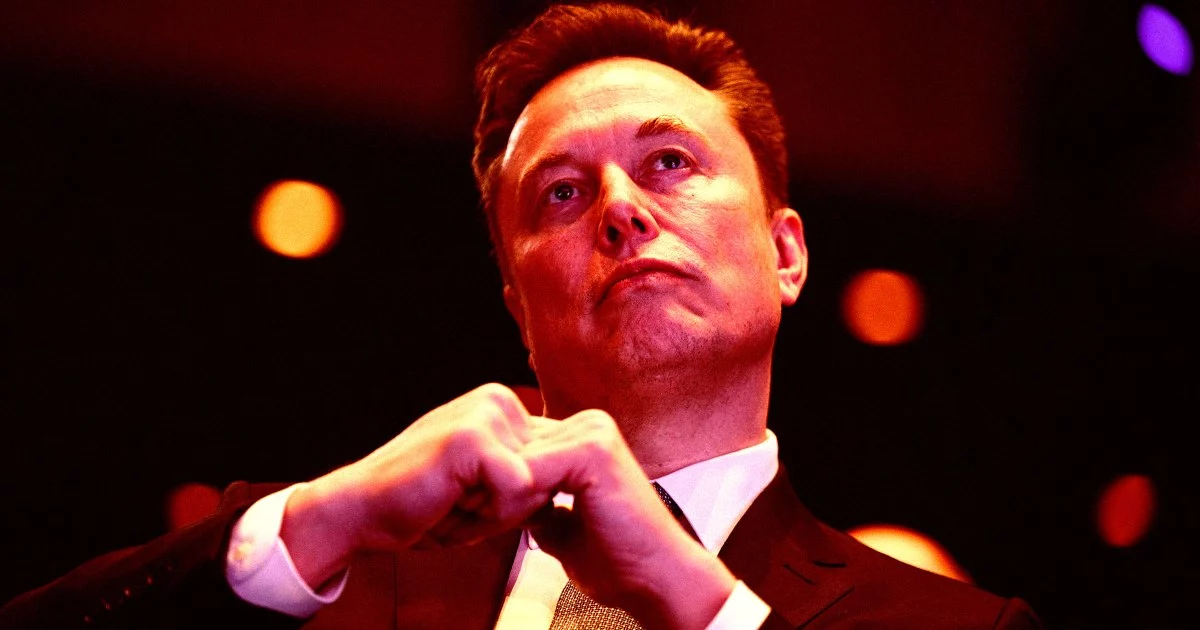
Tesla’s operational challenges are being amplified by a second, less quantifiable variable: leadership and governance risk. Elon Musk’s polarizing rhetoric and perceived drift toward far-right discourse have unsettled stakeholders, introducing reputational tail risks that can affect partnerships with municipalities, utilities, and charging-network collaborators. Brand resilience is not only a consumer issue; it is also a procurement and regulatory issue in markets where public-sector alignment matters.
Compounding that is the recurring concern—reported and debated across the market—that Musk’s engagement with Tesla’s core EV mission may be waning in favor of SpaceX and other ventures. Whether or not that perception is fully fair, it has real consequences:
- Board oversight and accountability: Investors may push for clearer CEO time commitments and stronger board independence.
- Succession planning: As Tesla’s business complexity increases, leadership continuity becomes a valuation input, not a footnote.
- R&D prioritization: Strategic focus is harder to maintain when the product pipeline appears stagnant.
On product cadence, the critique is blunt: Tesla has introduced no major new mass-market model in roughly six years, with the Cybertruck widely viewed as underwhelming relative to the commercial expectations it carried. Concentration in Model 3 and Model Y is efficient—until it becomes a constraint in a market fragmenting by price tier, body style, and regional preference.
—
Robotaxis and humanoid robots: ambitious optionality, uncertain timelines
Tesla’s capital and attention are increasingly oriented toward robotaxis and humanoid robotics (Optimus)—bets that could redefine the company’s profit structure if they mature. Yet both domains remain timeline-sensitive and regulation-heavy.
Key friction points include:
- Full Self-Driving remains “beta”: Years of iterative releases have not translated into broad regulatory approval for commercial robotaxi deployment in the U.S. or EU, suggesting a multi-year horizon with non-linear risk.
- Humanoid robotics economics: Optimus must prove cost-per-unit viability and real-world task reliability. Competitors such as Toyota, Boston Dynamics, and European startups have generally emphasized incremental field learning over sweeping commercialization promises—often a more credible path in robotics.
For markets, these initiatives function as optionality—valuable, but difficult to price with precision. When near-term vehicle fundamentals soften, investors tend to discount distant optionality more aggressively, especially if competitors appear ahead on commercialization.
Tesla remains one of the most consequential companies in business and technology, but the current moment is defined by a sharper question: whether it can restore confidence in execution, product momentum, and governance discipline fast enough to justify a valuation that still assumes the future arrives on schedule.


 By
By

 By
By
 By
By
 By
By

 By
By







