

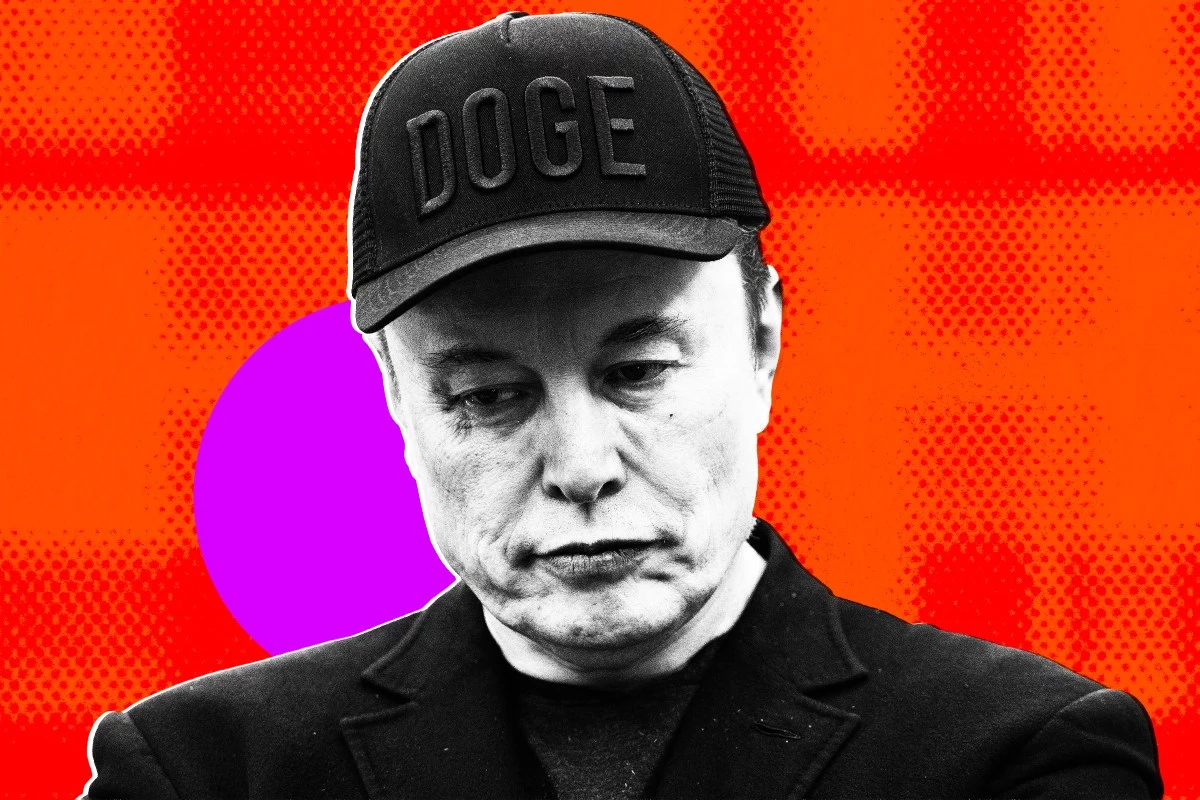

Insider testimony reframes the Full Self-Driving narrative
Reuters reporting—grounded in interviews with nine former Tesla data labelers and one self-driving engineer—introduces a materially different lens on Tesla’s Full Self-Driving (FSD) trajectory than the one investors and consumers typically hear from the company’s public-facing messaging. The most striking datapoint is not a single failure mode, but a sentiment: seven of nine labelers said they would not personally trust or ride in a Tesla operating in FSD mode.
That skepticism matters because data labelers sit at a critical junction in modern autonomy development. They translate raw driving footage into structured ground truth—lane boundaries, traffic controls, drivable space, object classes—that machine-learning systems internalize as “reality.” When those closest to the training pipeline express reluctance to rely on the product, it signals potential friction between what the system is learning and what the company is promising.
The allegations cited—vehicles ignoring speed limits, misreading common scenarios, and rare but severe outcomes such as driving into bodies of water, off bridges, or into oncoming traffic—also sharpen a long-running debate: whether Tesla’s approach is converging toward “safe unsupervised” operation, or whether it remains a powerful driver-assistance system whose edge behaviors can still surprise even attentive users.
The data-labeling pipeline: where safety priorities can drift
Autonomy is often described as an AI problem, but it is equally a process discipline problem. The Reuters interviews suggest an internal prioritization choice that, if accurate, would be consequential: speed-limit compliance—a frequent, high-impact safety behavior—was allegedly treated as lower priority than certain niche “edge-case” refinements.
From a risk-management standpoint, that trade-off is difficult to justify without strong countervailing controls. Speed compliance is:
- High-frequency: encountered on nearly every trip
- High-exposure: affects interactions with other road users continuously
- High-liability: implicated in crash severity and regulatory scrutiny
If labelers escalate recurring issues and those issues are not systematically resolved, the development loop can inadvertently normalize undesirable behavior. In machine learning, the model becomes a mirror of what it is rewarded for and what it is allowed to get away with. Over time, a pipeline optimized for scale—mass ingestion of fleet video—can outpace the slower, more expensive work of qualitative review, targeted relabeling, and rigorous root-cause analysis.
This is where the distinction between *collecting more data* and *curating better data* becomes strategic. Large datasets can improve generalization, but they can also entrench blind spots if the labeling taxonomy, escalation pathways, or engineering response cadence do not keep up. For autonomy systems, “good enough on average” is not a reassuring metric; the market and regulators care about predictable behavior under stress, especially around speed, lane discipline, and right-of-way interpretation.
Validation gaps: real-world mileage versus verifiable safety
The reported failure modes—misinterpreting road markings, drifting into opposing lanes, or navigating into clearly unsafe terrain—underscore a central engineering challenge: validation and verification (V&V) at autonomy scale. Tesla’s strategy has often been associated with leveraging fleet miles as a primary learning engine. Fleet learning is powerful, but it is not automatically equivalent to safety proof.
Robust V&V typically demands:
- Closed-loop testing that evaluates how perception errors propagate into planning decisions
- Scenario coverage that is deliberately constructed, not merely observed
- Regression discipline so that fixing one behavior does not degrade another
- Traceability from incident → root cause → dataset update → model change → measurable improvement
When simulation and real-world performance diverge, it can indicate insufficient scenario modeling, incomplete sensor/vision corner cases, or brittle decision policies. And when a system’s behavior appears inconsistent—sometimes correct, sometimes inexplicably wrong—stakeholders begin to question not only the model’s capability, but the predictability required for consumer trust and regulatory acceptance.
This is also where executive messaging becomes part of the risk surface. Public assurances that vehicles are nearing “safe unsupervised” operation set expectations that may not align with the lived experience of those closest to the training and testing loop. In capital markets, credibility is an asset; in safety-critical technology, it is also a control.
Market, regulatory, and competitive stakes for Tesla and the autonomy sector
The economic implications extend beyond a single product line. Tesla’s valuation narrative has long been intertwined with autonomy upside—software margins, robotaxi optionality, and platform leverage. Persistent negative press, paired with insider dissent, can pressure that narrative in several ways:
- Brand and consumer confidence: perceived leadership in autonomy is a premium attribute; doubts can compress willingness to pay
- Insurance and financing: if insurers price in higher uncertainty or liability exposure, premiums can rise and residual values can soften
- Investor modeling: autonomy revenue projections may face higher discount rates if timelines appear less certain or regulatory friction increases
Competitive dynamics also shift when a market leader is seen as opaque or overly optimistic. Rivals and suppliers—such as Mobileye and Waymo—can differentiate with more explicit safety cases, clearer operational design domains, and third-party validation narratives. For enterprise buyers and regulators, transparency can be as persuasive as raw capability.
Regulatory pressure is the other accelerant. As agencies evaluate autonomy incidents and consumer-facing driver-assistance marketing, the sector may move toward:
- Data transparency mandates (disengagements, collisions, software updates)
- Phased deployment frameworks (simulation → closed track → supervised public roads → expanded ODD)
- Standardization via SAE/ISO-style minimum safety-operational expectations
For Tesla, the strategic question is whether governance mechanisms evolve to match the stakes—potentially through stronger internal safety review, external audits, or clearer separation between experimental features and consumer-ready claims.
What emerges from the Reuters-sourced accounts is not merely a critique of one system, but a reminder of the autonomy industry’s central tension: innovation thrives on iteration, yet public-road deployment demands provable restraint. The companies that win durable trust will be those that treat everyday safety behaviors—speed, lanes, right-of-way—not as mundane details, but as the foundation upon which every ambitious edge case must stand.

 By
By
 By
By

 By
By
 By
By
 By
By
 By
By








