


A decade-long autonomy narrative meets the accountability era
Tesla’s “Full Self-Driving” (FSD) story has always been as much about expectation management as it is about machine learning. After years of ambitious timelines and marketing language that implied a near-term march toward hands-off autonomy, the product reality remains clear: FSD is still conditional and requires active driver supervision. That gap—between what many customers believed they were buying and what regulators and safety constraints allow Tesla to deliver today—has become the defining tension around the brand’s autonomy strategy.
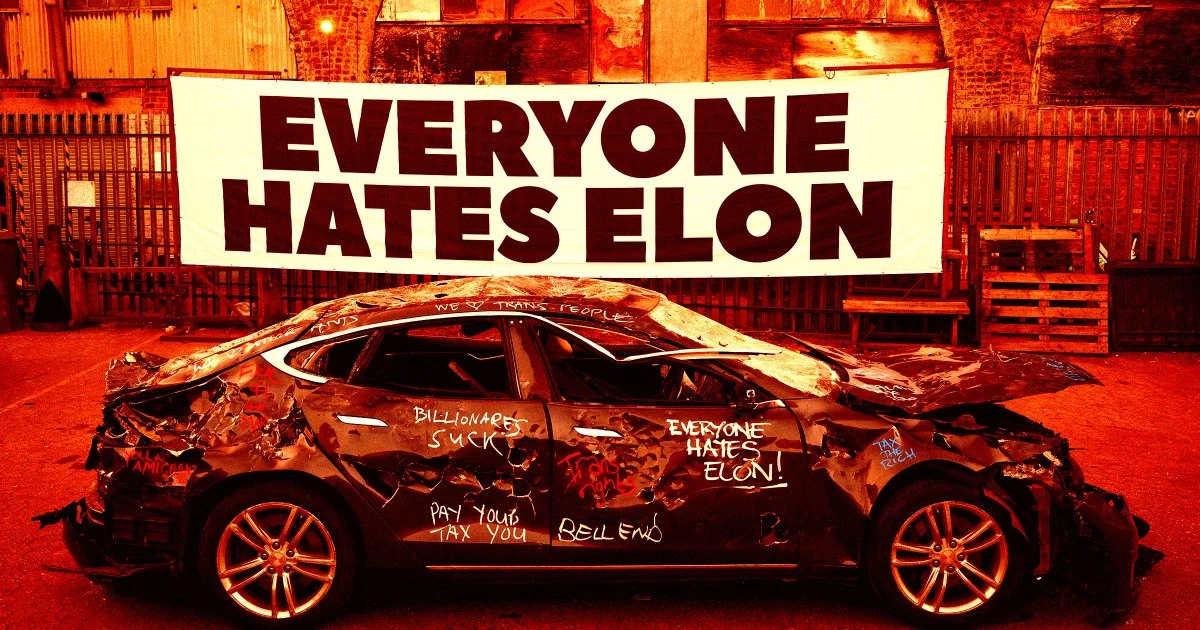
The frustration is no longer confined to online forums. Multiple class-action lawsuits now allege that Tesla misrepresented the autonomy capabilities of its vehicles, with plaintiffs seeking remedies that range from refunds to hardware upgrades. The legal pressure lands at a moment when the company is also reshaping how it monetizes the feature: FSD has moved from an $8,000 one-time purchase to a $99/month subscription, a shift that can be read two ways. For Tesla, it’s a modern software business model. For some owners, it can feel like paying indefinitely for a promise that keeps receding into the future.
This is the core reputational risk: autonomy is not a typical feature where incremental improvement is enough. The label “Full Self-Driving” carries an intuitive meaning for consumers, and the industry is now confronting the consequences of branding that outpaces operational reality—especially when safety, liability, and consumer protection are involved.
—
Hardware 3, vision-only autonomy, and the limits of software-first scaling
Tesla’s autonomy approach has long been defined by a software-first, vision-centric stack—a deliberate decision to prioritize camera-based perception and neural networks rather than rely on LiDAR-heavy sensor suites. That strategy has delivered real advantages:
- Faster iteration via over-the-air updates, enabling rapid deployment of new models and behaviors
- Lower sensor bill-of-materials costs, supporting margin discipline at scale
- Fleet data network effects, using real-world driving data to train systems on rare “corner cases”
Yet the same strategy exposes a structural vulnerability: hardware lifecycle mismatch. Many vehicles on the road run Hardware 3, and Elon Musk has acknowledged that HW3 is insufficient for true autonomy as Tesla defines it. That admission turns a technical constraint into a consumer trust issue, because earlier purchase decisions were often made under the assumption that the car was “future-proof” for autonomy through software updates.
The unresolved question is not whether Tesla can build better autonomy software—it is whether Tesla can do so without stranding a large installed base on compute that cannot support the end-state capability. Promised “free upgrades” become more than a customer service gesture; they become a test of whether Tesla can reconcile:
- Over-the-air ambition (software can improve continuously)
- In-field hardware reality (compute and sensors are fixed unless retrofitted)
- Residual value and total cost of ownership (used-market pricing depends on feature credibility)
If large numbers of owners conclude their vehicles cannot realistically reach the autonomy level implied at purchase, Tesla risks weakening the very fleet engagement that powers its data advantage. A dissatisfied customer base is not just a brand problem—it can become a data pipeline problem.
—
Subscription FSD, legal exposure, and the valuation that assumes robotaxis
Tesla’s market capitalization—still above $1 trillion—signals that investors continue to price the company as more than an automaker. Embedded in that valuation is the belief that autonomy and mobility services can unlock high-margin, recurring revenue at a scale traditional OEM economics rarely achieve.
The move to a $99/month FSD subscription aligns with the SaaS playbook:
- Smoother revenue recognition versus one-time purchases
- Potentially higher lifetime value per customer
- A pathway to bundling software features, insurance, and services
But subscriptions also introduce a harsher discipline: churn becomes the market’s real-time verdict on value. If FSD performance and perceived progress do not justify ongoing payments, the model can amplify dissatisfaction rather than stabilize revenue.
Meanwhile, class-action litigation introduces “tail risks” that markets often discount—until they don’t. Depending on outcomes, Tesla could face pressures including:
- Refund liabilities that affect margins and cash flow
- Mandatory disclosures or marketing constraints that reshape how FSD is sold
- Reputational discounting that impacts conversion rates for subscriptions and future vehicle sales
- Knock-on global exposure, as legal precedents in the U.S. can inspire actions in Europe, Australia, and other jurisdictions with strong consumer protection regimes
Regulators and insurers are also part of the economic equation. As long as Tesla positions FSD as supervised, responsibility remains with the driver—yet the branding and user behavior risks can still influence insurance pricing, coverage terms, and ultimately the cost of ownership. If insurers begin treating FSD-branded usage as a higher-risk category, premiums could rise, affecting both new sales and second-hand market liquidity.
—
Cybercab and the pivot to mobility-as-a-service under regulatory gravity
Against this backdrop, Tesla’s emphasis on a robotaxi future—often framed around the Cybercab concept—reads as both ambition and hedge. Strategically, robotaxis offer Tesla a way to shift the autonomy value proposition away from individual owners and toward a controlled fleet environment where the company can better manage:
- Vehicle configuration and maintenance standards
- Operational geofencing and route selection
- Safety monitoring, incident response, and data capture
- Insurance underwriting and liability frameworks
The note that production would begin slowly is telling. It suggests Tesla recognizes that autonomy is not only a software milestone; it is an operational system requiring regulatory alignment, municipal coordination, and public trust. In that sense, the robotaxi strategy is less a product launch than a multi-variable negotiation with governments, safety agencies, and the insurance ecosystem.
Competition is also evolving in parallel. Rival autonomy programs—often more sensor-diverse and hardware-redundant—may progress more slowly, but they can appear more “certifiable” to regulators and more legible to consumers. Tesla’s advantage has been speed and scale; its challenge now is proving that speed can coexist with verifiable safety claims and durable customer economics.
Tesla’s autonomy future will likely be decided less by a single breakthrough than by whether it can align four moving parts at once: hardware credibility, software performance, legal defensibility, and regulatory permission. The company has the capital, talent, and fleet footprint to remain a central actor in autonomous mobility—but the next phase will be judged in courtrooms, insurance models, and customer renewal decisions as much as on the road.


 By
By
 By
By

 By
By

 By
By
 By
By







