
A High-Profile Ride Failure in Taif: Unpacking the Fault Lines Beneath the Surface
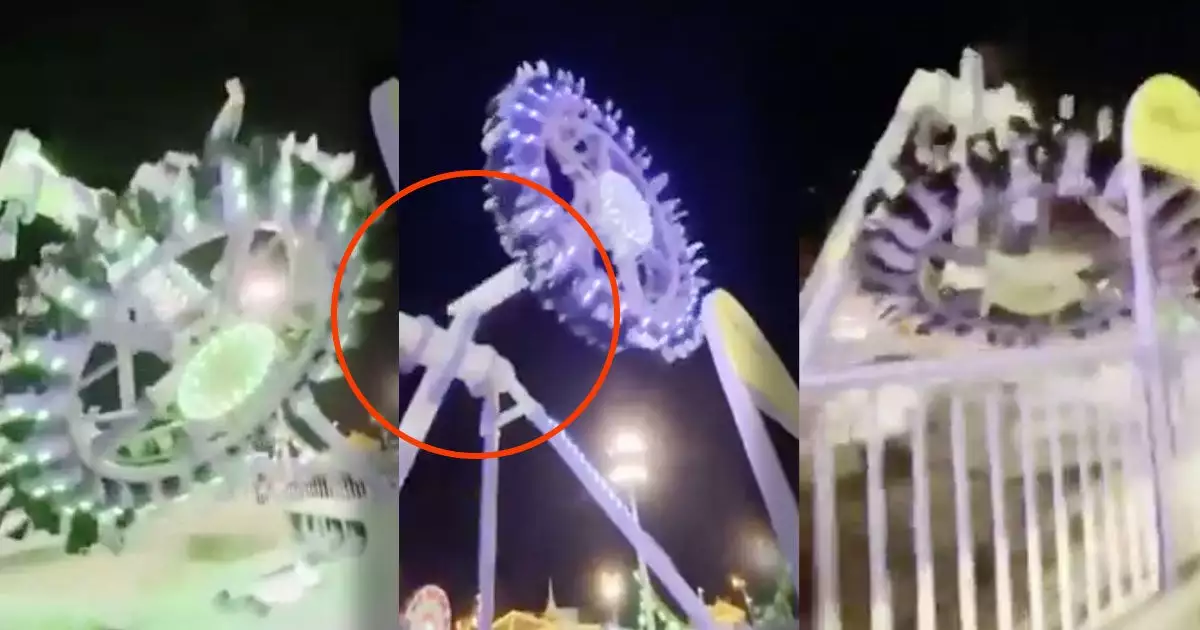
When news broke of a catastrophic mechanical failure at Green Mountain Resort’s “360 Big Pendulum” ride in Taif, Saudi Arabia, the global leisure and entertainment sector felt a tremor that extended far beyond the Kingdom’s borders. Over 20 injuries—three critical—were reported, and the park shuttered operations as authorities launched a root-cause investigation. Viral footage of the incident ricocheted across social media, amplifying reputational fallout at a time when Saudi Arabia is positioning itself as a premium family-entertainment hub.
Yet, beneath the surface of this rare event lies a convergence of forces—technological, economic, and regulatory—that are reshaping the risk calculus for amusement operators, investors, and policymakers worldwide.
—
The Anatomy of a Modern Ride Failure: Technology, Data, and Blind Spots
The “360 Big Pendulum” incident is a case study in the complexities of modern amusement engineering. While catastrophic ride failures remain statistically rare—industry experts cite a base rate of roughly 1 in 15.5 million rider exposures on U.S. fixed-site attractions—the stakes have never been higher. Today’s rides are feats of high-throughput engineering, integrating programmable logic controllers, IoT sensors, and SCADA systems in pursuit of both thrill and efficiency.
Probable vectors for the Taif failure include:
- Mechanical fatigue or weld failure in the central arm assembly, often exacerbated by high stress cycles and aging infrastructure.
- Sensor and SCADA system blind spots, which can delay anomaly detection and preemptive shutdowns.
- Maintenance protocol deviations, such as lapses in OEM torque-testing or incomplete data capture.
The incident also exposes a critical technology gap: the absence—or inadequacy—of closed-loop, predictive-maintenance platforms. Leading ride OEMs now deploy digital twins that ingest real-time vibration, strain, and temperature data, flagging micro-anomalies before they cascade into disaster. The cost of such systems has dropped precipitously, thanks to advances in edge AI and 5G connectivity, making them accessible even to mid-tier operators in emerging markets. If Green Mountain Resort lacked this digital safety net, the lesson is clear: predictive analytics is no longer optional.
Cyber-physical risk is another emerging frontier. As rides become more connected, vulnerabilities multiply. A single compromised PLC or IoT endpoint can translate into physical danger, pushing insurers and regulators to demand NIST-aligned security architectures as a baseline for high-payload attractions.
—
Vision 2030, Insurance Economics, and the Cost of Trust
Saudi Arabia’s Vision 2030 has set the stage for a massive transformation, with billions flowing into leisure mega-projects like Qiddiya and NEOM’s The Line. The Taif incident, however, threatens to complicate this narrative. A high-profile safety lapse can:
- Escalate insurance premiums by 12–20% across a regional operator’s entire asset base, as actuarial models recalibrate for increased risk.
- Delay project timelines and invite stricter international oversight, raising the cost of capital and potentially slowing the Kingdom’s diversification drive.
- Trigger renewed scrutiny of supply-chain traceability, especially as post-pandemic volatility has led some parks to source lower-tier components.
Beyond immediate financial implications, the event reverberates through the broader ESG landscape. Social-license metrics—particularly safety and community trust—are now central to sovereign-wealth and pension-fund allocation models. An incident of this magnitude elevates “S” risk scoring, with downstream effects on both equity valuations and debt covenants.
Cross-industry convergence is also accelerating. Best practices from oil-and-gas process safety, aviation maintenance, and autonomous-vehicle telemetry are increasingly relevant for amusement operators, creating a technology-transfer market valued at up to $3 billion over the next five years.
—
Strategic Imperatives: From Data-First Safety to Reputation Resilience
The Taif failure is catalyzing a new set of strategic imperatives for the global attractions sector:
- Regulatory convergence is on the horizon. Saudi Arabia is expected to accelerate the creation of a centralized ride-safety authority, modeled after Europe’s TÜV or the U.S. ASTM F24 committee, with multinational operators facing dual certification regimes.
- Continuous structural-health monitoring will become a board-level mandate, with plug-and-play sensor arrays and SaaS analytics moving from “nice-to-have” to investment prerequisite.
- Insurance-driven technology spend is set to rise, as underwriters offer premium discounts for verified IoT-enabled predictive maintenance and robust cyber-physical security.
- Reputation management in the viral era demands real-time social-media monitoring and AI-powered crisis communications, ensuring that fact-checked advisories outpace rumor cascades.
- Investor due diligence is expanding to encompass lifecycle fatigue analysis, control-system cybersecurity, and supply-chain audits, with ISO 55000-aligned asset management emerging as a premium differentiator.
- Cross-industry collaboration—including joint safety councils and open-source failure-mode libraries—will be critical in lowering systemic risk and accelerating learning curves.
—
The shockwaves from Taif are a clarion call for proactive investment in data-driven asset integrity and harmonized safety standards. As the experience economy surges and risk appetites evolve, those who lead with technology, transparency, and trust will define the next era of global leisure—and secure their social license in a world that demands both thrill and assurance.


 By
By

 By
By


 By
By
 By
By