

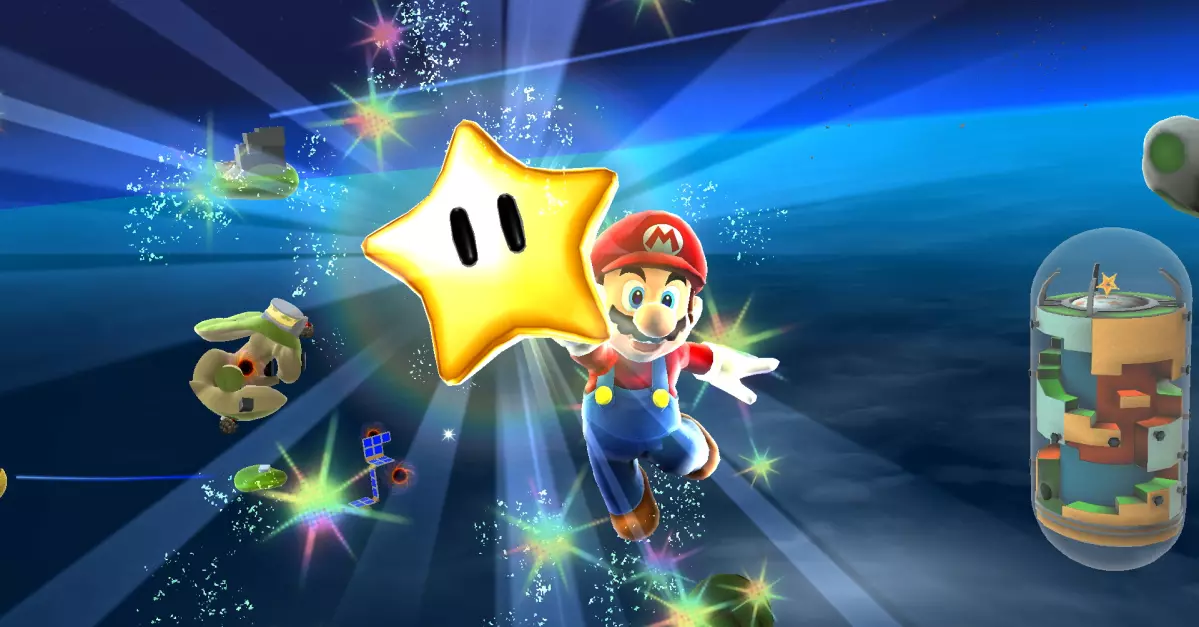

Nintendo’s Galaxy Bundle: A Calculated Prelude to the Next Hardware Epoch
Nintendo, ever the master of subtlety in an industry prone to bombast, has quietly orchestrated a revealing experiment. The limited, mobile-only release of the Super Mario Galaxy double pack—offered at a precisely discounted $55.20 on Woot—serves as both a technical harbinger and a commercial probe. Beneath its unassuming surface, this promotion signals the contours of Nintendo’s next hardware cycle, the evolving economics of nostalgia, and a cross-media strategy that could reshape the entertainment flywheel.
4K-Ready Ports and the Architecture of Backward Compatibility
The technical dimensions of the Galaxy bundle are a study in deliberate signaling. The ports’ capacity to render at 4K (3,840 × 2,160) without anti-aliasing is more than a graphical flourish—it is a coded message to developers and consumers alike. Such resolution ceilings suggest a seismic leap in GPU throughput, likely powered by mobile silicon on par with Nvidia’s Ada Lovelace architecture. Yet, these are not lavish remasters. Texture and lighting enhancements are minimal, underscoring Nintendo’s intent: rapid, cost-effective catalog enablement, not a labor-intensive overhaul.
This approach is reinforced by the apparent continuity of the software development kit (SDK). Identical codebases running across both the current Switch and its unannounced successor imply a unified SDK, lowering the barrier for third-party developers and accelerating time-to-market. For an industry wary of generational discontinuities, this is a reassuring overture—backward compatibility as a launch pillar, not an afterthought.
The decision to gate the promotion behind mobile app checkout is equally strategic. By leveraging Woot’s app exclusivity, Nintendo and Amazon are not merely courting impulse buyers; they are harvesting granular, device-level data. This behavioral telemetry will inform future mobile storefront strategies, a domain where Nintendo has historically lagged but now seems intent on closing the gap.
Dynamic Pricing and the Economics of Nostalgia
The $55.20 price point—21% below the standard $69.99 MSRP—serves as a controlled experiment in price elasticity. By confining the discount to a low-visibility channel, Nintendo establishes a new reference price without undermining the perceived value of its core offerings. This echoes Apple’s deft use of education discounts to shape demand without eroding brand equity.
The bundle’s pricing also recalibrates the physical versus digital revenue equation. At $40 each on the eShop, digital versions command higher margins but invite scrutiny over price parity. By offering a lower physical cost through Woot, Nintendo reins in grey-market resellers while preserving digital’s premium positioning. The gross margin on these legacy ports—where development costs are long since amortised—can exceed 80%. This cost-to-value arbitrage cushions the substantial R&D outlays required for the Switch 2’s advanced silicon and supply chain ramp.
Cross-Media Synergy and the Art of Portfolio Bridging
Nintendo’s timing is no accident. The 2025 Super Mario Galaxy film looms on the horizon, and the double pack’s release forms a bidirectional funnel. Filmgoers are enticed to become players, while the existing gaming audience is primed for the cinematic event. This cross-media flywheel, reminiscent of Disney’s Marvel strategy, extends the half-life of Nintendo’s intellectual property and mitigates the hit-driven volatility endemic to the games sector.
Equally important is the role of legacy rereleases in bridging console generations. By keeping the back catalog alive and relevant, Nintendo maintains user engagement during the liminal phase between hardware cycles—a period that has historically sapped momentum for rivals like Sony and Microsoft. The early embrace of 4K support signals to developers that their existing Switch titles will transition smoothly, curbing reluctance to invest in an ageing platform.
Amazon’s deployment of Woot as a sandboxed marketplace is a masterstroke in retail experimentation. By isolating time-boxed, app-gated discounts from the broader Amazon ecosystem, both companies can gather actionable insights without risking broader pricing disruption—a tactic with potential applications for cloud gaming platforms like Luna.
Strategic Signals for Industry Stakeholders
The implications of Nintendo’s Galaxy bundle ripple far beyond the confines of a single promotion. Hardware suppliers should brace for surges in demand for advanced mobile SoCs and high-speed memory as Nintendo’s next-gen ambitions become clearer. Third-party publishers are on notice: a unified SDK and backward compatibility could make early porting of back catalogs a lucrative proposition. Retailers and e-commerce platforms would do well to study the efficacy of mobile-app–gated promotions as a tool for data acquisition and channel management.
For media conglomerates, Nintendo’s deft cross-media orchestration is a clarion call to reassess dormant game IP and synchronize remake pipelines with cinematic releases. Investors, meanwhile, should note the resilience of high-margin nostalgia SKUs as a hedge against rising hardware costs and currency volatility.
Nintendo’s latest maneuver is more than a bundle—it’s a strategic overture, a testbed, and a preview of a future where gaming, film, and commerce are ever more tightly intertwined. Those who read between the lines will be best positioned to ride the coming wave.

 By
By
 By
By
 By
By

 By
By


 By
By







