


A confidential S-1 that reframes SpaceX as capital-markets infrastructure, not just aerospace
SpaceX’s reported confidential S-1 filing with the U.S. Securities and Exchange Commission is more than a procedural step toward an initial public offering—it is a signal that the company may be preparing to translate a decade of private-market momentum into public-market scale and scrutiny. Market estimates placing SpaceX above $1.75 trillion—if realized—would position it among the most valuable companies on Earth, instantly eclipsing traditional aerospace primes and placing it in the same valuation conversation as the largest technology platforms.
For investors and policymakers, the key interpretive shift is this: SpaceX is increasingly being framed not as a launch provider alone, but as a vertically integrated space infrastructure company spanning transport (Starship), connectivity (Starlink), and potentially compute (orbital data centers). The confidential nature of the filing also suggests a desire to test investor appetite and regulatory reception before committing to a timetable—an approach often used when valuation expectations are ambitious and execution risk is non-trivial.
At the center of the narrative is Elon Musk’s reported integration of xAI into SpaceX, implying a tighter coupling between space hardware and AI workloads. If SpaceX is positioning itself as a platform for global communications plus edge compute, the IPO becomes a referendum on whether public markets will underwrite a new category: space-based digital infrastructure.
—
Starship’s “system-of-systems” risk: one vehicle, many balance sheets
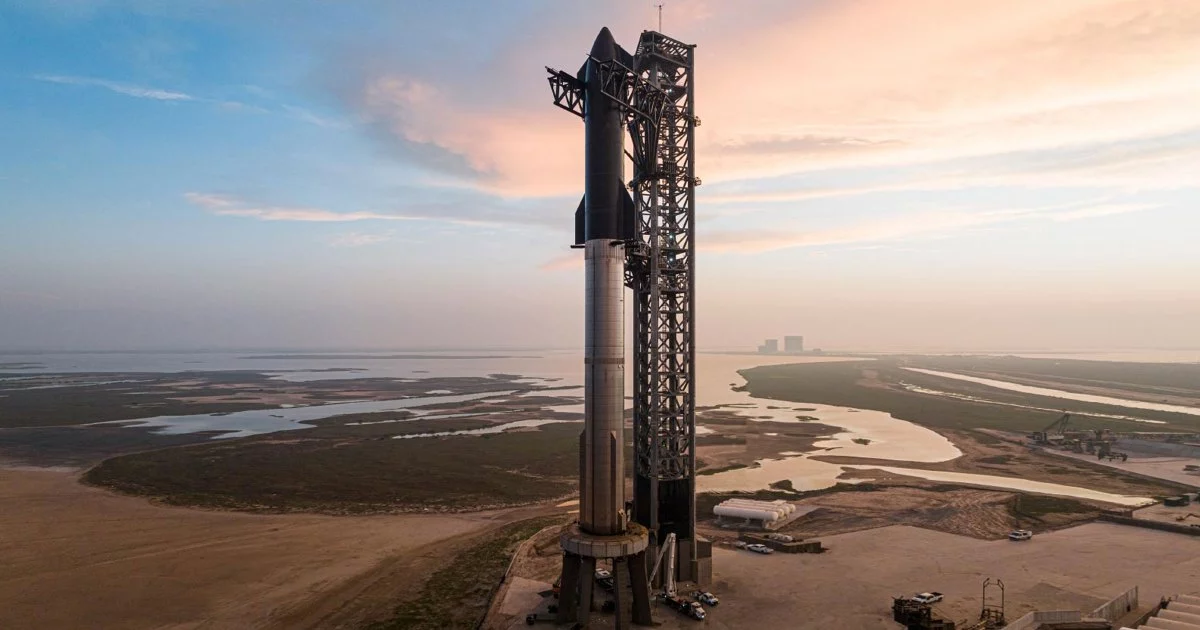
No element of the SpaceX story concentrates both upside and fragility like Starship. The vehicle is not merely a next-generation rocket; it is the enabling layer for multiple business lines and strategic commitments. That creates a “system-of-systems” dependency: if Starship underperforms, delays cascade across revenue, partnerships, and long-horizon ambitions.
Several technical milestones are especially consequential for IPO-grade credibility:
- Successful orbital launch and recovery at a cadence that supports commercial economics, not just demonstrations
- Reliable in-orbit refueling, which requires repeated orbital rendezvous and propellant transfer—an engineering challenge with few precedents at scale
- Operational maturity sufficient to support NASA’s Artemis human landing architecture, where schedule slippage carries reputational and political costs
This dependency is not limited to exploration. Starship is increasingly portrayed as a throughput engine for Starlink expansion and for any future megaconstellation of orbital compute nodes. In other words, Starship is not simply a product; it is the manufacturing and deployment backbone for SpaceX’s broader platform strategy.
That is why the IPO, if it proceeds, will likely be priced less on historical financials than on confidence in Starship’s risk retirement curve—a dynamic familiar in frontier technology, but unusually concentrated for a company with such sweeping operational scope.
—
Orbital data centers meet xAI: a bid to challenge terrestrial cloud economics from space
The most strategically provocative element in the material is the vision of orbital data centers—potentially scaling to an extraordinary number of nodes. Conceptually, this is a challenge to the gravitational center of today’s cloud market, dominated by AWS, Microsoft Azure, and Google Cloud, by relocating portions of compute and inference closer to global users and space-based sensors.
The thesis rests on several potential advantages:
- Lower latency for certain global inference and communications pathways, particularly where terrestrial routing is constrained
- Tighter integration with satellite networks, enabling compute “at the edge” for imaging, defense, maritime logistics, and remote operations
- A closed-loop innovation cycle if xAI models, training pipelines, and specialized hardware co-evolve with SpaceX’s deployment capabilities
Yet the orbital compute concept also introduces hard questions that public investors will demand be answered with specificity:
- Unit economics: cost per deployed compute watt, maintenance strategy, replacement cadence, and radiation-hardening tradeoffs
- Spectrum and interference management, especially as compute payloads expand radio-frequency activity
- Data sovereignty and compliance, since “where data resides” becomes legally ambiguous when infrastructure is in orbit
If SpaceX can credibly articulate a hybrid model—where orbital compute complements terrestrial cloud rather than attempting to replace it outright—it may unlock partnership pathways. Conversely, if it positions orbital compute as a direct cloud displacement play, it invites competitive responses from incumbents with deep enterprise relationships and regulatory experience.
—
Valuation, dual-class governance, and the new ESG frontier of orbital scale
A potential trillion-plus valuation is not simply a measure of optimism; it is a claim about durable cash flows across multiple lines: Starlink subscriptions, government contracts (including NASA), defense and commercial launch services, and prospective compute leasing. The market will likely treat these as interdependent, not diversified—because Starship maturity and deployment cadence influence them all.
Governance will be equally central. A dual-class share structure would align SpaceX with founder-control precedents in technology, preserving decision velocity for long-horizon R&D. But it also raises predictable concerns for institutional investors around:
- Minority shareholder protections and accountability mechanisms
- Capital allocation discipline amid multi-decade projects (lunar infrastructure, deep-space ambitions, orbital compute)
- Disclosure expectations, especially when execution risk is high and timelines are politically salient
Beyond governance, the IPO would force a sharper confrontation with the environmental and societal externalities of scale in orbit. Astronomers’ warnings about light pollution and radio interference, alongside broader concerns about orbital congestion and collision risk, are no longer niche objections; they are emerging as material ESG and regulatory variables. A constellation measured in the hundreds of thousands—or more—would likely accelerate demands for:
- Modernized space-traffic management frameworks
- Enforceable standards for brightness mitigation and radio emissions
- Transparent orbital environmental impact assessments that investors can benchmark over time
SpaceX’s next phase, if it enters public markets, will be judged not only by launch milestones and subscriber counts, but by whether it can operate as a credible steward of the orbital commons while scaling a business model that increasingly resembles critical infrastructure. The IPO—should it arrive—would not merely price a company; it would price the investability of the space economy’s most ambitious blueprint.

 By
By
 By
By

 By
By
 By
By

 By
By
 By
By







