

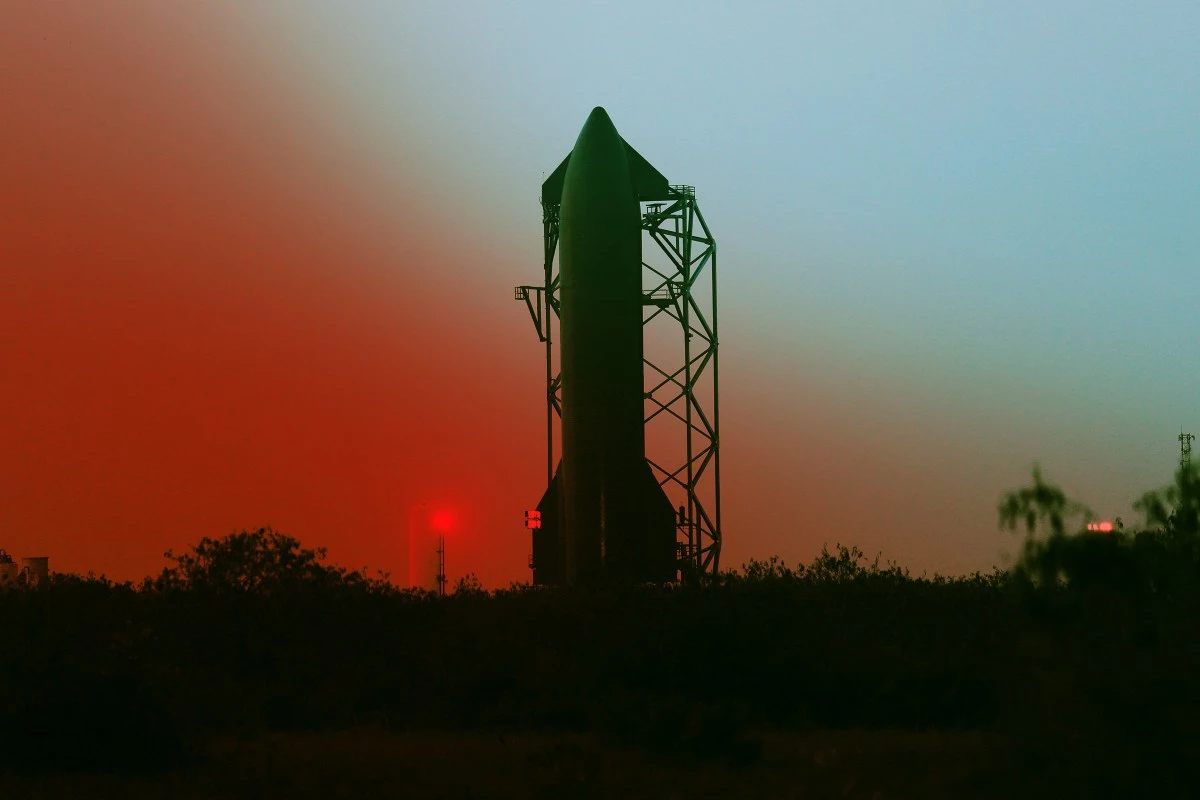

Texas lawsuits put Starship’s “externalities” under a courtroom microscope
SpaceX’s Starship program has long been framed as a triumph of private-sector velocity—rapid iteration, aggressive testing, and a willingness to absorb failures in pursuit of a step-change in launch capability. Now, that same operating philosophy is being tested in a different arena: civil litigation. Hundreds of residents near Starbase in Cameron County and the McGregor test site in McLennan County have filed lawsuits alleging that noise, vibrations, and sonic booms from Starship launches and static-fire tests caused structural damage to homes—from cracked roofs and shattered windows to compromised foundations.
The claims arrive at a moment when SpaceX is simultaneously pushing toward higher launch cadence and preparing for a potential multitrillion-dollar IPO narrative built on Starship’s long-term economics. In that context, the lawsuits are not merely a local dispute; they are a referendum on how the next era of commercial spaceflight will account for third-party risk—and how quickly regulators, investors, and government partners may demand more formalized safeguards.
At the center of the plaintiffs’ argument is a straightforward proposition: Starship is not “just another rocket.” If the vehicle’s scale is unprecedented, then the models, mitigation systems, and community protections used to manage its impacts may also need to be unprecedented.
When thrust doubles, the risk model can’t stay the same
Starship’s Super Heavy booster—powered by a 33-engine Raptor cluster—operates in a regime that strains legacy assumptions about acoustic and vibrational loads. The program’s pace since April 2023—eleven missions, several ending in explosions—has reinforced SpaceX’s “learn by flying” approach. But the lawsuits argue that iterative testing, when conducted near communities, can create a feedback loop of collateral harm if predictive tools and mitigation infrastructure lag behind the vehicle’s power.
Key technical and operational issues emerging from the dispute include:
- Acoustic-seismic load management at super-heavy scale
Starship’s thrust is described as roughly double that of NASA’s Saturn V and Space Launch System class vehicles. That magnitude changes the boundary conditions for nearby structures: low-frequency vibration coupling, window resonance, and soil-structure interactions become more consequential, particularly for older homes or foundations not designed for repeated impulse loads.
- Mitigation gaps highlighted by early pad damage
The inaugural Starship launch severely damaged the concrete pad, underscoring how acoustic energy and plume interactions can overwhelm conventional site design. Plaintiffs point to this as evidence that acoustic suppression and launch-pad hardening were not sufficiently mature for early operations.
- Predictive modeling shortfalls
A central allegation is that SpaceX relied on outdated acoustic-prediction models—tools calibrated for earlier-generation rockets and smaller engine clusters. Without high-fidelity simulations, dense sensor networks, and validated “digital twin” approaches, forecasting off-site impacts becomes probabilistic at best and blind at worst.
This is where the litigation becomes strategically significant. If courts or regulators conclude that Starship’s risk profile demands a new standard of care—more robust modeling, more conservative operating envelopes, or stronger mitigation—SpaceX may face not only damages but also operational constraints that affect cadence, timelines, and cost.
IPO optics, insurance math, and the price of remediation
Even if individual claims vary in strength, the aggregate effect of large-scale litigation can reshape how capital markets price the Starship story. For a company widely expected to pursue a landmark public offering at some point, the issue is less about any single verdict and more about contingent liabilities and governance credibility.
Several financial vectors stand out:
- Contingent liabilities and valuation sensitivity
Damages awards, legal fees, and settlement structures can become material—especially when paired with the reputational impact of allegations that community harms were foreseeable. For institutional investors, this intersects directly with ESG and stakeholder-risk frameworks, which increasingly treat “social license to operate” as a valuation input rather than a public-relations afterthought.
- Capital allocation trade-offs
Starship already demands enormous investment in engines, ground systems, and manufacturing scale. If SpaceX must accelerate spending on water deluge systems, acoustic baffles, reinforced foundations, and monitoring networks, those dollars compete with development velocity—potentially slowing iteration or forcing reprioritization.
- Insurance and risk transfer pressure
A heightened perceived risk profile can lead insurers to raise premiums, narrow coverage, or impose stricter underwriting requirements. For a launch provider that competes on cost and cadence, insurance friction can quietly erode a core advantage.
The market implication is clear: community impact is becoming a balance-sheet issue. The more Starship resembles critical infrastructure rather than an experimental program, the more investors will expect mature risk controls, explicit reserves, and transparent disclosure practices.
Artemis timelines, FAA scrutiny, and the emerging standard for super-heavy launches
SpaceX’s Starship is deeply entangled with U.S. national space priorities, including NASA’s Artemis program—where operational rigor and reliability are not optional. With Artemis IV targeted no earlier than 2028, the lawsuits introduce a governance question that matters to government partners: can SpaceX scale testing and operations while demonstrably protecting third parties and maintaining regulatory confidence?
Potential strategic and regulatory consequences include:
- FAA and environmental review evolution
Litigation can catalyze more detailed scrutiny of noise, vibration, and structural-risk metrics in environmental assessments. If new thresholds or monitoring requirements emerge, they could narrow launch windows or increase compliance overhead.
- Community resistance as a growth constraint
Local opposition can shift from isolated complaints to organized political pressure, complicating permits, expansions, and future site selection. For a company that thrives on rapid iteration, delays driven by community conflict can be as costly as technical setbacks.
- Industry-wide standard setting
Starship may force the sector to define what “best practice” means for super-heavy lift operations near populated areas—covering acoustic suppression, real-time monitoring, property-impact baselines, and compensation mechanisms. SpaceX can either help shape that standard proactively or have it shaped through enforcement and precedent.
What makes this moment pivotal is that it sits at the intersection of engineering reality and societal expectation. Starship’s promise is transformational—lowering the cost per ton to orbit and enabling new mission architectures. But the program’s durability will be measured not only by thrust and reusability, but by whether SpaceX can pair its speed with a credible framework for predicting, mitigating, and compensating the impacts borne by communities living in the shadow of the launchpad.

 By
By
 By
By

 By
By

 By
By
 By
By







