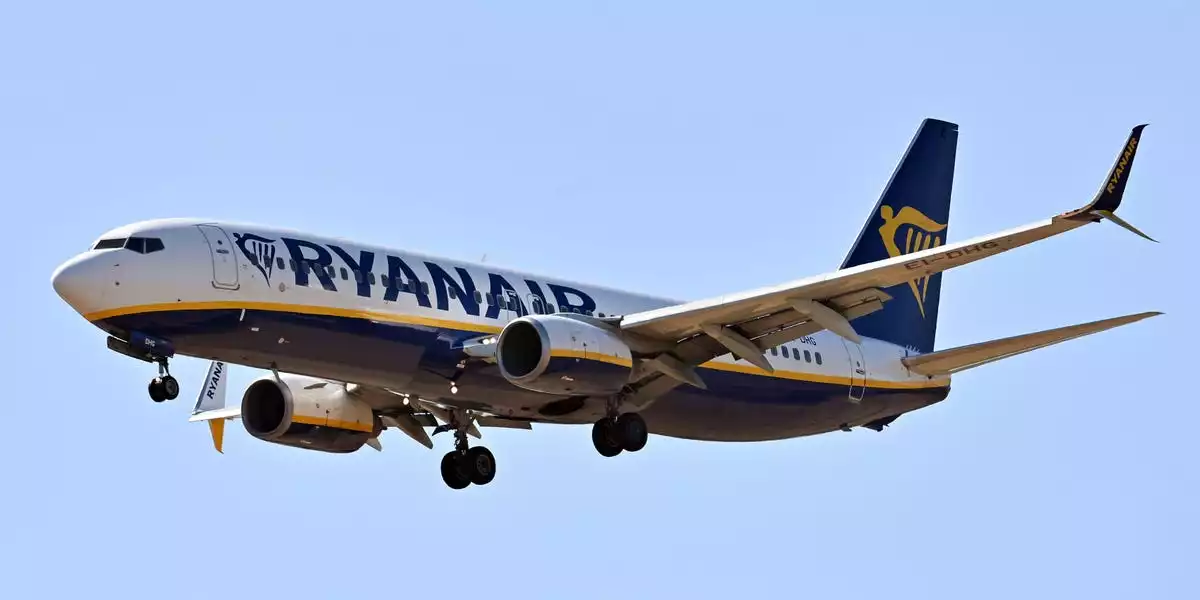

When Weather, Economics, and Regulation Collide at 30,000 Feet
The recent Ryanair Flight 3418 incident—marked by three missed approaches at Glasgow Prestwick, a fuel-critical diversion to Manchester, and a subsequent AAIB investigation—serves as a microcosm of the converging forces reshaping commercial aviation. This was not simply a tale of a flight gone awry, but a revealing stress test of the industry’s economic calculus, risk governance, and technological readiness in the face of mounting climate volatility.
The Anatomy of a Crisis: Meteorology Meets Minimalism
Storm Amy’s ferocity—sweeping crosswinds clocking 50 mph at Prestwick and over 30 mph at Edinburgh—pushed conditions well beyond the operational envelope for most narrow-body jets. The crew’s decision tree, underpinned by a fuel state that dwindled to a mere six minutes’ endurance upon arrival in Manchester, was shaped by a lean operating model that has become the hallmark of low-cost carriers. The sequence of two missed approaches at Prestwick, a failed attempt at Edinburgh, and a 175-mile repositioning to Manchester was less a chain of misfortune than a by-the-book demonstration of how razor-thin margins can be tested by the unpredictable.
Passengers, meanwhile, endured a 10-hour ordeal and a 200-mile ground transfer—outcomes that triggered regulatory compensation and underscored the human cost of operational brinkmanship. The incident’s reverberations extended far beyond inconvenience, exposing the fragility of just-in-time airline economics when confronted by the new normal of climate-amplified weather events.
Technology’s Double-Edged Sword: Analytics, Automation, and Human Limits
The technological divide between legacy dispatch tools and modern, AI-powered analytics is stark. While major carriers have begun to embed real-time weather and fuel optimization into their Electronic Flight Bags (EFBs), many ultra-low-cost operators still rely on static, pre-flight planning. The result: a flight departing Pisa with contingency fuel at regulatory minimums, leaving little room for the dynamic rerouting that volatile weather now demands.
- Predictive Analytics Gap: Had the crew been equipped with cloud-based turbulence models and AI-assisted diversion matrices, an earlier diversion to Manchester or Newcastle might have preserved both fuel reserves and passenger confidence.
- Human–Machine Interface Stress: The cognitive load of three high-stakes approaches in turbulent conditions is immense. Next-generation cockpit decision-support systems—such as Airbus’ “Connected Flight Path”—promise to nudge crews toward earlier, safer “Plan C” decisions, but adoption remains uneven across the industry.
This incident illustrates the urgent need for airlines to move from reactive to proactive operational paradigms, leveraging AI not just as a compliance tool but as a frontline defense against the unpredictable.
Economics of Risk: The High Cost of Lean
Ryanair’s fuel policy—loading near-minimum contingency to save roughly 300 kg per trans-EU sector—yields impressive annualized savings, estimated at over $120 million fleet-wide. Yet, as Flight 3418 demonstrates, the financial calculus can be upended by a single high-profile event. The costs of compensation, legal exposure, and potential brand erosion can swiftly outweigh the incremental savings, especially in an era where social media and regulatory scrutiny amplify every operational misstep.
- Network Ripple Effects: Diversions disrupt not only the affected flight but also ripple through gate allocations, crew rotations, and schedule reliability across the network. These knock-on effects threaten ancillary revenue streams and erode the punctuality metrics that underpin customer loyalty.
- Investor Optics: The incident sharpens the debate over whether cost leadership can coexist with heightened ESG expectations. A safety-centric downgrade by ratings agencies could elevate financing costs at a time when airlines are already grappling with the capital demands of sustainable aviation fuel transitions.
Regulatory Momentum and the New Aviation Playbook
The AAIB’s investigation is likely to accelerate regulatory moves toward tighter fuel-planning oversight, electronic audit trails, and higher minimum reserves—mirroring recent FAA initiatives. Storm Amy’s intensity, emblematic of a 30-year uptick in North Atlantic wind events, is catalyzing a re-examination of slot scheduling and weather risk pricing across Eurocontrol’s domain.
- Data Transparency: Regulators are increasingly demanding raw flight-deck data streams, and airlines lacking centralized Flight Ops Quality Assurance (FOQA) will struggle to defend their risk decisions.
- Incentivizing Safety: Proposals to harmonize fuel minimums across jurisdictions and incentivize early diversions through reduced ATC/landing fees are gaining traction, reframing safety as an economic opportunity rather than a regulatory hurdle.
Storm-driven disruptions are projected to rise by nearly a quarter across European airspace in the coming decade. Airlines that treat fuel strategy, data transparency, and AI-enabled decision support as core differentiators—rather than compliance burdens—will not only weather the storm but emerge as industry leaders. The legacy of Flight 3418 may well be its role as a catalyst: the moment when the ultra-low-cost playbook was forced to reckon with the new physics of climate-conditioned aviation.

 By
By
 By
By

 By
By

 By
By
 By
By
 By
By