

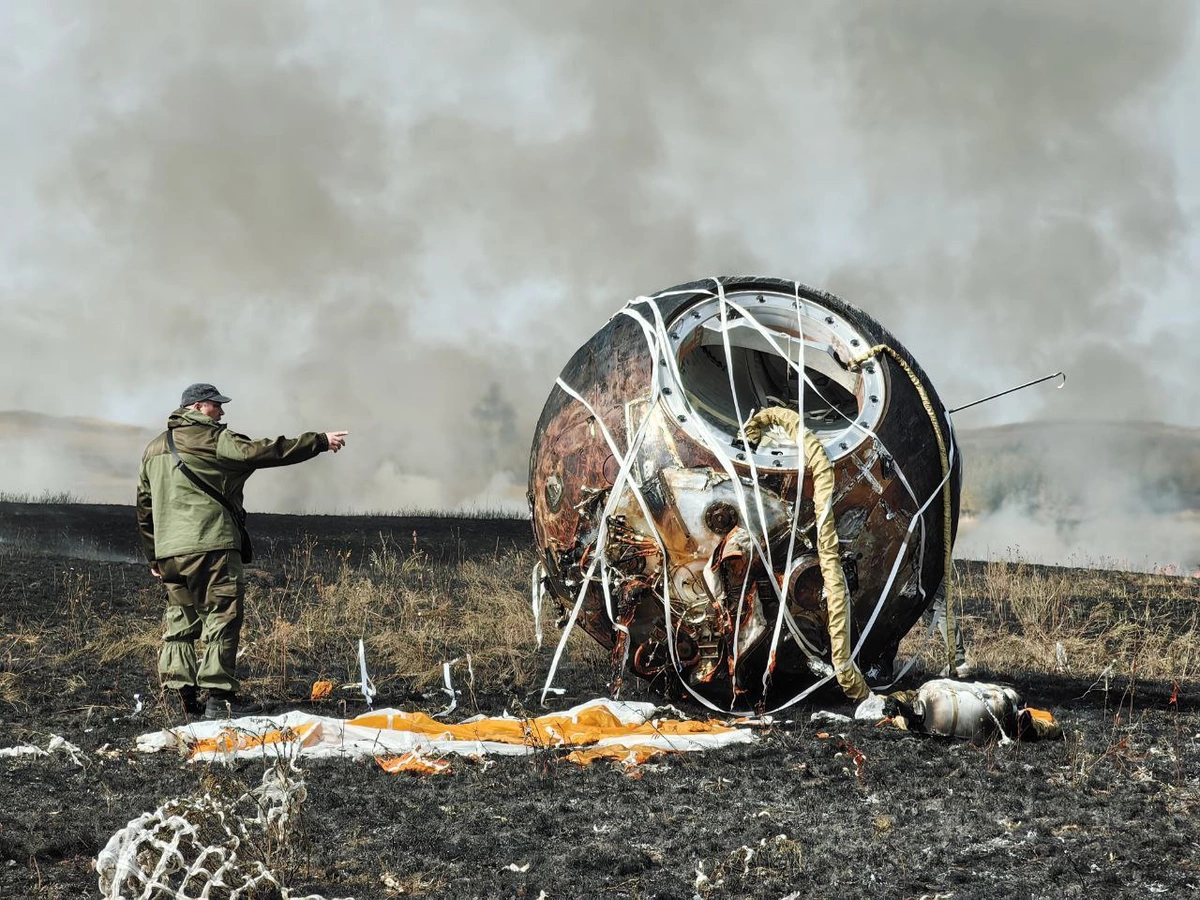

Orbiting on the Edge: Bion-M No. 2 and the Future of Space Bioscience
When Bion-M No. 2 crashed down southwest of Moscow after a month in the harshest reaches of low-Earth orbit, it was more than a battered satellite returning home. Inside its scorched shell, 1,500 flies, 75 mice, seeds, and a menagerie of microbial life—some encased in basalt—had endured a journey designed to push the boundaries of both biology and engineering. The mission, a collaboration between Roscosmos and the Institute of Biomedical Problems, was as much a statement of intent as a scientific endeavor: Russia, under mounting fiscal and geopolitical pressure, remains a sovereign force in bioscience, signaling to partners and competitors alike that its ambitions in space life sciences are undiminished.
Basalt, Microbes, and the Meteorite Hypothesis
At the heart of Bion-M No. 2’s technological intrigue lies a deceptively simple experiment: embedding microorganisms in basalt rock, then exposing them to the twin crucibles of cosmic radiation and the fiery violence of atmospheric re-entry. This approach is a masterstroke of efficiency—eschewing expensive re-entry capsules in favor of leveraging the natural shielding properties of rock, much as a meteorite would protect stowaway microbes on an interplanetary journey.
- Basalt embedding simulates meteorite shielding, offering a cost-effective platform for lithopanspermia research.
- The satellite’s orbit, roughly 30% more radioactive than the ISS, provides a unique radiation exposure profile—critical for calibrating next-generation mixed-field radiation models used in both spacecraft electronics and human health risk assessments.
Should viable microbes emerge from this ordeal, the implications are profound. Thermal-protection standards for sample-return missions could be relaxed, reducing mass and cost for lunar, Martian, and asteroid logistics. Conversely, confirmed survival would force a reckoning with planetary-protection protocols, tightening compliance requirements for private sector actors and raising the regulatory bar for missions modeled after OSIRIS-REx or SpaceX’s Starship.
The Economic and Strategic Stakes of Space Life Science
Bion-M No. 2’s significance extends far beyond the laboratory. In an era where Russia is increasingly isolated from Western partnerships, continued investment in bioscience satellites is a clear signal to BRICS+ nations and emerging space powers: Russia retains independent, cutting-edge life-science capabilities. The intellectual property generated here carries dual-use value, straddling both biodefense and deep-space exploration—markets projected to outpace traditional satellite revenue streams.
The commercial microgravity R&D sector is poised for explosive growth, with global spend on space biotech expected to reach $9 billion by 2030. Data from Bion-M-class missions are already feeding into contract research opportunities for pharmaceutical, ag-tech, and synthetic biology firms vying for a foothold on ISS-successor platforms like Axiom Station and Orbital Reef. The higher-altitude radiation datasets generated by these missions are also catalyzing innovation in the insurance sector, potentially reducing premiums for in-orbit bioreactors—a cost driver often overlooked by private labs.
- Cross-sector convergence: Microbial hardiness findings have terrestrial applications, from cold-chain logistics and resilient seed systems to ruggedized semiconductor substrates.
- Regulatory tension: If Bion-M No. 2’s basalt-embedded microbes survive, debates within COSPAR and the UN COPUOS on “reverse contamination” will intensify, with possible ripple effects on lunar and Martian sample missions.
- Geopolitical fragmentation vs. scientific interdependence: Despite Russia’s absence from the Artemis Accords, panspermia research remains a rare arena where universal scientific stakes may yet override political divides.
Strategic Imperatives for the NewSpace Economy
For decision-makers, the lessons of Bion-M No. 2 are both urgent and actionable:
- Strategic IP positioning: Early investment in microbe-shielding materials and planetary-protection services could yield high-margin niches as regulatory scrutiny escalates.
- Supply-chain resilience: If microbes can survive the 1,700°C inferno of re-entry, global sterilization protocols for pharma and food may require a fundamental rethink—spurring demand for advanced decontamination technologies.
- Insurance and risk modeling: Empirical data on radiation-tolerant organisms will anchor actuarial models for bio-payload missions, potentially lowering capital costs for space-based R&D startups.
- Portfolio diversification: Life-science payloads are emerging as a counter-cyclical play relative to launch services, offering a hedge against volatility in the propulsion sector.
- Policy engagement: For those with lunar or Martian ambitions, proactive participation in planetary-protection policy forums is no longer optional—it is a material ESG issue.
Bion-M No. 2 is not merely a footnote in the annals of astrobiology. It is a harbinger of a new era, where the interplay of biology, materials science, regulatory frameworks, and commercial strategy will define the next chapter of the space economy. As the low-Earth-orbit ecosystem tilts toward scientifically intensive, biologically complex payloads, those who move swiftly to interpret and act on these signals—whether in R&D, policy, or risk management—will shape the contours of space industry leadership for decades to come.

 By
By
 By
By


 By
By

 By
By
 By
By







