

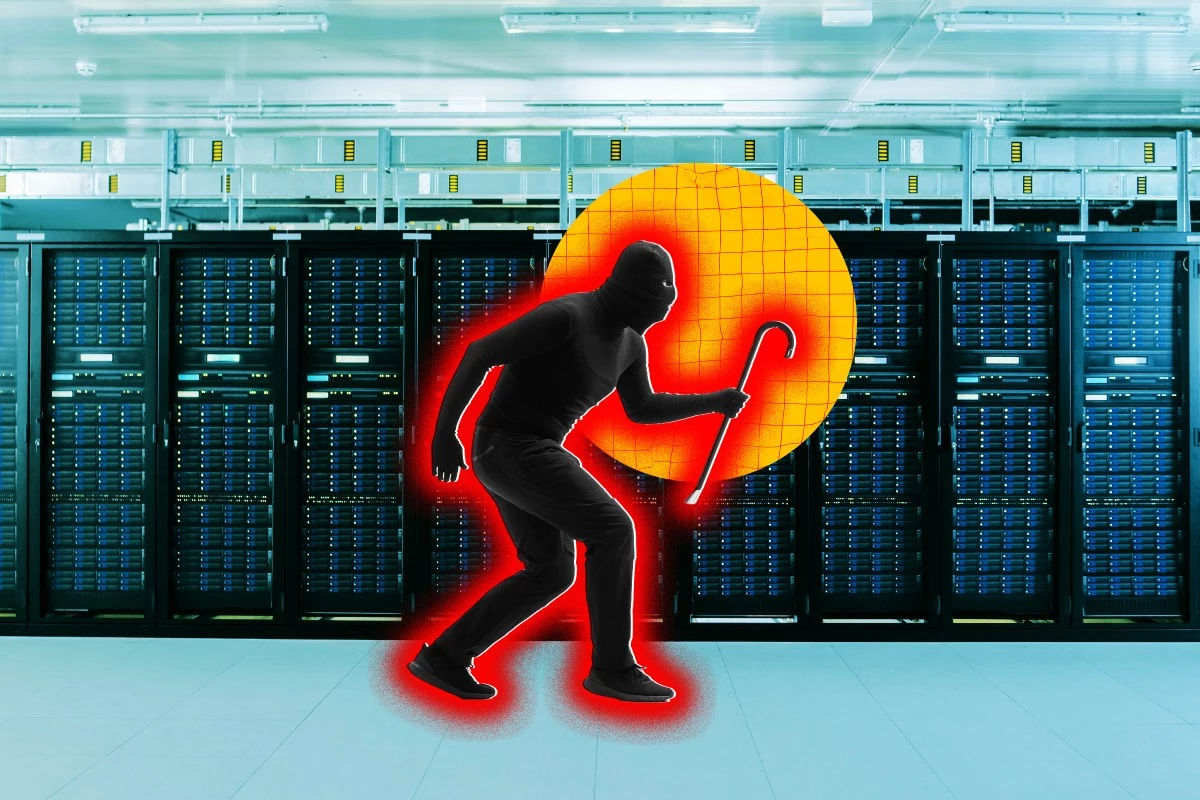

Data-center construction freight becomes a prime target in a $35B cargo-theft economy
A string of recent U.S. cargo thefts involving data-center construction materials underscores how the physical buildout behind the AI boom is reshaping criminal incentives. Investigators describe thefts of two tractor-trailers carrying more than $1.3 million in equipment—including $300,000 in copper wire spools—stolen while moving out of Alabama and Florida and later recovered in Illinois. In a separate case, nearly $5 million in copper and electronics reportedly disappeared while in transit.
These incidents land in a broader national trend line: the Department of Homeland Security estimates annual U.S. cargo-theft losses at roughly $35 billion, while Verisk CargoNet reports a 60% year-over-year surge in North American supply-chain crime. What stands out is not only the scale, but the changing composition of what’s being stolen. As data centers proliferate to support AI workloads, shipments increasingly contain high-density, high-value components—server racks, memory modules, power gear, and premium copper—turning ordinary freight corridors into high-stakes targets.
For business and technology leaders, the takeaway is clear: AI infrastructure risk is no longer confined to chips, cloud contracts, or cyber threats. The physical supply chain—trailers, yards, cross-docks, rail ramps, and warehouses—has become a critical attack surface with direct consequences for project timelines, capital efficiency, and service capacity.
Why AI-era hardware and copper are rewriting the cargo-theft playbook
Historically, cargo theft often centered on easily resold consumer goods. The current wave reflects a pivot toward specialized, high-liquidity industrial inputs—especially those tied to data-center construction and electrification. Several dynamics are converging:
- Per-shipment value is rising sharply. Data-center components are compact relative to their worth, enabling theft rings to extract outsized returns from a single load. Even “non-glamorous” inputs—like oxygen-free copper wire—can rival electronics in value when shipped in bulk.
- Copper’s price environment amplifies incentives. A multi-year bull run, fueled by electrification and renewable buildouts, increases the ROI on stolen copper and raises the stakes for shippers and insurers.
- Multi-modal complexity creates visibility gaps. Data-center materials frequently move through truck-to-rail transitions, port-adjacent warehouses, staging yards, and temporary storage. Each handoff can dilute accountability and weaken real-time tracking, creating exploitable windows.
- Resale channels are broader than many assume. Copper can be laundered through scrap and secondary markets; electronics and data-center gear can be fenced domestically or routed abroad. The result is a theft ecosystem that is both market-savvy and operationally agile.
Notably, these theft rings increasingly resemble professional logistics operators. They may track spot commodity prices, monitor outbound patterns from major OEMs and hyperscale campuses, and coordinate multi-state operations that exploit jurisdictional seams. The sophistication is less about brute force and more about information advantage—knowing what is moving, when it is most vulnerable, and how quickly it can be converted into cash.
The new convergence: physical logistics security as a pillar of digital resilience
The strategic importance of AI data centers changes how these crimes should be interpreted. When the stolen goods are inputs to compute capacity—power distribution equipment, copper wiring, electronics—the impact is not merely financial. It can translate into:
- Construction delays and capacity shortfalls that ripple into cloud availability, enterprise AI rollouts, and regional compute supply.
- Higher total cost of ownership as insurers raise premiums and impose stricter underwriting requirements, pushing security costs into capital expenditure models.
- Operational risk that blurs into cybersecurity and continuity planning, because physical asset loss can impair the infrastructure that underpins digital services.
This convergence is arriving at a politically sensitive moment. Data-center expansion is increasingly contested in some communities due to land use, energy demand, and traffic. If public sentiment hardens, policymakers could respond with tighter permitting, corridor restrictions, or compliance mandates that indirectly reshape freight operations. In that environment, cargo theft is not just a private-sector loss event—it becomes part of a broader debate about critical infrastructure resilience.
For investors and boards, this also intersects with ESG and supply-chain transparency. Stakeholders are scrutinizing provenance, ethical sourcing, and risk controls. That scrutiny can become a lever: companies can justify stronger tracking, tamper evidence, and chain-of-custody controls not only as loss prevention, but as governance and resilience measures aligned with long-term value protection.
What industry leaders are likely to do next—standards, intelligence-sharing, and finance-driven security
The emerging response will likely be less about any single technology and more about systems-level hardening—combining telemetry, process controls, and collaborative enforcement. Several strategic imperatives are gaining momentum:
- Hybrid, end-to-end tracking architectures: Pair GPS telematics with RFID and LPWAN sensors to maintain visibility across handoffs, detect route deviations, and trigger automated anomaly alerts.
- Collaborative intelligence-sharing: Build or expand consortia to exchange threat indicators—high-risk lanes, fraudulent pickup patterns, repeat offender tactics—so that carriers, OEMs, and developers operate from a shared risk map rather than isolated incident reports.
- Security embedded in project finance: Expect lenders and insurers to formalize “theft-risk layers,” rewarding hardened practices—vetted logistics partners, secure yards, sealed trailers, conditional disbursements tied to verified delivery milestones.
- Regulatory modernization for critical-infrastructure freight: As AI infrastructure is increasingly treated as nationally strategic, baseline standards analogous to air-cargo controls may emerge—ideally scalable enough not to crush smaller carriers while still raising the floor on security.
- Materials strategy to reduce criminal allure: Over time, R&D into lower-copper designs, composite conductors, and closed-loop recycling of decommissioned data-center hardware could reduce exposure to commodity-driven theft incentives.
The deeper signal from these thefts is that the AI economy’s physical backbone is becoming a contested domain—where organized crime, commodity markets, and infrastructure policy collide. Companies that treat data-center cargo security as a core competency—integrated across logistics, finance, and risk governance—will be better positioned to keep buildouts on schedule and protect the real-world assets that make digital ambition possible.

 By
By

 By
By

 By
By
 By
By
 By
By
 By
By







