

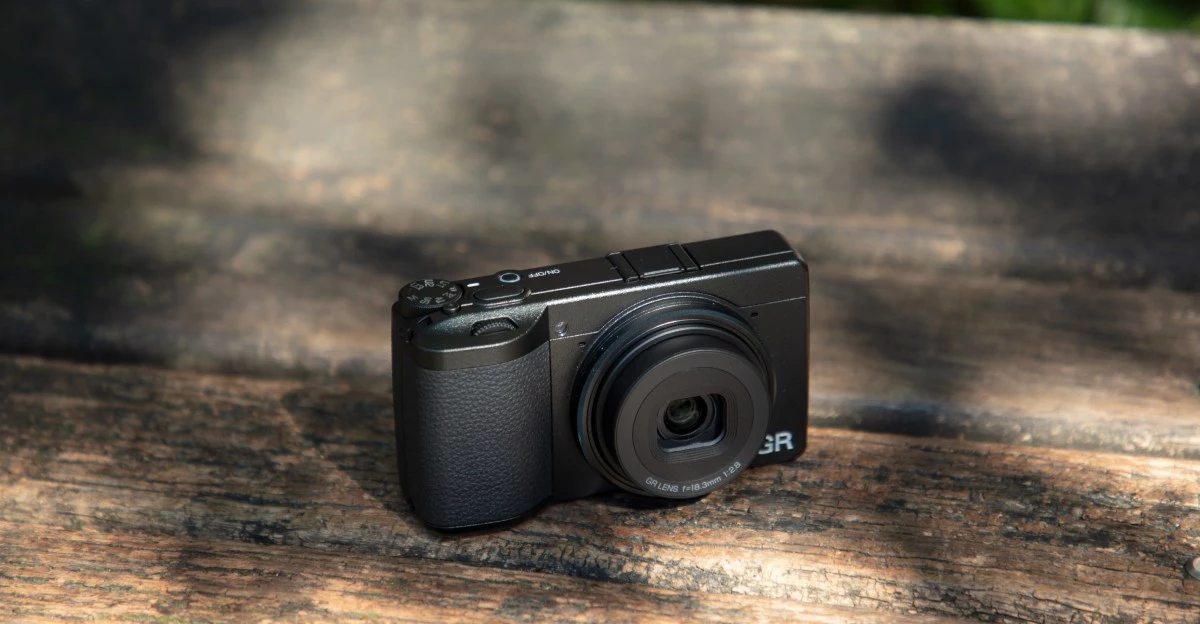

Ricoh’s GR IV: A Compact Camera Reborn for the Luxury Era
Ricoh’s unveiling of the GR IV, slated for release in mid-September at a striking $1,499.95, is not merely a product launch—it is a signal flare in the ongoing transformation of the premium compact camera market. The GR IV’s arrival, accompanied by the new GF-2 flash accessory, marks a decisive pivot away from the “affordable enthusiast” category toward a rarefied, luxury-driven niche. This shift is not occurring in isolation; it is the result of converging technological, economic, and cultural forces that are reshaping what it means to make—and sell—a camera in 2024.
The Anatomy of a Premium Compact: Innovation Meets Nostalgia
At the heart of the GR IV is a 26-megapixel APS-C sensor, paired with a newly engineered 28mm-equivalent f/2.8 lens. Ricoh’s commitment to hardware excellence is evident in the inclusion of in-body image stabilization (IBIS) and a revamped phase-detect autofocus system. Yet, the most intriguing technical flourish may be the 53 GB of internal storage—a feature that, while seemingly incremental, is quietly revolutionary.
- Sensor-to-storage integration: By embedding ample on-board memory, Ricoh eliminates the friction between capture and sharing, echoing the seamless user experience of smartphones. This move could compress the traditional memory card market, while laying the groundwork for direct-to-cloud workflows—a strategic adjacency that camera manufacturers have largely left untapped.
- Optics over computation: Unlike the computational photography arms race dominating smartphones, Ricoh’s upgrades are resolutely hardware-centric. This leaves open a tantalizing white space for future hybrid features: AI-driven noise reduction, subject tracking, or even real-time cloud backup, all of which could be delivered via firmware rather than costly hardware overhauls.
- Miniaturization mastery: Achieving a near-pocketable form factor around a large APS-C sensor is a testament to advances in actuator design and thermal management. Suppliers of low-profile lens assemblies and high-density PCB substrates stand to benefit from this relentless drive toward compactness.
Economic Realities and the New Psychology of Camera Luxury
The GR IV’s $1,500 price tag—$600 above its predecessor—reflects more than just inflation. Ricoh points to component cost escalation and U.S. tariffs, particularly Section 301 duties on Chinese-origin optical assemblies, which have added 8-12% to landed costs. Rather than absorbing these increases, Ricoh is passing them directly to consumers, betting on the inelasticity of demand among its cult following.
- Premiumization as strategy: While the overall interchangeable-lens camera market is in decline, the fixed-lens premium segment grew an estimated 17% year-over-year in 2023. Social-media-driven nostalgia and the scarcity premium of models like Fujifilm’s X100VI have transformed these cameras into objects of desire—akin to limited-edition sneakers or luxury watches.
- Accessory ecosystem: The optional $120 GF-2 flash and anticipated optical viewfinder refresh are not mere add-ons; they are pillars of a luxury-goods bundling strategy that echoes Leica’s optics-plus-accessory playbook. This approach not only boosts average revenue per user but also deepens brand engagement.
- Scarcity and social cachet: The GR brand’s cult status, combined with constrained supply, could fuel secondary-market premiums and organic social buzz. In this context, the camera becomes a Veblen good—a product whose desirability increases with its price and exclusivity.
Strategic Implications for an Industry at a Crossroads
Ricoh’s GR IV is more than a technical refresh; it is a case study in how niche hardware can command higher average selling prices when it fuses authentic brand equity with incremental user experience innovation. The camera’s unique positioning—lacking a built-in viewfinder, but offering a distinctive 28mm focal length—defends a creative sweet spot that Fujifilm’s X100VI cannot fully occupy. This micro-niche focus, paired with unmet demand from backordered competitors, allows Ricoh to carve out a defensible market segment.
For component suppliers, the GR IV’s internal storage and miniaturization imperatives signal new growth pockets in high-density NAND and low-profile IBIS modules. Specialty retailers, meanwhile, are incentivized to reallocate shelf space from declining entry-level DSLRs to premium compacts, leveraging accessory bundling and financing programs to mitigate sticker shock.
Perhaps most intriguingly, the GR IV’s platform potential—native storage, USB-C connectivity, and the prospect of direct mobile tethering—hints at a future where cameras are not just tools, but nodes in a broader content creation ecosystem. For prosumer and enterprise creators, this means faster, frictionless workflows; for policymakers, Ricoh’s pricing offers a live experiment in tariff pass-through and consumer elasticity.
The premium compact camera, once a utilitarian tool, is being reborn as a status object and a platform for innovation. As the market migrates from megapixels to seamless, smartphone-inspired experiences and curated scarcity, those who align their sourcing, channel, and product strategies with these new vectors will be best positioned to capture value in the evolving landscape.

 By
By
 By
By

 By
By
 By
By

 By
By
 By
By







