

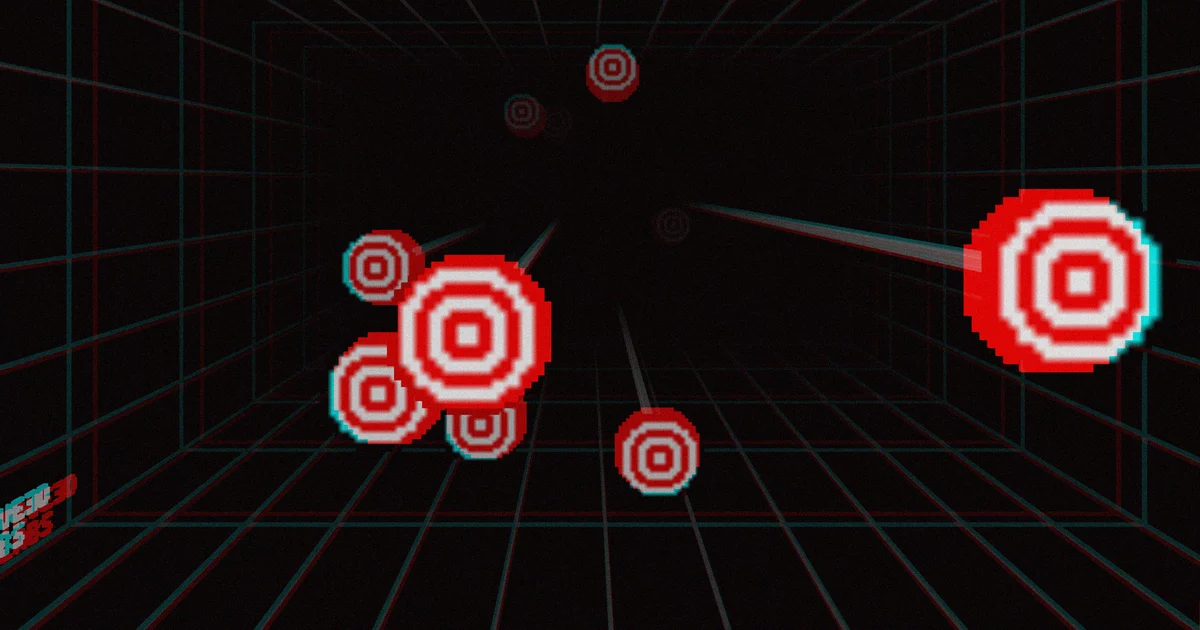

A New Dimension: Head-Tracked “Window Mode” and the Reawakening of Consumer 3D
The perennial allure of three-dimensional displays has haunted the technology industry for decades. From the red-blue anaglyphs of yesteryear to the short-lived 3DTV boom, the promise of immersive depth has repeatedly collided with the hard limits of hardware, content, and consumer patience. Now, a prototype from True3D Labs, led by former Meta Reality Labs engineer Daniel Habib, suggests a subtle but potentially seismic shift: a glasses-free, head-tracked “Window Mode” that transforms any ordinary screen into a portal of depth—no cumbersome headsets or special glasses required.
The Optical Alchemy: Turning Commodity Screens into 3D Windows
At the heart of this innovation is a deceptively simple principle: instead of relying on binocular disparity (the difference between what each eye sees), the system synthesizes stereopsis through motion parallax. By tracking the viewer’s head with a standard webcam and remapping the virtual camera’s viewpoint in real time, a flat display becomes a dynamic “window” into a three-dimensional scene. The effect is immediate and uncanny—move your head, and the perspective shifts as if you’re peering into a shadowbox world.
Several technological currents converge to make this possible:
- Ubiquitous, Low-Cost Sensors: Commodity 720p webcams, now available for under $3, provide the necessary input for head tracking across billions of devices.
- On-Device Neural Processing: Modern mobile SoCs—Apple’s A-series, Qualcomm’s Snapdragon, Google’s Tensor—boast AI accelerators capable of low-latency, privacy-preserving pose estimation, eliminating the need for cloud processing.
- Advanced Filtering Algorithms: Habib’s team employs predictive filtering and Kalman smoothing to suppress jitter and micro-saccades, addressing the “swimming” effect that plagued early experiments like Johnny Lee’s Wii-mote demo.
Yet, the system is not without constraints. Latency budgets are razor-thin—motion-to-photons must remain under 20 milliseconds to avoid breaking the illusion. Current designs optimize for a single viewer; multi-user scenarios remain research-grade. And crucially, content pipelines must evolve: true 3D requires depth-embedded assets, not just parallaxed 2D layers.
Shifting the Value Chain: From Headsets to Everyday Screens
If this approach scales, it could fundamentally alter the economics of spatial computing. Headset makers like Meta, Apple, and Sony have long concentrated profits in bespoke hardware, but adoption remains hamstrung by cost, comfort, and social friction. A software-driven, glasses-free 3D solution reframes depth as a feature upgrade for the existing global install base of two billion screens.
This shift has cascading implications:
- Semiconductors: Edge AI accelerators and GPUs stand to benefit, as real-time multi-view rendering becomes a new performance benchmark.
- Platform Strategy: Apple could leverage the technology to bridge MacBooks and Vision Pro, while Microsoft might integrate it into the Copilot+ AI PC ecosystem. For streaming giants, “3D Enhanced” content could become a premium differentiator, much like Dolby Vision or HDR.
- Business Models: Licensing SDKs to OEMs offers a Dolby-style royalty opportunity, while creator toolchains could spark a flywheel of user-generated depth content.
Strategic Horizons: Privacy, Content, and the Next UX Plateau
The privacy-forward design—processing all head-tracking data locally—aligns with tightening global regulations, a critical advantage for enterprise and regulated sectors. If studios and platforms embrace depth-embedded mastering standards, content investments can be amortized across both headset and screen-based 3D, consolidating budgets and reducing risk. The flywheel effect is tantalizing: as more devices support “Window Mode,” content libraries grow, and consumer expectations shift.
Adjacent verticals stand to gain as well:
- E-commerce: Photorealistic, depth-rich product showcases could boost conversion rates and reduce returns.
- Telepresence and Collaboration: Holographic whiteboards and 3D canvases on standard laptops could redefine remote work.
- Industrial Applications: Simulation and digital twin workflows, once confined to specialized hardware, could reach field technicians on mainstream devices.
Industry Realignment and the Road Ahead
With hardware growth slowing and software premiumization on the rise, OEMs are hungry for experiential upgrades that justify higher price points. Asset-light, software-centric approaches—like head-tracked 3D—fit the new capital discipline favored by investors wary of hardware write-downs. The post-pandemic hybrid workforce, increasingly reliant on depth-accurate visualization, further accelerates demand.
For executives and strategists, several imperatives emerge:
- Track Standards: Early alignment with MPEG-I, Khronos, and OpenXR will minimize retrofit costs and accelerate ecosystem lock-in.
- Pilot and Iterate: Begin A/B testing parallax features on premium devices to gather engagement data and refine ergonomics.
- Secure Supply Chains: Anticipate demand for high-frame-rate webcams and low-latency panels; diversify sourcing strategies.
- Empower Creators: Invest in toolchains that make depth content creation seamless, lowering the barrier to entry.
As the industry stands at the threshold of a new spatial computing cycle, the head-tracked window paradigm offers a pragmatic, privacy-aligned, and capital-efficient path forward. By embedding depth as a software-defined layer atop the world’s screens, the technology sidesteps the pitfalls of past 3D fads and positions itself as a foundational upgrade for the next era of digital experience. The question is no longer whether consumers want 3D—it’s whether the industry can finally deliver it, frictionlessly, at scale.

 By
By
 By
By
 By
By

 By
By

 By
By
 By
By







