

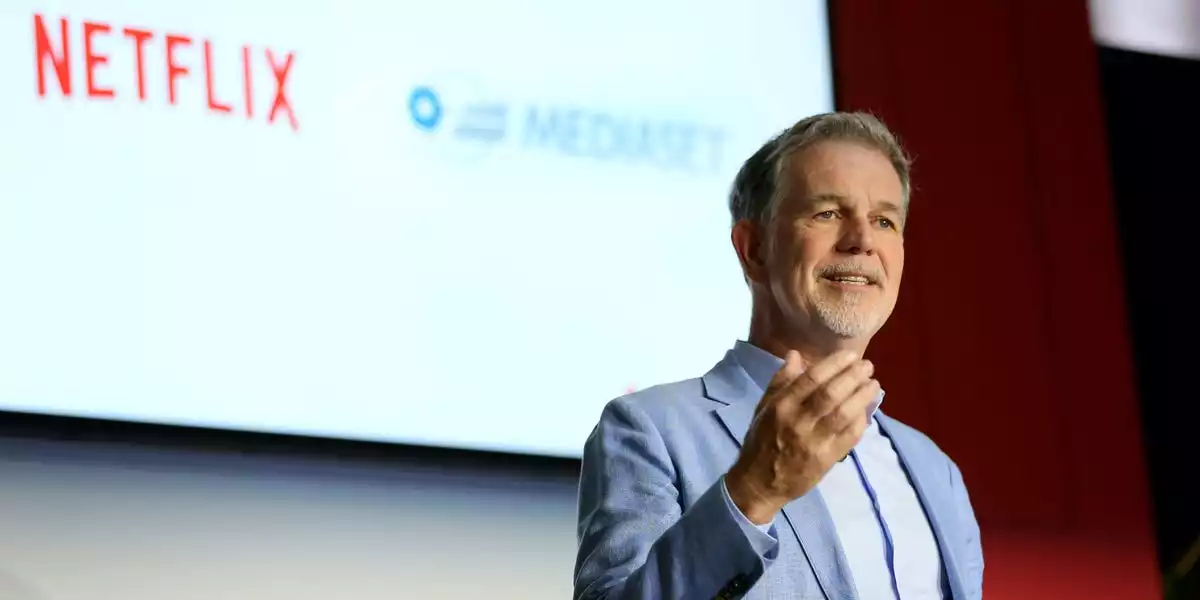

A founder’s final handoff—and what it signals for Netflix’s next governance era
Reed Hastings’ planned departure from Netflix’s board in June 2023—following his January step-down as CEO—reads less like a sudden break than a carefully staged transfer of institutional authority. For investors and industry observers, this kind of phased exit is a familiar pattern in the tech-founder lifecycle: the founder gradually reduces formal control while the company recalibrates governance for a new competitive chapter.
Netflix is no longer the insurgent that rewired home entertainment; it is a global incumbent operating at scale in a market defined by rising content costs, intensified platform competition, and expanding regulatory scrutiny. In that context, a board refresh is not merely symbolic. It can be a strategic lever—one that helps Netflix align oversight with the realities of the modern streaming economy, including:
- Ad monetization expertise, as Netflix expands and optimizes its ad-supported tier
- Gaming and interactive entertainment know-how, as the company tests new engagement models beyond video
- International policy and compliance depth, as content rules, data privacy regimes, and digital taxation evolve across Europe, Asia, and Latin America
- Technology governance, including AI, personalization systems, and platform integrity
Hastings’ departure closes a defining governance chapter, but it also raises a sharper question: can Netflix preserve the cultural operating system he built while adapting to a world that increasingly demands formal controls?
The Netflix culture doctrine: high performance, radical candor, and “no rules” autonomy
Hastings’ most durable contribution may not be a product feature or a content strategy, but a management philosophy—popularized in *No Rules Rules*—that positioned culture as Netflix’s competitive moat. The company’s internal model has often been described as a high-performance “sports team,” designed to maximize speed, accountability, and talent density.
At its core, the blueprint rests on three interlocking ideas:
- “Stunning colleagues” talent density
Netflix’s approach favors a lean roster of top performers, even if that means paying generous severance to employees deemed merely “adequate.” The logic is that a smaller team of exceptional talent can outperform a larger organization burdened by mediocrity and coordination drag.
- Radical candor and high transparency
Feedback is expected to be direct, frequent, and actionable—up to and including candid post-mortems around performance and exits. In theory, this reduces politics and accelerates learning cycles. In practice, it requires careful leadership calibration to avoid turning candor into corrosive bluntness.
- Autonomy over process (“no rules”)
Policies like unlimited vacation and flexible spending are meant to replace bureaucratic controls with adult judgment. The model can unlock creativity and faster decision-making, but it also assumes a workforce capable of self-discipline and strong context awareness.
This culture has long been treated as Netflix’s differentiator—especially in a sector where competitors can replicate product features, bid for similar content, and access comparable cloud infrastructure. Yet culture is also fragile: it scales unevenly, varies across regions, and can be stressed by new business lines that require tighter operational guardrails.
Strategic tensions: scaling freedom in a regulated, diversified, AI-shaped media market
Hastings’ exit lands at a moment when Netflix is simultaneously defending its core subscription business and building new pillars of growth. That combination introduces strategic tensions that test the limits of the “no rules” ethos.
The competitive battlefield now spans far more than Hollywood. Streaming platforms compete for:
- showrunners, directors, and production executives
- data scientists and machine-learning engineers
- platform reliability and security talent
- advertising technology specialists
Netflix’s high-performance model can be an advantage—top talent often prefers environments with autonomy and high impact. But it can also amplify churn risk, particularly when rivals offer differentiated cultures, geographic flexibility, or more predictable career pathways.
As governments tighten rules around content standards, child safety, misinformation, and data privacy, Netflix must reconcile a minimal-policy mindset with the need for consistent compliance. The operational reality is that global scale demands repeatable controls, especially in:
- content classification and local regulatory alignment
- privacy-by-design and data governance
- advertising measurement integrity and brand safety
- vendor and production risk management
The challenge is not whether to introduce guardrails, but how to do so without re-importing the slow bureaucracy Netflix historically rejected.
Hastings’ emphasis on transparency mirrors broader expectations that boards should be more engaged on technology risk, stakeholder trust, and long-term resilience. For Netflix, board composition becomes especially consequential as it navigates:
- ad-supported economics and pricing architecture
- gaming strategy and capital allocation discipline
- AI-driven personalization and ethical oversight
- sustainability and regulatory reporting requirements
Founder succession, in this light, is not just leadership change—it is a governance redesign aligned to a more complex operating environment.
What endures after Hastings: institutionalizing a culture while upgrading the control plane
Netflix’s next phase will likely be defined by whether it can preserve the performance edge of Hastings’ culture while installing the operational discipline required by diversification and regulation. The company’s scale—more than 12,000 employees globally—makes this an execution challenge, not a slogan.
Several forward-looking implications stand out:
- Codifying behaviors without calcifying them: Netflix may need clearer definitions of “high performance” that travel across regions and functions, while still allowing local nuance.
- Selective rules, not blanket bureaucracy: Stronger oversight in budgets, compliance, and data governance can coexist with autonomy if the rules are narrow, transparent, and tied to risk.
- AI governance becomes unavoidable: As generative AI influences recommendations, localization, and potentially production workflows, Netflix will need explicit protocols around bias, IP protection, and creative rights—areas where “freedom-first” must meet enforceable standards.
- Diversification demands alignment: Advertising and gaming introduce different metrics, cycles, and partner ecosystems than subscription video. Maintaining speed across these domains requires shared accountability frameworks, not just cultural aspiration.
Hastings leaves behind more than a company; he leaves behind a managerial thesis that helped Netflix outmaneuver larger incumbents for years. The next test is whether that thesis can be upgraded—without being diluted—as Netflix competes in a streaming market where growth is harder, scrutiny is sharper, and technology change is accelerating rather than stabilizing.

 By
By
 By
By
 By
By
 By
By

 By
By

 By
By







