
Plasma-driven biochar: why a 90-second conversion matters for energy and waste economics
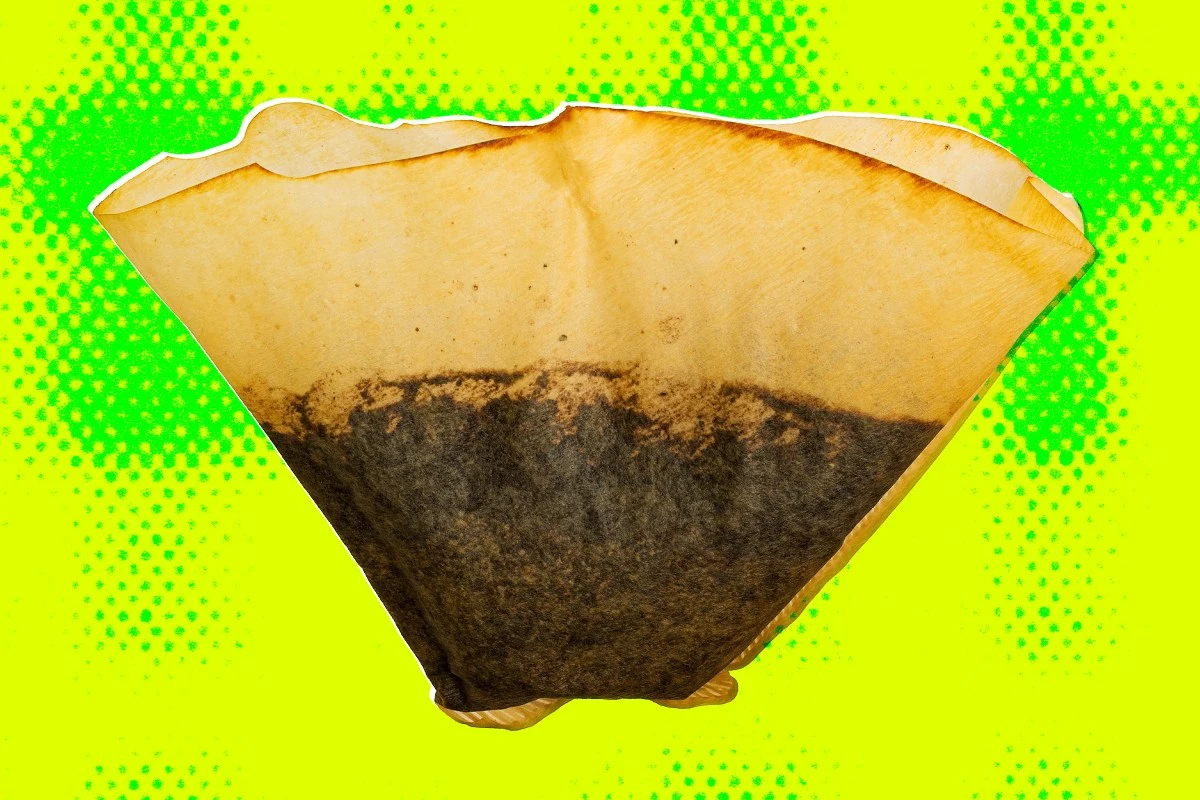
The Korea Institute of Geoscience and Mineral Resources (KIGAM) is drawing attention with Flame Plasma Pyrolysis (FPP)—a thermochemical process that converts spent coffee grounds into high-grade biochar in roughly 90 seconds. In a sector where wet biomass typically demands hours of residence time and energy-intensive pre-drying, the headline is not merely speed; it is the possibility of reframing “wet waste” as a high-performance solid fuel feedstock.
At approximately 1,652°F (900°C), FPP uses plasma-induced pressure and heat to trigger micro-explosions inside biomass particles, rapidly releasing moisture and volatiles while forming a highly porous carbon structure. The reported outcome—biochar with an energy density comparable to anthracite coal—positions FPP as more than a niche recycling story. It becomes a potential lever in three markets that rarely align cleanly: waste management, industrial energy, and carbon accounting.
KIGAM’s early observations—minimal smoke and reduced tar formation—also matter operationally. Conventional pyrolysis and related thermal routes can produce complex condensables that complicate gas cleanup, odor control, and permitting. If FPP consistently suppresses tar and particulate formation at scale, it could reduce downstream treatment requirements and improve project bankability.
Inside Flame Plasma Pyrolysis: performance claims and the engineering hurdles that decide viability
FPP’s core differentiator is its ability to process high-moisture biomass without the usual preprocessing penalties. Traditional pyrolysis often requires drying to avoid wasting heat on water evaporation and to stabilize reactor conditions. FPP instead uses plasma conditions to drive rapid internal pressure changes, effectively turning moisture into a mechanism for structural transformation rather than a liability.
Key technical implications emerging from the reported results include:
- Throughput potential: A 90-second cycle implies a 100× to 1,000× time advantage over many wet-biomass pyrolysis setups, which can translate into smaller reactor footprints per unit output—if power delivery and heat transfer scale efficiently.
- Product competitiveness: Biochar approaching anthracite-like calorific value suggests immediate relevance for industrial boilers, district heating, and certain power-generation contexts, subject to ash behavior, grindability, and combustion compatibility.
- Cleaner conversion profile: Lower tar and smoke formation—if validated—could mean simplified flue-gas cleanup, fewer fouling issues, and potentially smoother compliance pathways.
Yet the decisive questions are industrial, not laboratory. Scaling plasma systems is rarely linear. The technology’s next chapter will likely be written by:
- Reactor durability and materials: Sustaining plasma conditions under continuous operation demands components that tolerate thermal cycling, erosion, and high-temperature corrosion.
- Electrical infrastructure and efficiency: Plasma generation is power-intensive; the commercial case will hinge on kWh-per-ton processed, uptime, and the ability to integrate with low-cost or low-carbon electricity.
- Feedstock variability: Coffee grounds are relatively consistent compared with mixed food waste, manure, or sewage sludge. Broad deployment will require adaptive control of plasma parameters to handle fluctuating moisture, oils, salts, and contaminants.
Market impact: from landfill liability to coal-adjacent fuel and carbon-market instrument
The macro opportunity begins with scale. An estimated 8–10 million tonnes of spent coffee grounds are landfilled globally each year, representing both a disposal burden and a concentrated, collectable biomass stream—especially in urbanized, coffee-intensive economies. FPP’s proposition is to convert that stream into a saleable solid fuel while shrinking waste volume by up to 83.3%, potentially reducing hauling and landfill costs.
From a business perspective, the unit economics could be shaped by a combination of revenue and avoided cost:
- Tipping-fee offsets and avoided landfill liabilities: Waste-to-value models often become viable when disposal costs are high or rising.
- Coal displacement value: If biochar is truly anthracite-competitive, it can target higher-value coal applications where performance requirements are strict.
- Carbon credit upside: Biochar can function as a stable carbon pool, and emerging methodologies in voluntary and compliance markets may reward sequestration—though eligibility depends on lifecycle accounting, permanence rules, and monitoring rigor.
Downstream, FPP-derived biochar sits at an intersection of markets:
- Energy and heat: Industrial furnaces, district heating networks, and select power producers seeking lower-carbon solid fuels could be early adopters—particularly where coal faces tightening sulfur and emissions constraints.
- Agriculture and soil: Biochar’s soil-amendment potential introduces a second demand channel, though fuel-grade and soil-grade specifications may diverge.
- Circular economy procurement: Large enterprises with ESG and zero-waste targets may support offtake models that bundle waste diversion with energy procurement.
Competitive positioning will be closely watched. Gasification, anaerobic digestion, torrefaction, and conventional pyrolysis each address wet biomass differently. FPP’s differentiator is its minimal preprocessing and rapid conversion, which could carve out a niche where logistics and moisture content have historically undermined project economics.
Commercialization pathways: partnerships, policy alignment, and the adoption barrier of “new coal”
KIGAM’s stated ambition to scale FPP and extend it to other high-moisture residues is strategically aligned with where waste volumes are largest: municipal organics, agricultural residues, and sludge streams. The most credible commercialization path is likely co-location—placing FPP units near concentrated feedstock sources such as coffee processing facilities, large roasters, or municipal organics hubs to reduce transport costs and stabilize supply.
Practical go-to-market steps that would accelerate validation include:
- Demonstration plants in major coffee hubs to prove continuous operation, energy efficiency, and emissions performance under real-world variability.
- Offtake agreements and performance guarantees to overcome end-user hesitation in substituting a proven commodity fuel with a novel biochar.
- Licensing and joint ventures with waste-management firms, utilities, and industrial heat users to align feedstock control with demand certainty.
- Policy positioning under renewable fuel standards and biochar carbon-accounting frameworks to unlock incentives and reduce permitting friction.
The adoption barrier is not merely technical; it is institutional. Industrial energy buyers are conservative because downtime is costly. If FPP can demonstrate reliable, scalable operation—and if its biochar consistently meets combustion and handling specifications—spent coffee grounds may stop being a quirky sustainability anecdote and start looking like a strategic, tradable input in the evolving markets for low-carbon heat, circular waste infrastructure, and verifiable carbon removal.

 By
By
 By
By

 By
By
 By
By


 By
By