

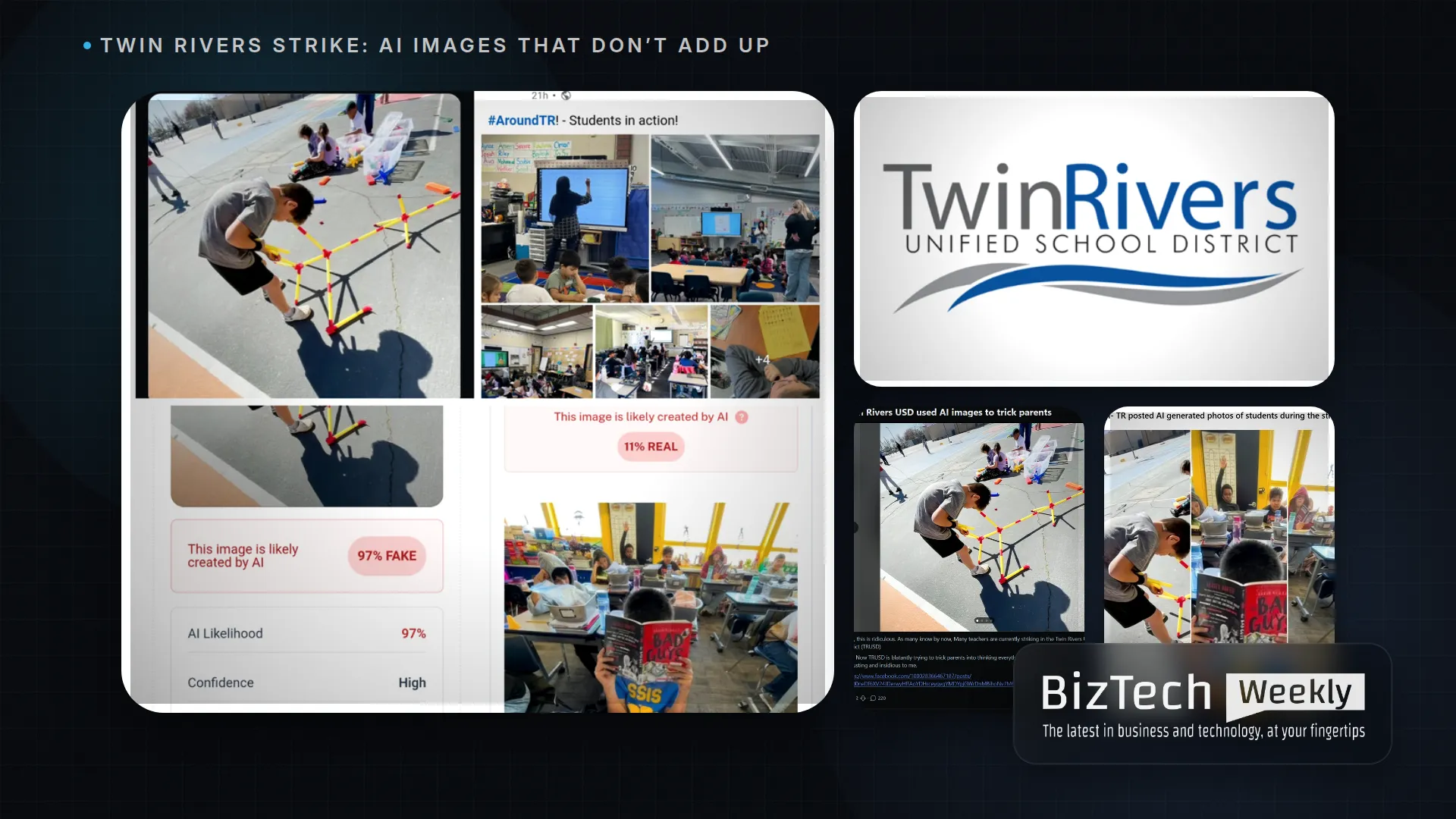

SACRAMENTO COUNTY, Calif. — As the teachers’ strike in the Twin Rivers Unified School District stretches into its second week, a new controversy is raising serious questions about how the district has portrayed conditions inside its schools.
Images posted on social media that appeared to show students actively learning in classrooms are now under scrutiny after multiple online users and independent reviewers found strong indicators that the photos may have been generated using artificial intelligence.
This situation could represent a troubling example of how emerging technologies can be used to shape public perception during a high-stakes labor dispute involving thousands of students and families.
A Strike Over Classrooms
The strike began March 5 after negotiations between the district and its teachers stalled. Union leaders say educators walked out over what they describe as a staffing crisis and years of under-investment in classroom instruction.
According to the California Teachers Association, the district began the school year with roughly 100 educator vacancies, with approximately 80 still unfilled months later.
District officials say schools remain open and that staff and substitutes are supervising students while negotiations continue.
But parents and students have reported scenes that look very different from a typical school day.
Several parents say their children have described being gathered into large spaces such as gyms or cafeterias rather than attending normal classes. Some students reported spending hours without structured lessons or instructional plans.
One parent said her daughter described hundreds of students grouped together in a gym with only a handful of adults supervising them.
Another student said substitutes had little or no curriculum to teach, leaving students to complete old assignments or simply wait out the day.
Social Media Images Raise Alarm
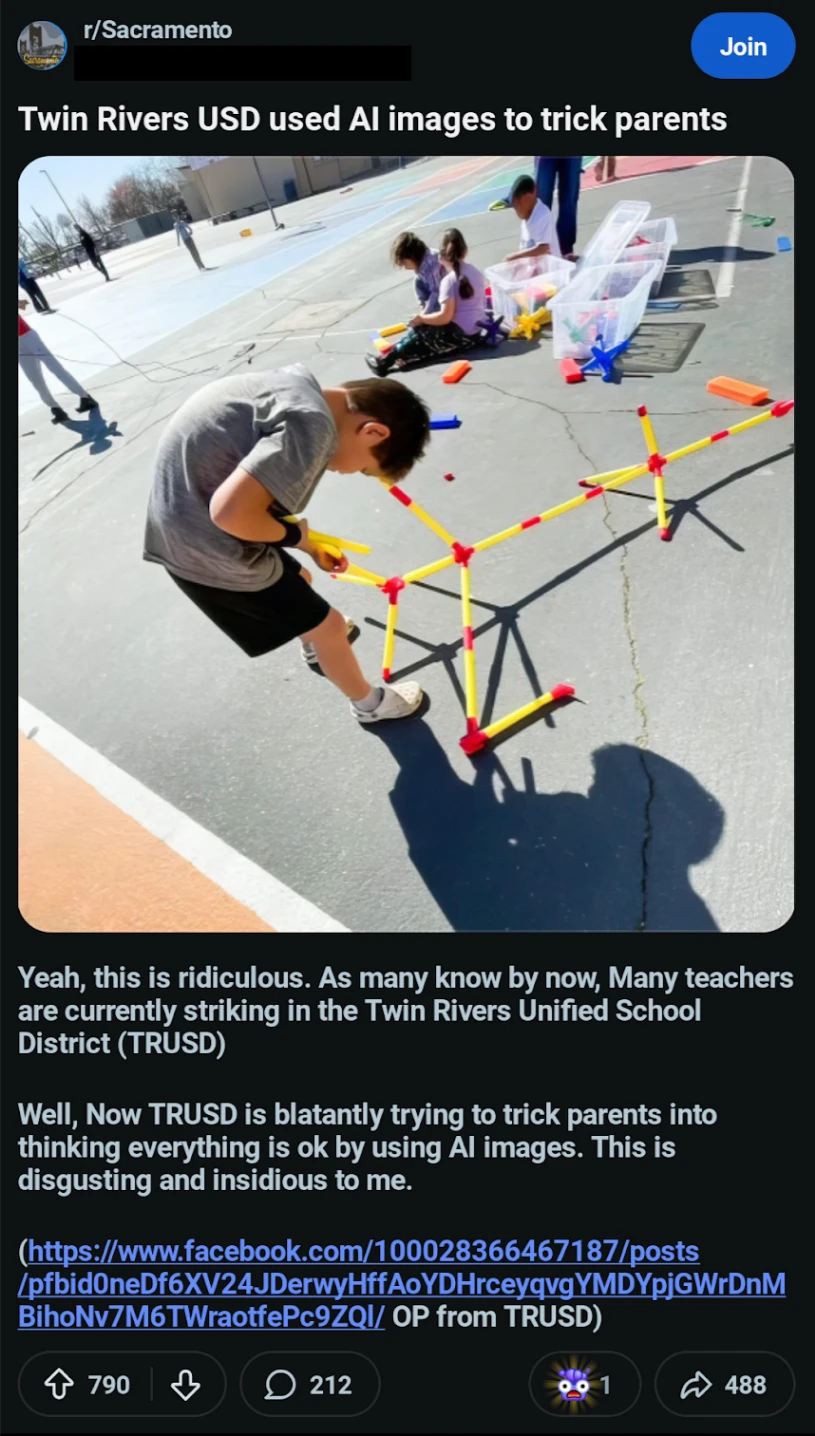
Amid those reports, images posted online that appeared to show orderly classrooms with students engaged in learning quickly began circulating.
The photos were shared widely in community forums and discussion groups, where some viewers initially accepted them as evidence that schools were operating normally despite the strike.
But others quickly noticed irregularities.
Users on Reddit and Facebook began running the images through AI-detection tools designed to identify patterns commonly associated with computer-generated imagery.
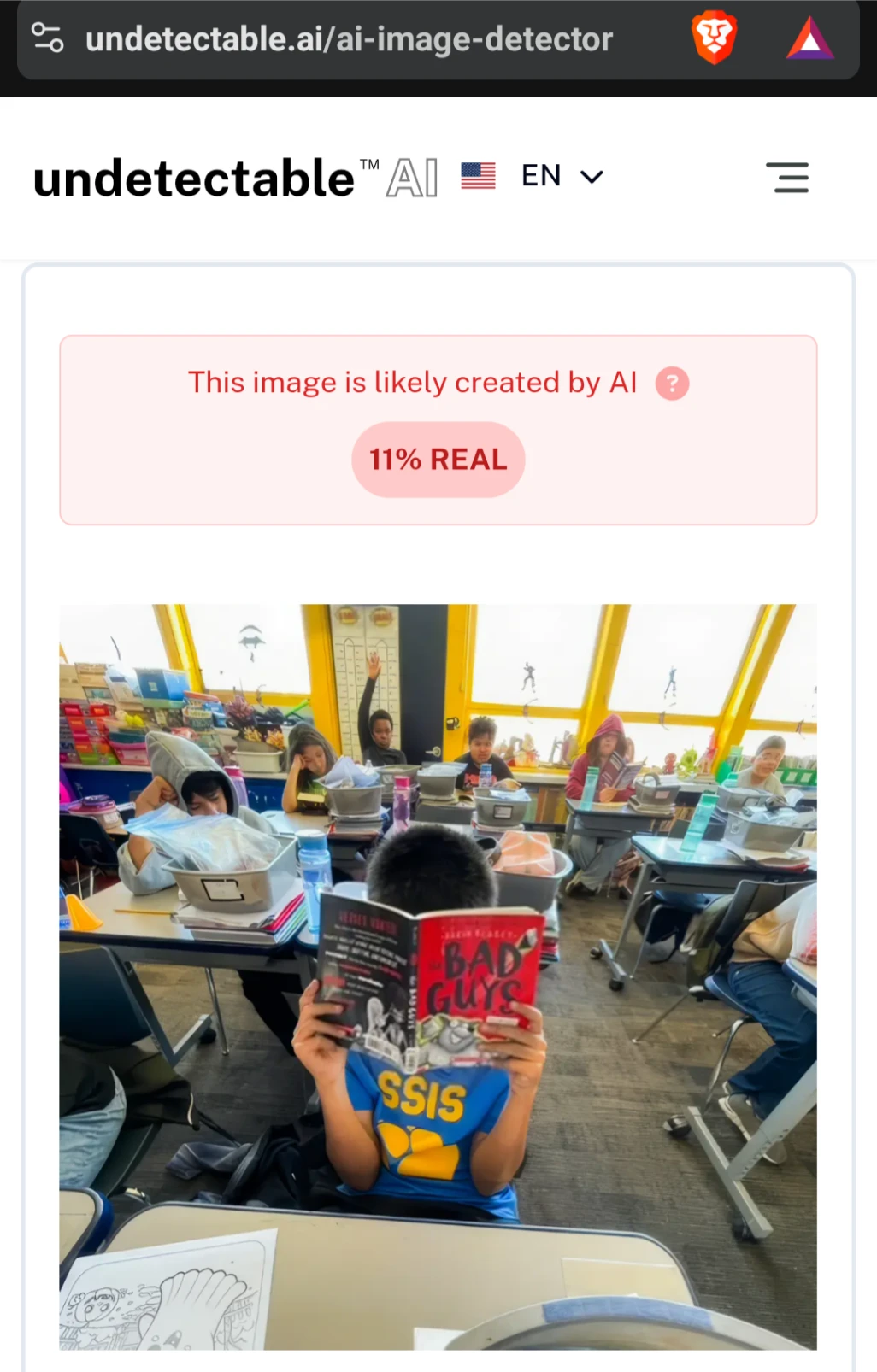
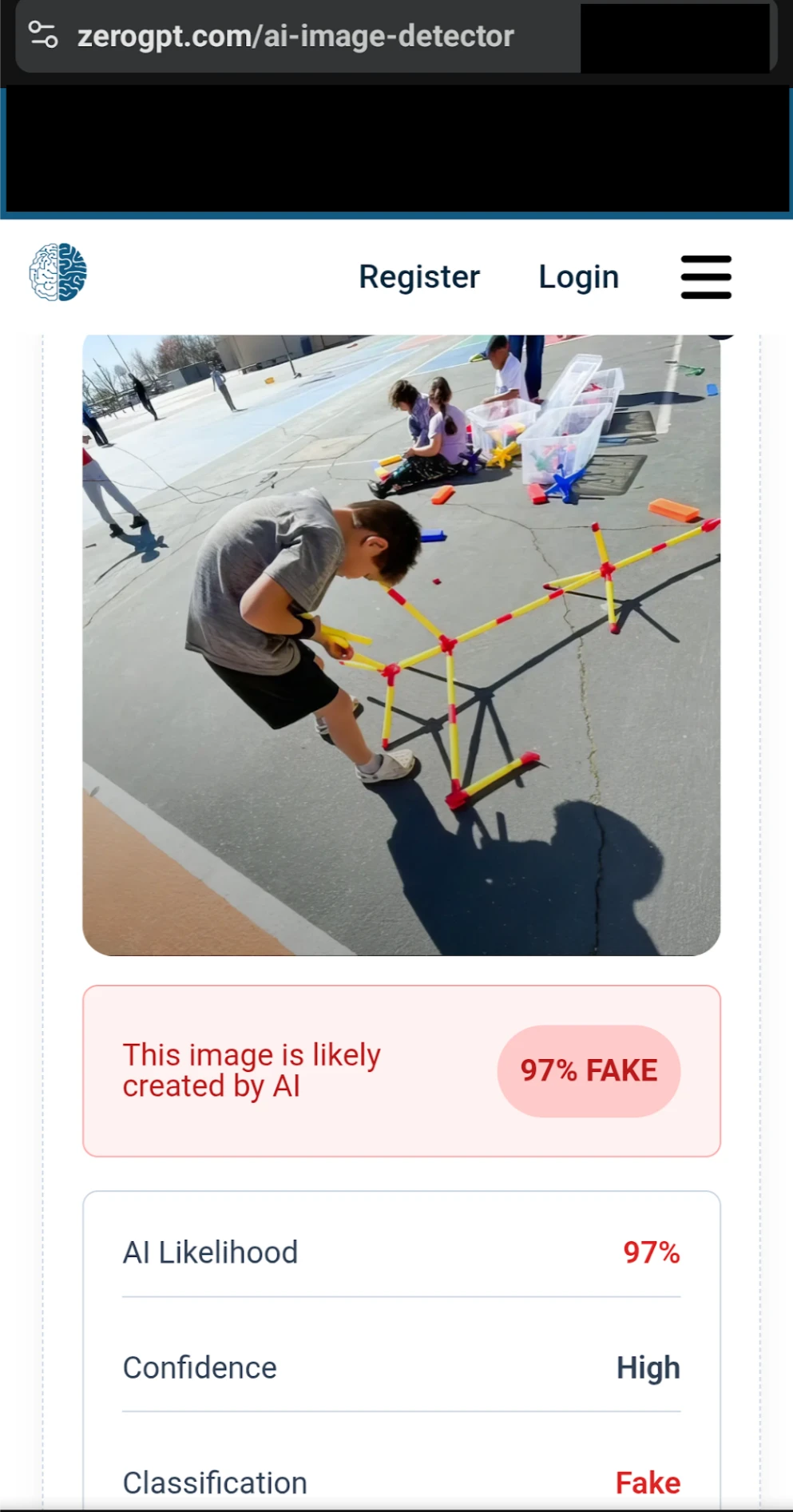
Multiple detection platforms flagged the images as highly likely to have been produced using artificial intelligence.
BizTech Weekly independently tested several of the same images using widely available AI-image detection tools. The results returned strong indicators that the images were likely AI-generated.
While such tools are not definitive proof, experts say consistent results across multiple detection systems can raise significant red flags.
Insider Accounts Paint a Different Picture
Compounding the controversy are statements from individuals claiming to work within the district who say the images do not reflect what is actually happening on campuses during the strike.
Several people posting online — identifying themselves as district staff or employees — claim many students are being supervised in large group settings rather than receiving structured instruction.
BizTech Weekly could not independently verify the identities of those individuals. However, their descriptions closely align with reports from parents and students interviewed by local media outlets.
Taken together, the accounts suggest a situation where schools may technically remain open while traditional classroom instruction is largely suspended.
The Power — and Risk — of AI Imagery
Artificial intelligence image generation has advanced rapidly in recent years, making it increasingly difficult for the public to distinguish real photographs from synthetic ones.
While the technology has legitimate uses in art, design, and education, experts warn that it can also be misused to create misleading narratives — particularly during moments of political or institutional controversy.
Public institutions such as school districts are generally held to especially high standards of transparency because they operate using taxpayer funding and are responsible for the welfare of children.
If AI-generated images were presented in a way that implied real classroom conditions during the strike, critics say it could undermine public trust.
District Response Unclear
As of publication, the Twin Rivers Unified School District has not publicly addressed the authenticity of the images circulating online.
It remains unclear who created the images, when they were produced, or whether they were intended to depict real classrooms during the strike.
Meanwhile, negotiations between district officials and the teachers’ union are expected to resume after Sacramento Assemblymember Maggy Krell called on both sides to return to the bargaining table.
Union leaders say they are prepared to negotiate but insist that the strike reflects deeper systemic issues affecting students and educators alike.
A Question of Public Trust
Beyond the immediate labor dispute, the controversy highlights a growing challenge facing public institutions in the age of artificial intelligence: how to maintain transparency when technology can easily manufacture convincing realities.
For parents deciding whether to send their children to school during a strike, accurate information is more than a matter of politics — it’s a matter of trust.
And when that trust is called into question, the consequences can reach far beyond a single labor dispute.

 By
By

 By
By
 By
By
 By
By
 By
By
 By
By
 By
By







