

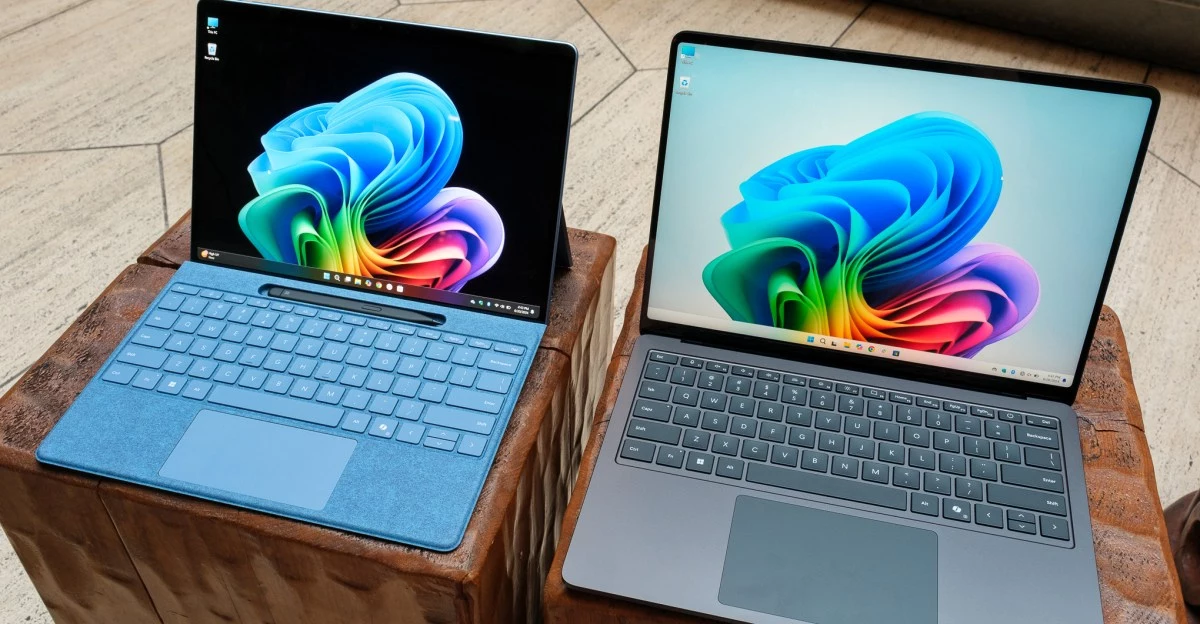

Snapdragon X Elite: The Quiet Revolution in PC Performance
In the ever-evolving landscape of personal computing, seismic shifts often begin as whispers. Qualcomm’s Snapdragon X Elite, once regarded as a curiosity for mobile-first laptops, has now emerged as a formidable contender, subtly redrawing the boundaries of what Windows-on-Arm (WoA) can achieve. Recent developments—ranging from a dynamic Snapdragon Control Panel to Microsoft’s Prism AVX emulation, and the landmark arrival of Fortnite with full kernel-level anti-cheat—signal not just incremental progress, but a genuine inflection point. The WoA ecosystem is no longer a speculative experiment; it is, increasingly, a credible alternative for high-performance and gaming-centric PCs.
The Anatomy of a Platform Breakthrough
The Snapdragon X Elite’s ascent is neither accidental nor singular. It is the product of a meticulously orchestrated confluence of technologies and partnerships, each addressing a historical pain point in Arm-based computing.
Driver-Centric Performance Uplift
- The introduction of the Snapdragon Control Panel marks a paradigm shift, bringing the rapid, iterative driver update culture of smartphones into the PC domain. Over-the-air GPU driver drops—more than 100 game optimizations in just 12 months—create a quasi-continuous delivery model that mirrors, and in some cases outpaces, what AMD and NVIDIA offer in the x86 world.
- This cadence is not mere window dressing; it is foundational for keeping pace with the relentless demands of modern gaming and creative workloads. The result is a platform that feels alive, responsive, and, crucially, competitive.
AVX/AVX2 Emulation: Bridging the Compatibility Divide
- Microsoft’s Prism emulation layer, now capable of translating x86 AVX opcodes, removes a longstanding barrier for creative and scientific applications that rely on SIMD extensions. Qualcomm’s on-chip AVX2 emulation further accelerates these code paths, hinting at a future where select x86 instructions are natively supported in Arm silicon.
- This is more than a technical workaround—it is a strategic bridge, enabling a vast catalog of legacy software to run with minimal friction, and signaling a willingness to blur the rigid lines of instruction set architecture.
Securing the Multiplayer Frontier
- The integration of kernel-level anti-cheat for Fortnite, achieved through close collaboration with Epic Games and multiple anti-cheat vendors, addresses a critical trust issue for competitive esports. By abstracting anti-cheat functions into a platform service layer, Snapdragon X Elite establishes a new baseline for multiplayer integrity—one that is both robust and vendor-agnostic.
- This security posture is not just a technical achievement; it is a prerequisite for attracting AAA publishers, whose revenue models depend on the sanctity of competitive play.
Native ARM64 Game Distribution: Local Performance Unlocked
- The upgraded Xbox app’s ability to deliver native ARM64 game binaries is a watershed moment. No longer confined to cloud streaming, WoA devices can now offer local, high-efficiency gaming experiences—sidestepping the performance penalties of emulation and unlocking new levels of battery-to-frame-rate optimization.
Economic Realignment and Competitive Ripples
The implications of these advances reverberate far beyond the engineering labs. Arm-based PCs currently account for less than 15% of Windows laptop shipments, but the tide is turning. Persistent improvements in drivers and AVX support are lowering the switching costs for both OEMs and independent software vendors, threatening the long-held dominance of Intel and AMD in the premium ultraportable segment.
- Subscription Economics: Microsoft’s PC Game Pass, now leveraging native Arm support, expands its addressable market and reinforces the shift toward recurring-revenue models.
- Channel Power Shift: The arrival of Fortnite on the Xbox PC Store, outside Epic’s own launcher, signals a détente between platform holders. For Microsoft, each marquee title on WoA increases the strategic value of its storefront; for Epic, it offers insulation from the volatility of app-store disputes.
Strategic Horizons: What Comes Next?
The Snapdragon X Elite’s momentum is not merely a function of raw performance; it is a validation loop. Gaming, the ultimate stress test, serves as a proxy for the platform’s readiness to tackle a broader array of workloads—including the AI-enhanced applications that will define the next era of productivity.
- Driver Update Cadence as a Differentiator: Expect the frequency and quality of GPU driver updates to become a marketing metric, much like security patches in the smartphone world. Enterprises will need to scrutinize vendor commitments to continuous optimization.
- Silicon Specialization and ISA Convergence: The success of AVX emulation hints at a future where Arm SoCs selectively embed x86 translation blocks, blurring the boundaries between architectures and compelling software vendors to adopt multi-ISA abstraction frameworks.
- Anti-Cheat as a Platform Service: Kernel-level, vendor-neutral anti-cheat could become a baseline expectation, opening new revenue streams for OS vendors and reducing fragmentation for developers.
- Storefront Convergence: Cross-platform distribution agreements—encompassing Microsoft, Epic, and potentially others—will create new leverage points for bundled subscriptions and procurement strategies.
The maturation of Snapdragon X Elite is more than a technical achievement; it is a harbinger of architectural plurality in the PC market. As continuous driver delivery, advanced emulation, and secure game enablement become the new normal, enterprises and consumers alike must recalibrate their device strategies. The era of monolithic x86 dominance is yielding to a landscape where Arm, x86, and perhaps even RISC-V, coexist—each vying for relevance in a world that now prizes flexibility, efficiency, and openness above all.

 By
By

 By
By

 By
By
 By
By

 By
By







