


A one-percent Hubble constant sharpens the “tension” into a strategic signal
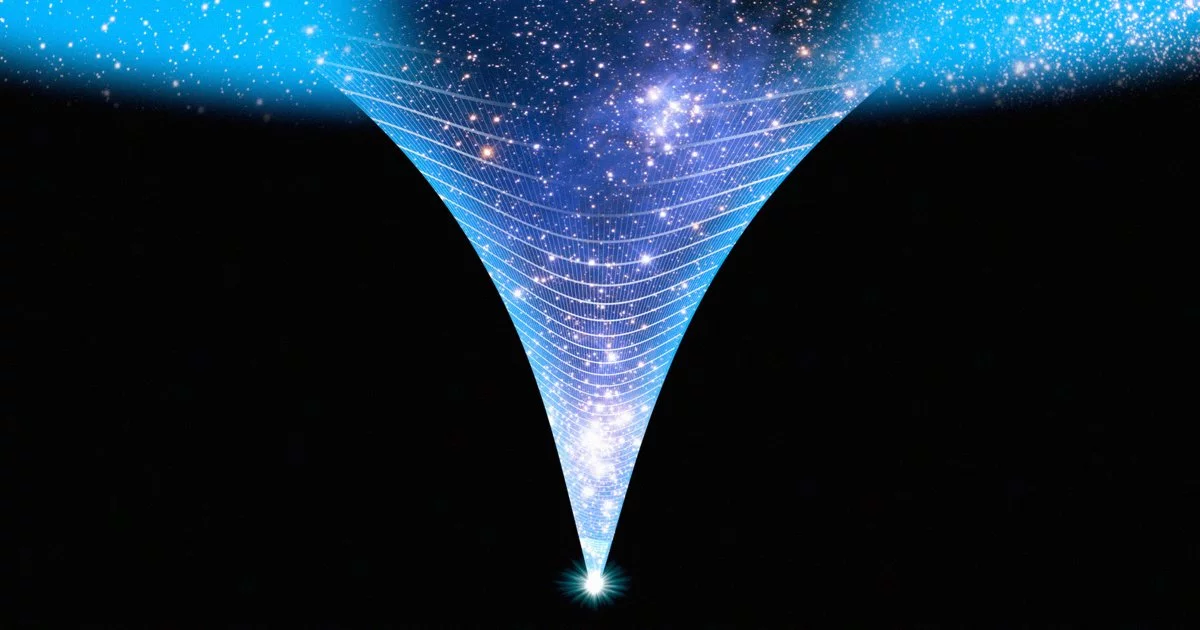
An international consortium of astronomers has delivered one of the most precise local measurements yet of the Hubble constant (H₀)—about 73.5 km/s/Mpc with ~±1% uncertainty—and in doing so has intensified one of modern cosmology’s most consequential disputes: the Hubble tension. The issue is not merely academic. Local, distance-ladder measurements (built from calibrated “standard candles” and geometric anchors) continue to land higher than the expansion rate inferred from the early universe under the ΛCDM (Lambda–Cold Dark Matter) model, typically derived from cosmic microwave background (CMB) observations.
What makes this result particularly consequential is methodological: the team applied a robust statistical framework designed to integrate multiple rungs of the distance ladder without depending on any single dataset. That architecture—deliberately resilient to the removal of individual components—reduces the plausibility that the discrepancy is driven by a hidden systematic error in one instrument, one calibration step, or one survey pipeline.
With the gap now exceeding five times the combined uncertainties (a “>5σ” level in the language of statistical significance), the tension increasingly reads less like an experimental nuisance and more like a signpost. Either:
- The standard cosmological model is incomplete, requiring new physics (for example, modifications to dark energy behavior, additional relativistic species, or other beyond-ΛCDM ingredients), or
- A subtle, correlated bias remains across multiple measurement channels—harder to identify precisely because it would need to survive cross-checks designed to expose it.
For business and technology leaders, the deeper message is that frontier science is demonstrating how high-stakes decisions evolve when precision improves faster than consensus.
Instrumentation and analytics: cosmology as a proving ground for resilient data systems
Reaching one-percent accuracy is not a single breakthrough; it is the compound effect of improvements across sensors, platforms, and computation. The enabling technologies—space-based photometry, infrared detectors, adaptive optics, and calibration discipline—mirror the same engineering pressures shaping commercial markets: higher sensitivity, lower noise, and more reliable inference under imperfect conditions.
Two themes stand out for the technology sector.
Astronomical measurement pushes components to extremes: stability over long baselines, photon-starved detection, and meticulous error budgets. Those demands routinely spill into adjacent industries, especially where “seeing more” with fewer photons or less signal is commercially valuable. The same classes of advances often translate into:
- Medical imaging (better detectors, improved signal processing)
- Autonomous systems (robust sensing under adverse conditions)
- Industrial inspection and metrology (higher fidelity measurement at scale)
The consortium’s approach—integrating heterogeneous datasets while remaining robust if any one input is removed—resembles a next-generation pattern for analytics in messy real-world environments. In enterprise settings, data streams are frequently incomplete, biased, or intermittently unavailable. A framework that maintains accuracy despite “sensor dropouts” is directly relevant to:
- Cybersecurity, where telemetry is noisy and adversarial
- Financial risk, where regimes shift and correlations break
- Industrial IoT, where devices fail and data quality varies
In effect, cosmology is showcasing a practical philosophy: design inference systems that degrade gracefully, rather than systems that collapse when a single upstream assumption fails.
Computing intensity and the emerging competition for scientific-grade infrastructure
Precision cosmology at this level is computationally expensive. Modeling cosmic expansion, propagating uncertainties, and validating cross-dataset consistency requires petascale-class computing, specialized numerical solvers, and increasingly sophisticated simulation pipelines. That demand is not isolated; it reinforces a broader contest for high-performance compute capacity across sectors already hungry for cycles—AI training, climate modeling, materials discovery, and drug design.
This creates a reinforcing loop with tangible market implications:
- Cloud providers and national supercomputing centers face rising pressure to deliver not just raw FLOPS, but reproducibility, auditability, and long-horizon data stewardship.
- Advanced hardware roadmaps—from accelerators to memory architectures—gain another high-visibility customer class with stringent requirements.
- Quantum computing narratives may sharpen as well, not because quantum is immediately necessary for H₀ analysis, but because frontier science continues to supply credible “north star” workloads that justify long-term investment.
For investors and strategists, the Hubble tension is a reminder that scientific progress increasingly depends on compute as infrastructure, not compute as a line item.
Funding, geopolitics, and commercialization pathways for “new physics”
Persistent anomalies have a way of reshaping budgets. When a discrepancy survives improved instrumentation and more rigorous statistics, it becomes easier for agencies and governments to justify flagship missions, upgraded observatories, and expanded data programs. That matters because astronomy has a long track record of generating spillovers—CCD imaging, precision timing, spectral sensors, and MEMS components all benefited from similar cycles of publicly funded ambition.
Several forward-looking dynamics are now in play:
- Public-private partnerships may expand as optics, photonics, and precision engineering startups become natural collaborators for next-generation instruments.
- Spin-off ecosystems could emerge around real-time data fusion, calibration tooling, and high-integrity scientific software—capabilities increasingly valuable in regulated industries.
- Geopolitical competition will likely intensify as major powers expand astronomical infrastructure, raising familiar questions about export controls, technology transfer, and research governance.
The tantalizing possibility—still speculative, but increasingly discussed—is that resolving the Hubble tension could require new physical ingredients. If that happens, the commercial timeline is uncertain, yet the pattern is familiar: foundational physics often yields unexpected applied dividends, especially in sensing, materials, and computation. For business and technology audiences, the prudent stance is neither hype nor dismissal, but disciplined monitoring—tracking which theoretical proposals gain empirical traction, and which instrumentation programs are funded to test them.
The universe’s expansion rate may sound distant from quarterly earnings, yet the machinery built to measure it—precision sensors, resilient analytics, and compute-intensive validation—maps directly onto the competitive toolkit of the modern economy. When cosmology can no longer “average away” a discrepancy, it forces a more valuable question: what other systems, in markets or machines, are quietly signaling that the model—not the measurement—needs to change?

 By
By
 By
By

 By
By
 By
By


 By
By







