


Philadelphia’s sidewalk robots meet a familiar urban stress test
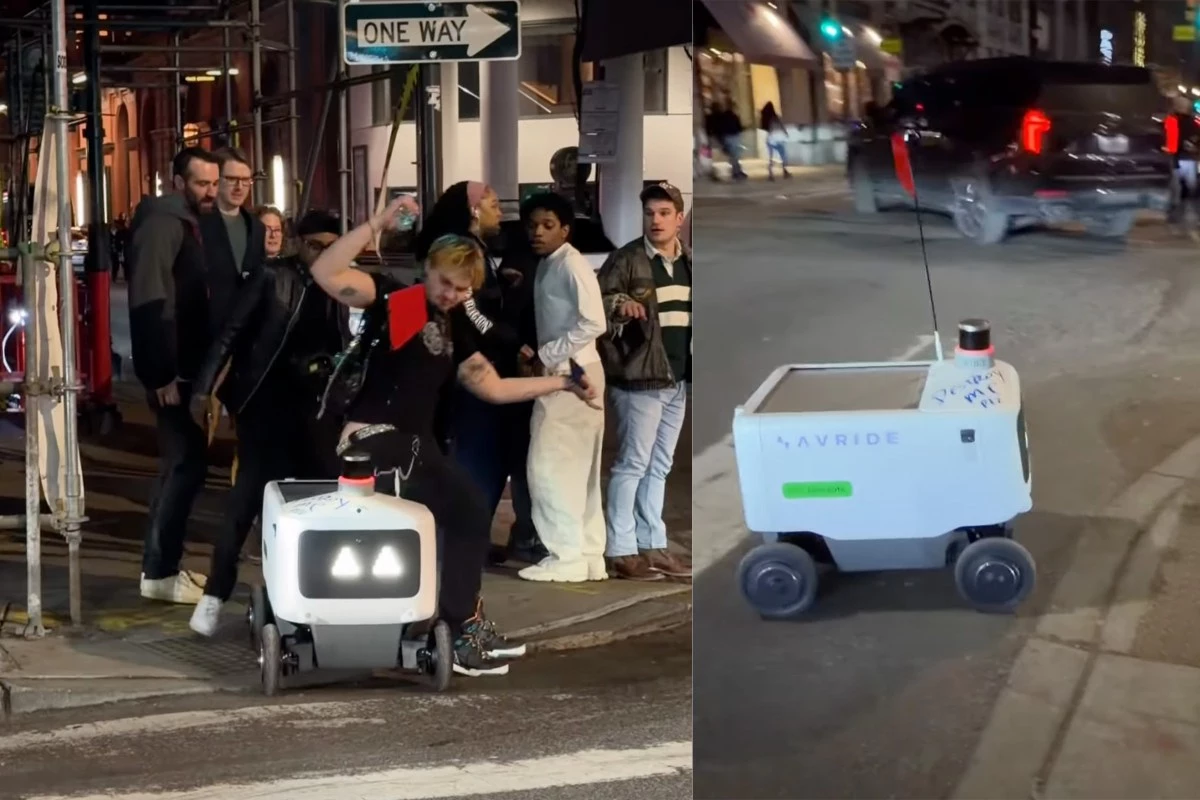
Philadelphia’s rollout of Uber–Avride autonomous delivery robots has quickly become more than a pilot program in last‑mile logistics. Viral footage showing residents taunting, striking, and defacing a slow-moving delivery bot has reignited a civic debate that feels uniquely Philadelphian—an echo of the city’s widely remembered 2015 “hitchBOT” episode, when a friendly hitchhiking robot was destroyed shortly after arriving.
For business and technology leaders, the incident is not merely a story about vandalism. It is a live demonstration of what happens when automation enters contested public space—sidewalks that already function as dense, informal infrastructure shared by pedestrians, scooters, strollers, wheelchairs, pets, and delivery workers. In that environment, a robot is not just a machine; it is a moving symbol of corporate presence, surveillance anxiety, labor displacement, and perceived entitlement to public right‑of‑way.
The immediate optics are harsh, but the deeper signal is strategic: technical feasibility is no longer the primary gating factor for sidewalk delivery. The limiting variable is increasingly the “social license” to operate—earned through community alignment, regulatory clarity, and resilient deployment design.
What the robot’s constraints reveal about real-world autonomy
On paper, sidewalk delivery robots are designed to be conservative: slow speeds, constrained geofences, and cautious navigation. In practice, those same safety-first constraints can create exposure.
Key operational realities surfaced by the Philadelphia episode include:
- Speed and throughput trade-offs: With robots reportedly capped around 5 mph and operating within a limited radius, the model prioritizes safety and predictability. Yet low speed also makes units easier to surround, obstruct, or tip—turning the robot into a stationary target and a sidewalk bottleneck.
- Obstacle avoidance versus social unpredictability: Current autonomy stacks handle curbs, crosswalks, and static obstacles better than they handle human spontaneity—crowding, harassment, or coordinated interference. A robot can “see” a pedestrian, but it may not interpret intent until it is too late.
- Durability economics: Reinforcing shells, protecting sensors, and concealing wiring improves survivability, but it also increases weight, power draw, and unit cost. The Philadelphia graffiti and physical abuse underscore a hard truth: if sensitive components remain accessible, vandalism becomes not an edge case but a recurring maintenance line item.
- Human–robot interaction (HRI) gaps: Many delivery bots remain socially mute—no expressive signaling, minimal audio cues, limited “body language.” Without basic de-escalation tools (clear yielding behavior, polite alerts, visible “I’m stopping” indicators), robots can appear indifferent or intrusive, which can inflame hostility rather than diffuse it.
This is where the industry’s next iteration is likely to focus: not just better autonomy, but better street-level diplomacy—interfaces and behaviors that reduce friction in the first five seconds of an encounter.
The business case: savings collide with “social risk” and insurance math
Sidewalk delivery automation is often justified through labor arbitrage and utilization economics. In dense neighborhoods, robots can theoretically reduce delivery costs by 30–50% compared with human couriers, particularly as wages rise and courier supply tightens. But Philadelphia highlights how quickly those savings can be diluted when the environment is adversarial.
The unit economics hinge on a few variables that vandalism directly attacks:
- Fleet utilization: Early-stage pilots are expensive; profitability typically requires high utilization rates (often modeled above ~75%) and dense order stacking. If robots are pulled for repairs, rerouted away from demand centers, or paused due to public backlash, utilization collapses.
- Repair and replacement costs: Damage is not just cosmetic. Sensor misalignment, wheel damage, and compromised housings can trigger safety shutdowns and expensive service cycles.
- Insurance and liability exposure: As incidents accumulate, insurers may respond with higher premiums, narrower coverage, or exclusions for vandalism and civil disturbance. Operators could face requirements for mitigation—rapid-response retrieval teams, neighborhood monitoring, or enhanced anti-tamper hardware—each adding hidden operational cost.
- Competitive differentiation under pressure: Uber’s partnership with Avride sits within a competitive landscape that includes other delivery robotics players and adjacent approaches (human couriers, e-bikes, micro-fulfillment). The differentiator may become less about autonomy performance and more about risk management strategy—camera policies, low-profile design, remote teleoperation, and community integration.
For investors and operators, the Philadelphia case suggests a new KPI category is emerging alongside cost per drop-off: cost of social friction, measured in incident rates, downtime, complaint volume, and regulatory drag.
Regulation, community alignment, and the next playbook for urban robotics
Philadelphia’s response will be watched well beyond city limits because sidewalk robots are still in a formative regulatory phase. Municipalities are actively defining what robots are allowed to do, where they can operate, and how they must behave. Expect the policy conversation to cluster around:
- Sidewalk right-of-way rules: potential requirements for geofencing, speed caps, restricted hours, or mandatory yielding behavior in high-foot-traffic corridors.
- Operational accountability: clearer standards for remote monitoring, incident reporting, and retrieval times when a robot stalls or is obstructed.
- Privacy and surveillance concerns: on-board cameras can improve safety and evidence collection, but they also raise civil liberties questions—especially if footage is retained, shared, or used beyond navigation and incident response.
The more durable lesson is that deployment cannot be treated as a purely technical rollout. Operators are likely to adopt hybrid models that blend automation with visible human presence and local partnership. Practical measures being discussed across the sector include:
- Pre-deployment outreach with neighborhood associations and business improvement districts to establish expectations and channels for feedback.
- “Ambassador” staffing—periodic human monitors who can intervene, answer questions, and perform light maintenance.
- Real-time “hot zone” analytics using geotagged incident data to dynamically reroute fleets away from repeat-problem blocks.
- Incentive design that ties local benefits to compliance—discounts, credits, or partnerships with nearby merchants that make the robot feel less like an intruder and more like shared infrastructure.
Philadelphia’s sidewalk robot moment is ultimately a referendum on how innovation behaves when it leaves controlled environments and enters civic life. The companies that succeed in autonomous last‑mile delivery will not be the ones with the most impressive demos—they will be the ones that can translate efficiency into legitimacy, proving that automation can coexist with the messy, human reality of the modern city.

 By
By
 By
By

 By
By


 By
By
 By
By







