


A humanitarian drone mission collides with the politics of visibility in Las Vegas
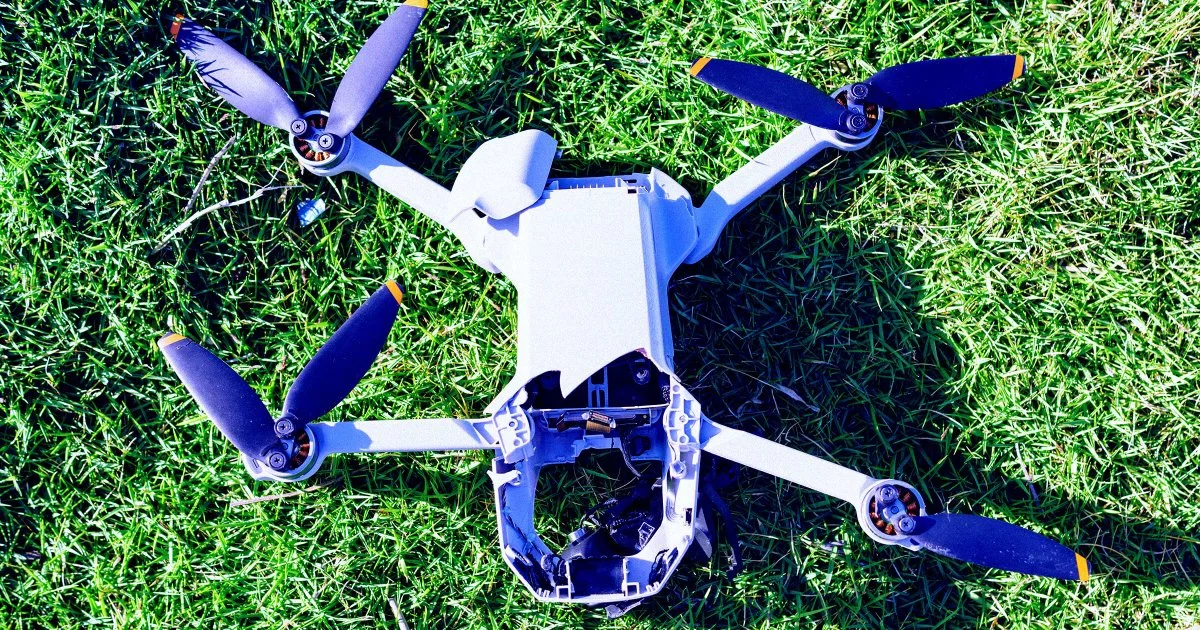
The incident involving Paws Patrol LV, a volunteer animal rescue group in Las Vegas, reads at first like a straightforward story of vandalism: a $7,000 thermal-imaging drone launched to locate an injured dog is allegedly smashed and thrown into a waterway moments after takeoff. Yet the deeper significance lies in what the drone represented to different people in the same public space.
For the rescuers, the aircraft was a practical tool—an airborne thermal sensor capable of quickly scanning terrain where a frightened, injured animal might be hidden from view. For others nearby, particularly those living in or adjacent to a homeless encampment, the drone may have signaled something else entirely: surveillance, enforcement, and displacement, regardless of the operator’s intentions.
This is the central tension modern civic technology repeatedly encounters: the same device can be interpreted as care or coercion, depending on lived experience. Thermal imaging is technologically neutral, but socially charged. In communities that have seen drones used to map encampments, support police sweeps, or document “quality of life” violations, an airborne camera can feel less like a rescue instrument and more like an early-warning system for removal.
The result is a collision between humanitarian mission design and public-space legitimacy—a reminder that deploying advanced tools in contested environments requires more than technical competence. It requires social permission.
The operational lesson: high-performance tools create single points of failure
From a business and technology perspective, the episode exposes a common fragility in small organizations adopting advanced hardware: mission success becomes dependent on a single high-value asset. Thermal drones are powerful precisely because they compress time and uncertainty—turning hours of ground searching into minutes of aerial scanning. But when that capability is concentrated in one platform, the organization inherits a disproportionate operational risk.
Key takeaways for drone-enabled NGOs and public-safety adjacent teams include:
- Single-drone dependency is a strategic vulnerability. When one aircraft is damaged, the impact is not only replacement cost; it is downtime, lost search windows, and reduced volunteer morale.
- Hardening and redundancy matter as much as sensor quality. Protective housings, rapid stow procedures, and “good enough” backup drones can prevent a single incident from halting an entire program.
- The environment is part of the threat model. Many drone risk frameworks emphasize weather, battery failure, or regulatory compliance. This case highlights a different variable: community hostility and sabotage, especially where drones are associated with policing.
The broader market context makes this more than a niche concern. The consumer and prosumer drone segment continues to expand—often cited in the mid-teens annual growth range—driven by use cases such as public safety, inspection, and precision agriculture. But adoption curves are not shaped by capability alone. They are shaped by what economists and policy analysts increasingly call social license: whether a community accepts a technology’s presence, even when it is legal.
In practical terms, a drone program can be “FAA compliant” and still fail on the ground if it is perceived as illegitimate.
Surveillance stigma and the trust deficit: why intent doesn’t travel with the aircraft
The most consequential element of this story is not the broken drone; it is the trust gap it reveals. Marginalized populations—especially those experiencing homelessness—often have a rational basis for fearing surveillance. In many cities, aerial tools have been used to:
- locate encampments for enforcement actions,
- document activity for citations or arrests,
- support “cleanups” that result in loss of personal property,
- create a persistent sense of being watched in spaces that already lack privacy.
Against that backdrop, a rescue group’s explanation—“we’re searching for an injured dog”—may not overcome the immediate emotional and strategic calculus of those who feel targeted by similar technologies. The drone’s camera, not the operator’s mission, becomes the dominant symbol.
This is where governance and communications become operational necessities, not public-relations add-ons. Rescue organizations and civic tech users increasingly need to treat deployment as a stakeholder-managed process, especially in shared public spaces. Approaches that can reduce conflict include:
- Visible identification and purpose signaling: high-visibility markings, audible alerts, and clear insignia that distinguish rescue operations from law enforcement or private security.
- Transparent data practices: published flight logs, retention policies, and explicit commitments not to share footage with enforcement absent legal compulsion.
- Community intermediaries: partnerships with homeless advocacy groups, social-service providers, or neighborhood organizations that can validate intent and reduce misinterpretation.
- Geo-fencing and “privacy fences”: technical constraints that demonstrate boundaries—where the drone will and will not fly, and what it will and will not record.
These measures do not eliminate risk, but they shift drone use from “something done to a community” toward “something done with guardrails the community can understand.”
Philanthropy replaces hardware; governance must replace uncertainty
A Montana entrepreneur’s donation to replace the destroyed drone underscores a modern resilience pattern: distributed philanthropy can restore capability quickly, especially when a story resonates online. That is a strength—community-backed technology can rebound faster than municipal procurement cycles.
But it also highlights a structural weakness. Reliance on episodic generosity creates uneven access to critical tools and leaves organizations exposed to repeated disruption. For NGOs operating at the intersection of technology and public space, sustainability increasingly depends on institutionalizing resilience:
- contingency reserves for equipment loss,
- diversified funding (micro-donations, civic grants, corporate sponsorships),
- and, for larger ecosystems, outcome-linked financing models that reward measurable public benefit.
The policy horizon matters as well. As city budgets tighten and public agencies experiment with outsourcing or privatizing certain functions, drones may become even more prevalent—and more contested. If communities cannot easily distinguish between humanitarian, commercial, and enforcement uses, the surveillance stigma will spread across all operators, increasing the likelihood of backlash and prompting calls for stricter municipal controls.
The Las Vegas episode is a sharp case study in a broader reality: technology succeeds in public life only when legitimacy scales alongside capability. Replacing the drone restores the tool; rebuilding trust determines whether the next launch is seen as a rescue—or a threat.

 By
By


 By
By
 By
By

 By
By
 By
By







