


Thought-Driven Gaming: Neuralink’s Hybrid BCI Signals a New Era of Human-Computer Interaction
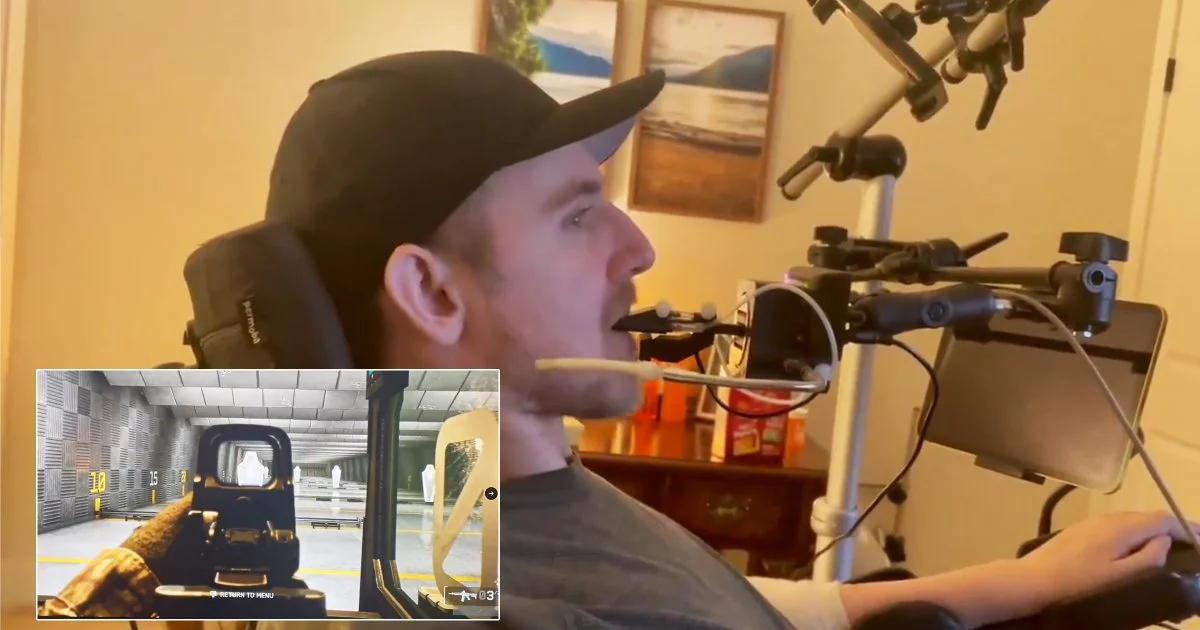
When paralyzed gamer Rob Greiner took aim in “Battlefield 6” not with his hands, but with his thoughts, Neuralink’s latest demonstration did more than inspire. It marked a profound shift in the brain-computer interface (BCI) landscape, signaling the transition from medical proof-of-concept to consumer-grade interactivity. This public showcase, blending Neuralink’s high-resolution neural implant with the adaptive QuadStick mouth controller, is a harbinger of a future where the boundaries between mind and machine are not merely blurred—they are actively reimagined.
Hybrid Control Models: Redefining Accessibility and Precision
At the heart of this demonstration lies a sophisticated, multimodal control stack. Neuralink’s implant captures cortical signals with remarkable fidelity, while the QuadStick translates gross motor movements. The result is a seamless fusion of intent and action, with latency reportedly under 50 milliseconds—a technical feat inferred from the fluidity of Greiner’s gameplay. This hybrid approach elegantly sidesteps the limitations of traditional assistive devices, which often force users to choose between movement and aim, never both simultaneously.
- Real-time sensor fusion enables rapid, intuitive gameplay.
- Continuous decoder calibration allows the system to learn and adapt to micro-movements, yielding unprecedented precision.
- On-device adaptive AI reduces reliance on cloud infrastructure, a crucial step in meeting FDA requirements for deterministic, safe operation.
This convergence of neural and physical inputs is not just a technical marvel; it is a blueprint for future accessibility. For the twelve individuals who have received Neuralink implants to date, each iteration brings the technology closer to mainstream viability, while viral gaming content lowers the psychological and cultural barriers to adoption.
Data Sovereignty, Privacy, and the Coming Neuro-Economy
As brain data becomes a new class of digital asset, questions of privacy and governance loom large. Neuralink’s architecture hints at a future where encryption-at-source and federated learning are not optional, but foundational. The raw neural telemetry generated during gameplay is both a treasure trove for algorithmic refinement and a potential flashpoint for ethical debate.
- Encrypted, federated data flows will be essential as datasets scale.
- Early data-sharing standards could form a strategic moat, echoing the dominance of biometric ecosystems in the smartphone era.
The economic implications are equally profound. The global disability assistive technology market, valued at roughly $30 billion, is only the beginning. Gaming peripherals represent a $70 billion adjacent opportunity, and the convergence of neuro-enhanced e-sports, digital therapeutics, and rehabilitation services promises to unlock new revenue streams. Hospitals and insurers will scrutinize the cost-benefit calculus, but outcome data derived from gaming dexterity could tip the scales in favor of reimbursement and broader adoption.
Platform Wars, Regulatory Frontiers, and the Architecture of Trust
Neuralink’s public gaming showcase is as much a strategic maneuver as it is a technical demonstration. By capturing the imagination of developers and gamers alike, the company is laying the groundwork for a neurotech ecosystem—one where BCI-native applications may flourish before rivals like Apple, Meta, or Synchron can formalize their own platforms.
- AAA studios may soon integrate differentiated accessibility features, echoing the rapid adoption cycles seen with past hardware innovations.
- Cloud-gaming providers could bundle BCI input APIs, leveraging anonymized neural data (with consent) to enhance user experience and stickiness.
Yet, the path to mass adoption is fraught with regulatory and ethical complexities. FDA approval for at-home use will hinge on long-term durability and safety, while emerging neuro-rights legislation in the EU and US will shape data flows and market timing. Enterprises that invest in inclusive technology stand to capture not only untapped talent pools but also ESG premiums, as workforce participation and diversity metrics become boardroom priorities.
Strategic Imperatives for the Decade Ahead
The implications of this inflection point are far-reaching:
- Device and semiconductor firms must invest in biocompatible packaging and edge AI, anticipating a wave of M&A before standards solidify.
- Gaming and XR platforms should develop BCI-ready schemas now, securing first-mover advantage.
- Insurers and employers can pilot reimbursement tied to neural-based functional gains, gathering actuarial data for future models.
- Chief Privacy Officers must treat neural signals as sensitive biometrics, drafting governance frameworks ahead of regulation.
- Policymakers and standards bodies should convene multi-stakeholder groups to define provenance, ethics, and liability—averting the regulatory patchwork that plagued earlier tech epochs.
Neuralink’s foray into thought-driven gaming is more than a viral moment; it is a catalyst compressing medical, consumer, and enterprise trajectories into a single, compelling narrative. Those who grasp the cross-sector reverberations will not merely witness the next chapter of human-machine symbiosis—they will write it.

 By
By
 By
By
 By
By

 By
By
 By
By

 By
By







