
A smaller ring with bigger ambitions in the premium wearables market
Oura’s fifth-generation smart ring arrives at a moment when the wearables category is no longer defined by step counts and notification mirroring, but by continuous health intelligence—and by the business models that monetize it. The Oura Ring 5, available for preorder ahead of its June 4 release, starts at $399 in silver/black and reaches $499 in gold/deep rose. Distribution through major U.S. retailers—Amazon, Best Buy, Target, and Walmart—signals confidence in mainstream demand, even as the product remains priced firmly in the premium tier.
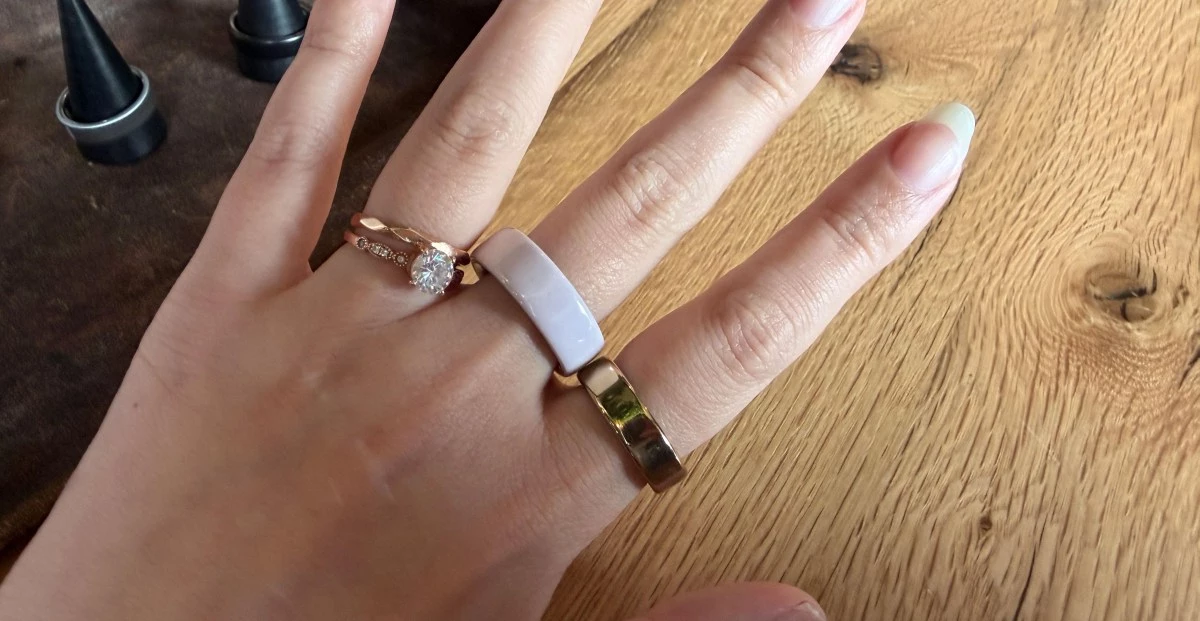
The headline hardware move is miniaturization: Oura says Ring 5 is 40% smaller than its predecessor. In a market dominated by wrist-worn devices, that reduction is not cosmetic; it’s strategic. Rings succeed or fail on *compliance*—whether users can tolerate wearing them 24/7, including sleep, workouts, and daily life. A smaller footprint, improved comfort, and a more discreet aesthetic directly support the company’s core value proposition: high-frequency, low-friction biometric capture.
Battery life is another pillar of the pitch. Oura cites up to nine days per charge, and introduces a $99 wireless charging case that can extend usage to roughly a month between wall charges. This two-part system reads like a response to a well-known pain point in wearables: consumers may accept sophisticated sensors, but they increasingly reject daily charging rituals. The charging case also hints at a broader product philosophy—ambient, always-ready health tech that behaves more like an accessory ecosystem than a single gadget.
—
Sensor fusion moves Oura from “sleep tracker” to health modeling platform
Oura built its brand on sleep and recovery, but Ring 5’s feature set underscores a push into multi-parameter health modeling—a shift from tracking isolated metrics to interpreting patterns across systems. The company is emphasizing improved sensor accuracy (notably via enhanced photoplethysmography, or PPG) and expanding into new domains that sit closer to preventive health than lifestyle analytics.
Key software and health-tracking additions include:
- Live workout and heart-rate tracking, bringing Oura closer to real-time fitness use cases historically dominated by watches and chest straps
- Third-party sensor compatibility, which could appeal to performance-focused users who want validated external heart-rate data while keeping Oura’s recovery and sleep insights
- GLP-1 metric monitoring, aligning the product narrative with the fast-growing cultural and clinical focus on metabolic health and weight-management therapies
- Health Radar, positioned to analyze nighttime breathing and blood-pressure pattern surrogates, pushing toward early-warning insights for conditions adjacent to sleep apnea and hypertension
- A Locate tool for finding misplaced items, a practical feature that also signals Oura’s intent to compete on everyday utility, not only wellness
The strategic significance is not any single metric; it’s the direction of travel. Wearables are increasingly judged on whether they can translate raw signals into actionable, personalized guidance. That requires strong algorithms, longitudinal baselines, and careful communication of uncertainty—especially when features begin to resemble medical screening. Oura appears to be moving toward a “health dashboard” model where sleep, respiration, cardiovascular patterns, and metabolic signals reinforce one another, potentially improving the quality of insights over time.
This is also where partnerships matter. The mention of AI-assisted medical guidance via Counsel Health (as described in the provided material) illustrates the industry’s broader convergence: consumer wearables are becoming front doors to telehealth, triage, and remote monitoring. The opportunity is credibility and stickiness; the risk is expectation management, regulatory scrutiny, and the challenge of proving clinical value beyond wellness narratives.
—
The business model: premium hardware, mandatory membership, and reimbursement strategy
Oura’s pricing and monetization choices are as central to the story as its sensors. The Ring 5’s $399–$499 entry cost places it among the most expensive mainstream wearables, and the company continues to require an Oura membership—$5.99/month or $69.99/year—to unlock full functionality. That model aligns with a broader industry shift toward recurring revenue, where the device becomes the on-ramp to a service layer of analytics, coaching, and feature updates.
From a business standpoint, subscriptions offer predictable cash flows and higher lifetime value. From a consumer standpoint, they raise the bar for perceived ongoing benefit. The competitive set is no longer just hardware rivals; it includes bundled ecosystems and services that can dilute willingness to pay—especially in a macro environment where consumers are more selective about recurring charges.
Oura’s reimbursement positioning is therefore notable. The Ring 5 is HSA/FSA-eligible in the U.S., a practical lever that can reduce friction for buyers and open doors to:
- Employer-sponsored wellness programs
- Clinical pilots and population health initiatives
- Adoption among users managing chronic risk factors who may justify the spend as health-related
The company also offers a free sizing kit, a small operational detail with outsized impact. Fit affects comfort, sensor quality, and return rates—meaning sizing is not merely customer service, but a driver of data integrity and unit economics.
—
Competitive pressure and what will determine whether Ring 5 becomes a category benchmark
Ring 5 lands in a wearables market where differentiation is increasingly about platform depth—the ability to integrate data, generate trusted insights, and fit into daily routines without friction. Oura’s ring form factor remains a distinctive advantage against wrist-based incumbents, but the competitive landscape is tightening as smartwatches expand health features and lower-cost trackers improve baseline accuracy.
Three factors are likely to determine the product’s trajectory:
- Clinical validation and trust: Features like breathing analysis and blood-pressure pattern inference sit near medical territory. Publishing peer-reviewed evidence and building real-world outcomes data could defend premium pricing and unlock broader institutional adoption.
- Interoperability and ecosystem reach: Third-party sensor compatibility is a start; deeper integration with telehealth workflows and health records would increase enterprise relevance and reduce churn.
- Value clarity under subscription economics: Mandatory membership can work when insights feel indispensable. If users perceive the ring as “paywalled hardware,” churn risk rises—especially as competitors bundle services into broader device ecosystems.
Oura Ring 5 is ultimately a bet that the next phase of wearables will be defined by continuous, comfortable, clinically adjacent insight generation, delivered through a service model that turns biometric data into an enduring relationship. If Oura can translate its expanding sensor suite into outcomes users—and institutions—can trust, the ring may become less a gadget and more a durable health interface people simply don’t take off.

 By
By
 By
By

 By
By

 By
By
 By
By
 By
By