


AI compute’s collision with the power grid is reshaping infrastructure strategy
The modern AI boom is no longer constrained primarily by algorithms or even silicon supply—it is increasingly constrained by electricity, land, permitting, and heat. As frontier models scale and inference demand spreads across industries, leading technology firms are committing hundreds of billions of dollars to expand data-center capacity in the United States. Yet the pace of deployment is running into a hard reality: much of the domestic grid is aging, transmission build-outs are slow, and communities often resist new substations and high-voltage lines.
This bottleneck is not a footnote; it is becoming a defining feature of AI’s next phase. Traditional data-center expansion depends on a chain of prerequisites—interconnection approvals, transmission upgrades, water access, and local zoning—that can stretch timelines and inflate costs. The result is a strategic environment where executives are incentivized to explore alternatives that appear to bypass terrestrial friction.
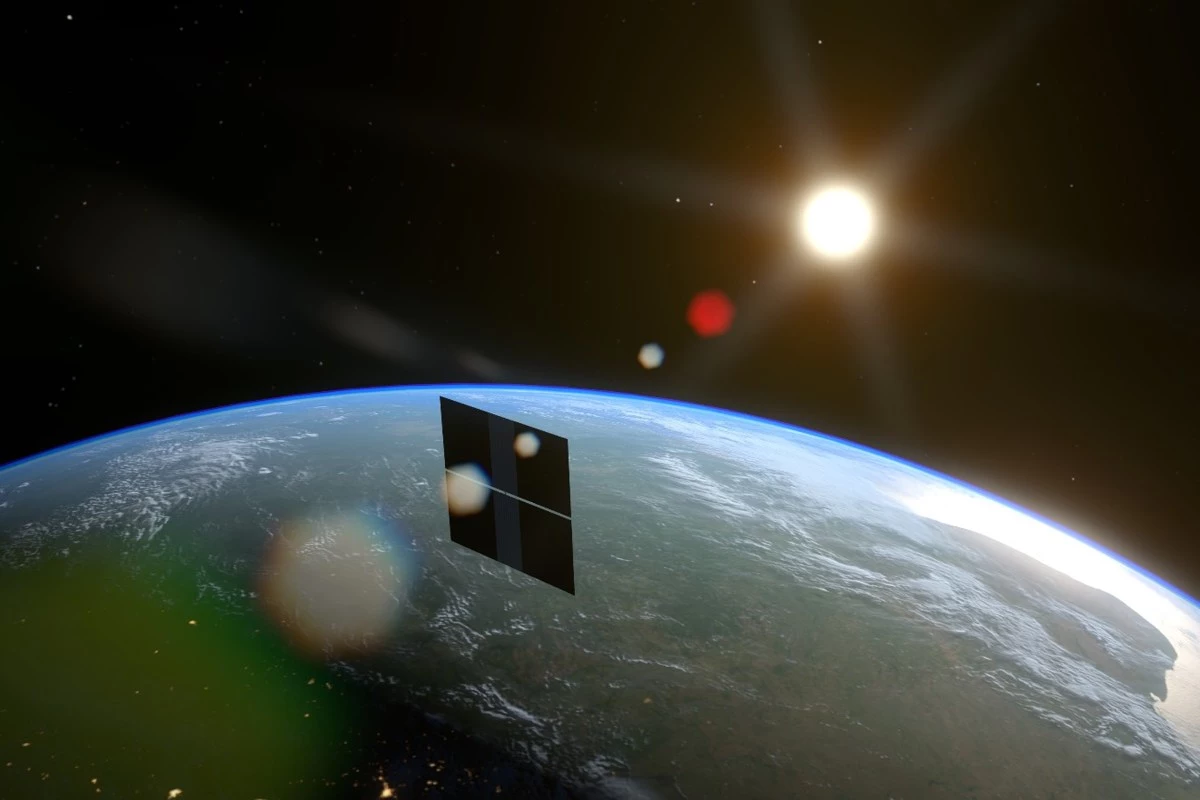
That context helps explain the renewed attention on orbital data centers—a concept that promises abundant solar energy, fewer local permitting battles, and a dramatic reframing of “where compute lives.” The most visible proposal comes from Starcloud, reportedly backed by $170 million and associated in the public imagination with SpaceX as a launch and ecosystem partner. The pitch is straightforward: place compute in low-Earth orbit (LEO), power it with solar arrays, and avoid Earth-bound grid constraints.
The idea is bold—and it is also encountering a rigorous technical rebuttal that underscores the widening gap between infrastructure physics and venture narrative.
Orbital data centers: the promise of always-on solar meets the physics of heat in vacuum
A central claim behind LEO data centers is energy abundance: sunlight is continuous or near-continuous depending on orbit, and solar generation avoids fuel logistics. But energy supply is only one side of the ledger. High-density AI compute converts a large fraction of input power into heat, and in space heat removal becomes the primary engineering problem.
Irish aeronautical engineer Brian McManus has published a detailed critique of Starcloud’s white paper, arguing that the proposal underestimates the scale and complexity of orbital thermal management. On Earth, data centers rely on convection and conduction—air handling, liquid cooling loops, evaporative systems, and heat exchangers. In vacuum, there is no convective cooling; heat must be moved internally and then rejected via radiation through large radiator surfaces.
McManus’s analysis highlights several core constraints that any orbital compute architecture must confront:
- Thermal rejection at AI scale: He calculates coolant circulation needs on the order of 150,000 lb per second for the proposed design—an illustrative magnitude that, if accurate, implies radiator and pumping systems far beyond current spaceflight norms.
- Radiator area and mass penalties: Radiators are not just panels; they require structure, deployment mechanisms, micrometeoroid tolerance, and thermal cycling resilience. Each adds mass and failure modes.
- Maintenance and repair realities: Terrestrial data centers assume routine component replacement. In orbit, servicing is expensive, logistically complex, and risk-prone—especially for systems operating at hyperscale power densities.
The critique also challenges the feasibility of launching and assembling the proposed mass. A single orbital data center is estimated at 113 million kg, a figure comparable to a Nimitz-class aircraft carrier. Even with aggressive assumptions about heavy-lift cadence, that implies dozens to hundreds of launches, orbital assembly complexity, and a cost structure that quickly overwhelms any claimed advantage over Earth-based builds.
Finally, there is the issue of radiation and data integrity. LEO is not deep space, but it is still a high-radiation environment relative to terrestrial facilities. Ionizing particles can cause single-event upsets (bit flips) and long-term component degradation. Mitigations—error correction, redundancy, shielding—raise weight, power draw, and design complexity, eroding performance-per-dollar.
The economics: when “grid avoidance” becomes a high-cost detour
Starcloud’s reported $170 million backing illustrates how capital can flow quickly toward “moonshot” infrastructure when it aligns with a compelling macro story: AI demand is exploding, the grid is constrained, and space launch costs have fallen. The association with SpaceX—directly or indirectly—adds a halo effect that can compress diligence cycles and amplify investor appetite.
Yet the economic question is not whether orbit is possible in principle; it is whether it is competitive on levelized cost per petaflop-hour, factoring in full lifecycle costs:
- Launch and assembly: Even optimistic per-launch pricing becomes enormous when multiplied by the number of flights required for carrier-scale mass.
- Orbital operations and end-of-life: Station-keeping, collision avoidance, deorbiting plans, and debris mitigation are not optional; they are cost centers and regulatory obligations.
- Accelerated replacement cycles: Radiation exposure and thermal cycling can shorten component lifetimes, increasing replenishment frequency versus terrestrial norms.
- Latency and networking constraints: AI workloads vary. Training can tolerate latency more than interactive inference, but orbital networking still introduces architectural trade-offs and dependence on spectrum and ground-station infrastructure.
The deeper risk is strategic misallocation. Capital diverted into speculative orbital compute could crowd out nearer-term, compounding investments that expand capacity faster on Earth—particularly high-voltage transmission upgrades, modular microgrids, utility-scale storage, and advanced cooling retrofits. For hyperscalers already investing heavily in renewables procurement, demand-response programs, and AI-optimized silicon, the orbital proposition must clear an extremely high bar to justify switching costs and operational risk.
What this debate signals for AI infrastructure, regulation, and competitive advantage
The orbital data-center narrative is best understood as a stress signal from the terrestrial system: AI’s growth is exposing the fragility of permitting pipelines, grid interconnection queues, and regional power availability. That stress is real—and it will shape corporate strategy, public policy, and competitive dynamics.
At the same time, the McManus critique underscores a recurring pattern in frontier technology cycles: the most elegant story is often the one that postpones the hardest engineering. In this case, the hardest engineering is not launching servers; it is rejecting heat, maintaining hardware, and doing so at a cost and reliability profile that competes with Earth-based facilities.
The regulatory layer adds further complexity. Orbital data centers would likely trigger new governance questions around:
- Space debris liability and collision risk
- Spectrum allocation and communications resilience
- Cross-border data sovereignty and jurisdiction
For established cloud providers—AWS, Microsoft Azure, Google Cloud—the competitive playbook is already oriented toward pragmatic scaling: co-locating near energy, contracting renewables, improving utilization, and deploying specialized accelerators. That does not preclude space-based experimentation, but it suggests orbital hyperscale compute will remain, for now, more of a research frontier than a near-term infrastructure substitute.
What emerges from this moment is a clearer dividing line between visionary aspiration and executable strategy. AI infrastructure will be won by those who can secure power, manage heat, and deliver reliability at scale—whether that happens under the cloudless sunlight of LEO or, more likely in the coming years, through the unglamorous modernization of Earth’s grids and the relentless refinement of terrestrial data-center engineering.

 By
By
 By
By


 By
By
 By
By
 By
By
 By
By







