

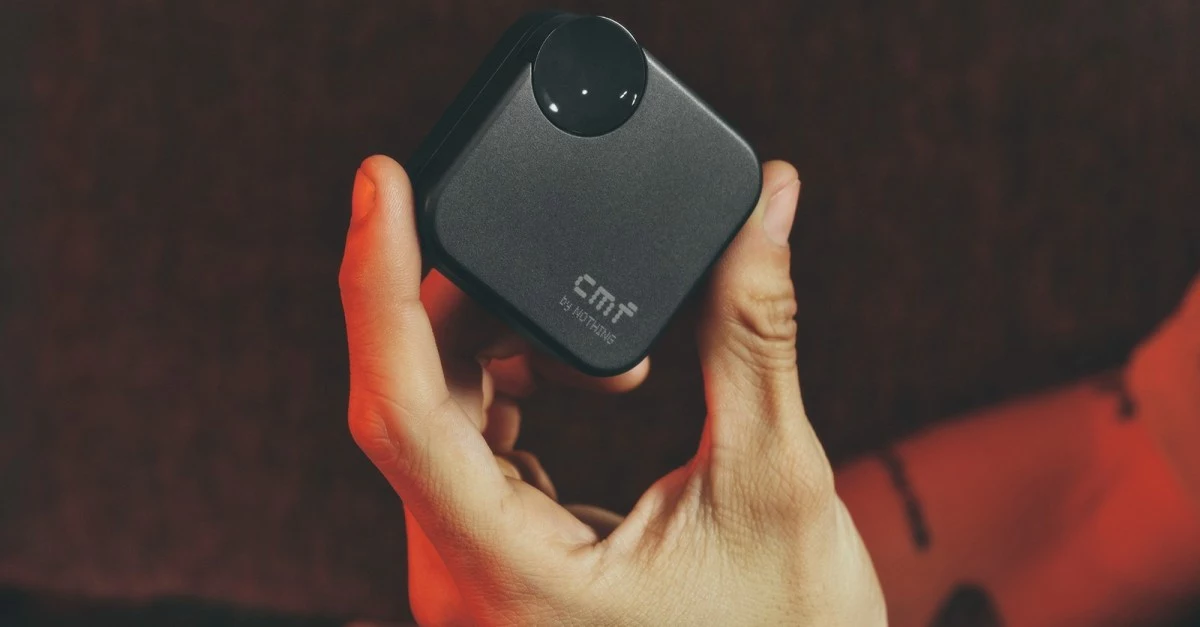

A sub-$20 earbud that reframes “entry-level” expectations in true wireless audio
Nothing’s CMF Buds 2A hitting an all-time low of $19.99 on Amazon is more than a routine discount—it’s a signal of how quickly the true wireless stereo (TWS) market is compressing premium features into mass-market price bands. At a price that historically implied basic Bluetooth audio and little else, the Buds 2A arrive with a specification set that reads like a mid-tier product sheet: active noise cancellation (up to 42 dB attenuation), transparency mode, IP54 dust and splash resistance, and up to eight hours of standalone battery life (up to 35.5 hours with the case).
For consumers, the headline is obvious: more capability per dollar. For the industry, the deeper story is what this pricing implies about component cost curves, platform reuse, and the shifting battleground from hardware differentiation to software, ecosystems, and AI-enabled experiences.
Key capabilities that stand out at this price point include:
- 42 dB ANC + transparency mode, increasingly expected even in budget earbuds
- IP54-rated durability, aligning with fitness and commuting use cases
- Four microphones with proprietary noise reduction for calls
- Nothing X app features such as EQ, gesture mapping, multi-device pairing, and “find my earbuds”
- A distinctive ecosystem hook: voice access to ChatGPT when paired with Nothing/CMF handsets
The technology story: commoditized ANC, software-defined sound, and the rise of the “AI ear”
The Buds 2A illustrate a broader technological pivot: the most visible “premium” features in earbuds—ANC, app EQ, and multi-mode listening—are becoming commodities, while differentiation migrates to software layers and ecosystem services.
ANC commoditization is accelerating. A claimed 42 dB of attenuation would have been a flagship talking point not long ago. Today, it’s arriving in products priced like accessories rather than electronics. This reflects maturing supply chains for microphones, DSPs, and acoustic designs that can be tuned at scale.
App-enabled personalization is now table stakes. The Nothing X companion app reinforces a market expectation that even low-cost earbuds should support:
- EQ customization (to correct or tailor tonal balance)
- ANC/transparency adjustments
- Gesture mapping (a usability differentiator that reduces friction)
- Multi-device pairing (a productivity feature once reserved for pricier models)
- Device recovery tools like “find my earbuds,” increasingly important as TWS becomes an everyday carry item
Sound quality, by reports, leans slightly tinny, a reminder that acoustic tuning and driver performance still separate the best from the rest. Yet the more consequential point is that software EQ and user tuning can partially compensate—another example of how software is being used to smooth hardware constraints in budget tiers.
The most forward-looking element is the voice-driven ChatGPT access within the Nothing/CMF handset ecosystem. This is an early, practical demonstration of earbuds evolving into ambient interfaces for generative AI—not merely audio endpoints. If the earbud becomes a reliable “wake-and-ask” surface, it competes for attention with the smartphone screen itself, shifting interaction toward hands-free, low-friction queries and potentially real-time assistance.
Pricing, margins, and Amazon’s role: why $19.99 matters to the business model
A $19.99 price tag for feature-rich earbuds raises immediate questions about unit economics. At this level, profitability depends on a combination of:
- High-volume sales to offset thin per-unit margins
- Shared platform architectures (common drivers, mic arrays, charging components, and ICs across product lines)
- Favorable component pricing driven by scale and maturing manufacturing processes
- Potentially inventory velocity strategies, where moving units quickly is prioritized over margin preservation
The Amazon promotion underscores how central major e-commerce platforms remain to consumer electronics distribution—especially for price-sensitive categories like TWS. Amazon functions as:
- A high-intent discovery engine for budget tech shoppers
- A mechanism for timed promotions that can spike volume
- A channel that rewards competitive pricing and review momentum, often pressuring brands into aggressive discounting
In a climate of cautious consumer spending, discounts can outperform incremental feature improvements as a demand catalyst. The Buds 2A pricing suggests a market where feature parity is rising and pricing power is weakening, pushing brands to seek differentiation elsewhere—most notably in software and ecosystem value.
Ecosystem strategy and competitive positioning: feature gating as a loyalty lever
Nothing’s approach reveals a strategic tension common in modern consumer tech: platform neutrality vs. ecosystem lock-in. The Buds 2A work broadly across Android and iOS, but the ChatGPT voice integration is positioned as a value-add for Nothing/CMF handset owners. That kind of selective enhancement is a familiar playbook—offer baseline compatibility, then reserve the most compelling experiences for users inside the brand’s device family.
In a crowded sub-$30 earbud market, differentiation is difficult through hardware alone. Nothing’s advantage is narrative coherence: a brand identity built around design distinctiveness and software-forward experiences. The Buds 2A extend that identity into the budget segment, using app features and AI integration to stand out in a category that otherwise risks becoming interchangeable.
For business and technology leaders, the Buds 2A point to several near-term realities:
- AI-first wearables are moving from concept to commodity, starting with the ear
- Modular hardware + software upgrades will be essential to protect margins as features standardize
- Ecosystem-driven upsell—from devices to services—will shape long-term profitability
- Channel orchestration will matter: Amazon can deliver volume, but direct channels preserve margin and customer data
Nothing’s CMF Buds 2A, at $19.99, are not just a bargain—they’re a compact case study in where consumer audio is headed: hardware that’s “good enough” at astonishing prices, and software—especially AI—that increasingly defines what users perceive as premium.

 By
By
 By
By
 By
By
 By
By
 By
By

 By
By
 By
By







