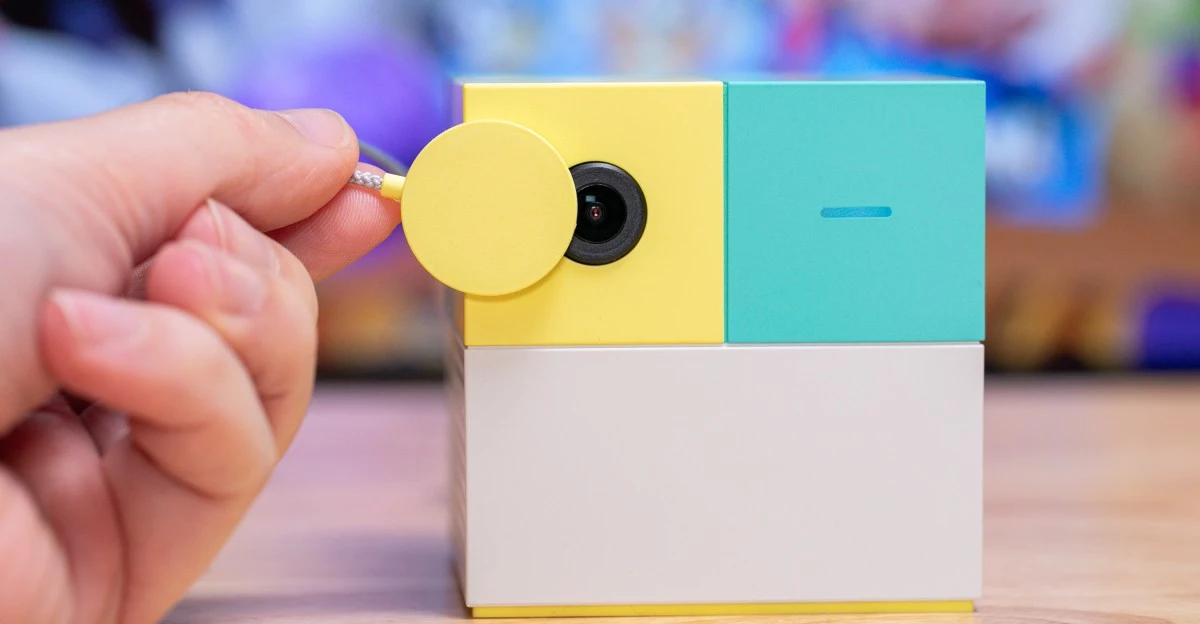

A family-first console tests the limits of premium pricing in a cautious spending cycle
The Nex Playground has carved out a distinctive position in the living room: a compact, motion-controlled gaming console for children aged five and up that aims to convert “screen time” into something closer to active play. Strong holiday-season demand suggests the product resonates with parents looking for shared, low-friction entertainment—especially the kind that gets kids moving without requiring controllers, headsets, or complex setup.
Yet the business story is increasingly defined by pricing power—and its constraints. The console’s MSRP rising from $249 to $299 signals confidence, but also exposes the product to a more skeptical consumer environment where households are scrutinizing discretionary purchases and recurring fees. Amazon’s Gaming Week discount—$239 through May 4—offers a short-term pressure valve, though it still sits above earlier promotions that dipped below $200. That gap matters: for family electronics, the difference between “impulse buy” and “considered purchase” is often a single discount tier.
From a market perspective, Nex is attempting something many mainstream platforms have deprioritized since the Wii era: mass-market motion gaming designed around younger children and family participation, rather than hardcore performance or competitive online play. The question now is whether the company can sustain momentum as the product transitions from holiday novelty to year-round household staple—while defending a higher price point.
—
Edge-AI motion tracking: a compelling differentiator with real-world friction points
At the heart of Nex Playground’s value proposition is its integrated camera paired with AI-driven motion tracking, processing movement on-device rather than leaning on cloud inference. This “edge-AI” approach aligns with a broader consumer electronics shift toward real-time, privacy-conscious interactivity—and it brings practical benefits for gameplay:
- Lower latency than cloud-reliant motion systems, which is critical for action-oriented titles
- Simplified setup for families (fewer peripherals, fewer accounts, fewer failure points)
- A clearer privacy posture in principle, since core interaction can occur locally
The product ships with five pre-loaded games—including recognizable, accessible formats such as Fruit Ninja and Whack-a-Mole Deluxe—designed to deliver immediate utility out of the box. Review sentiment, as reflected in the provided material, indicates the core experience is often delightful: intuitive, social, and easy for mixed ages to enjoy.
Still, the same technical design introduces predictable constraints. Motion tracking can falter during fast or erratic movement, where field-of-view limitations, lighting variability, and compute ceilings can reduce accuracy. For a child-focused product, these moments are not merely technical blemishes; they can become behavioral breakpoints, where frustration interrupts the “pick up and play” promise that parents are paying for.
This is where hardware-software co-design becomes strategic. Future iterations could plausibly benefit from:
- More capable SoCs or hybrid CPU/GPU architectures optimized for vision inference
- Improved robustness to occlusion, rapid motion, and room-scale variability
- Companion software that calibrates play spaces more intelligently without adding friction
In a category built on physical interaction, tracking fidelity is not a feature—it’s the platform. Any perception of inconsistency risks undermining the premium narrative.
—
Subscription economics meets “subscription fatigue”: the Play Pass balancing act
Nex’s longer-term monetization hinges on its Play Pass subscription, offering a growing game library and licensed children’s IP. The pricing described—$49 for three months or $89 annually—positions the service as a meaningful second decision after the hardware purchase, not a casual add-on. The library’s inclusion of familiar brands such as Elmo, Bluey, and Peppa Pig is strategically sound: in children’s entertainment, trusted characters reduce adoption friction and can increase repeat engagement.
This model reflects a broader industry pivot toward recurring revenue and higher lifetime value (LTV), echoing patterns seen in streaming, mobile gaming, and “content ecosystems.” For Nex, subscriptions can help offset the margin pressure created by promotional pricing events and retail discounting.
But the same model runs headlong into two realities:
- Subscription fatigue is now mainstream, especially in households managing multiple media and software subscriptions.
- Parents may compare the offering to lower-cost alternatives—tablet apps, freemium games, or one-time purchases—where ongoing fees feel optional.
To justify recurring spend, the platform must continuously answer a simple question: *What do we get next month that we don’t already have?* That requires a steady cadence of new content, reliable IP partnerships, and a clear value story that goes beyond “more games.”
Potential strategic levers—implied by the dynamics in the material—include:
- Bundled pricing (e.g., hardware plus a year of Play Pass) to reduce sticker shock
- Tiered subscriptions that introduce a lower-cost entry level without eroding premium tiers
- Institutional pathways such as classroom or after-school licenses, where budgets and retention dynamics differ from consumer households
The subscription can be a moat, but only if the library remains fresh and differentiated enough to feel like a service—not a toll.
—
Where Nex Playground could win next: education adjacency, partnerships, and trust-by-design
Nex Playground’s most defensible niche is not competing head-to-head with traditional consoles, but owning the interactive early-childhood segment where parents value movement, simplicity, and perceived developmental benefits. In a tightening consumer-spend environment, that framing matters: products positioned as active play and skill-building can be more resilient than purely discretionary gadgets.
That opens credible expansion routes:
- Educational and STEM-aligned titles that strengthen the “worth it” argument for parents
- Partnerships with edtech providers or pedagogy leaders to add legitimacy and structure
- B2B pilots in preschools, elementary schools, and after-school programs, where longer contracts can stabilize revenue
At the same time, camera-based products live under heightened scrutiny. Even with on-device processing, the platform’s long-term brand equity will depend on privacy-first defaults, transparent data handling, and clear parental controls—not as compliance checkboxes, but as product fundamentals.
Nex Playground sits at the intersection of edge-AI interactivity, family gaming, and subscription monetization. Its next phase will be defined by how convincingly it can defend premium pricing, reduce friction in motion tracking, and evolve the Play Pass from a content add-on into a durable ecosystem that parents trust—and children keep coming back to.

 By
By
 By
By
 By
By

 By
By
 By
By