

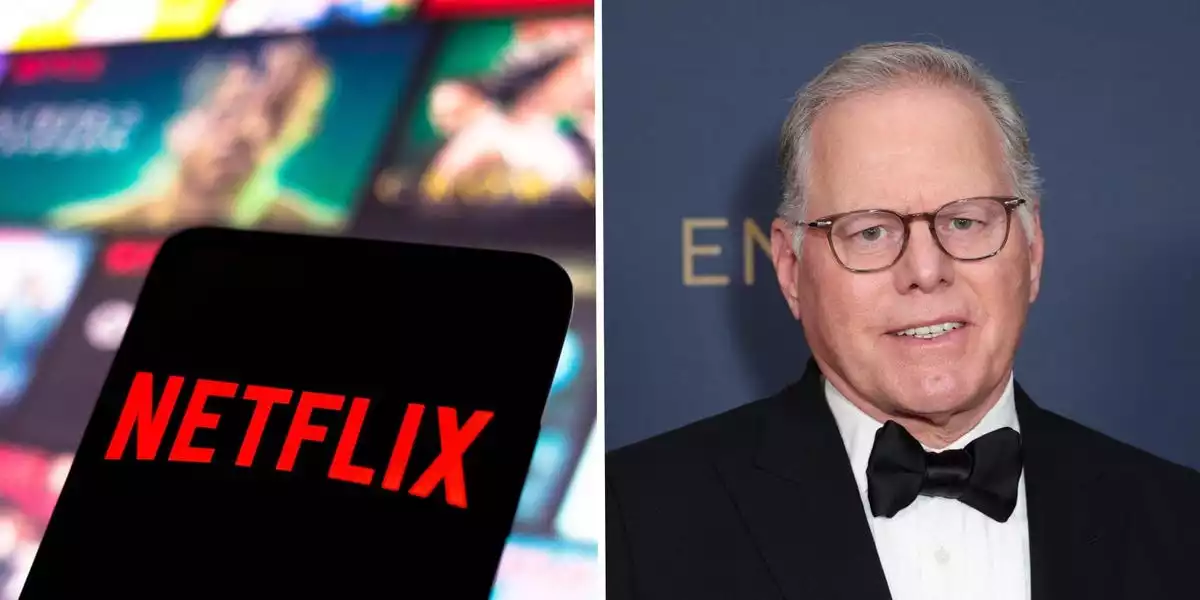

Netflix’s $72 Billion Power Play: A New Order in Global Media
When Netflix announced its definitive agreement to acquire Warner Bros. Discovery’s studio and streaming assets—excluding the Global Networks unit—for an eye-watering $72 billion equity value, the tectonic plates beneath the entertainment industry shifted. This is not merely a merger; it is a reconstitution of the media landscape, a move that transforms Netflix overnight from a streaming juggernaut into a fully integrated content empire. The implications ripple far beyond Hollywood, touching technology, finance, and even geopolitics.
From Streamer to Studio: Closing the Heritage IP Gap
For years, Netflix’s most glaring vulnerability was its lack of enduring, multi-generational franchises. While the company’s algorithmic prowess and original content pipeline kept it ahead of the curve, it lacked the cultural lodestones—think Marvel, Star Wars, or Pixar—that have underpinned Disney’s moat for decades. With this acquisition, that gap evaporates. Now, Netflix commands:
- HBO’s prestige series: From “Succession” to “Game of Thrones,” the kind of appointment viewing that keeps churn low and pricing power high.
- Warner’s legendary IP: DC superheroes, Harry Potter, and the Turner Classic library, each a wellspring of spinoffs, merchandise, and cross-platform storytelling.
This move is not just about scale; it’s about narrative gravity. Netflix gains the gravitational pull to keep subscribers orbiting its ecosystem, and, for the first time, it can credibly challenge Disney’s cultural hegemony.
Vertical Convergence and Technological Synthesis
Netflix’s purchase is the first instance of a streaming-native platform absorbing a legacy studio of this magnitude. The logic is both defensive and offensive:
- Full-stack control: From production lots and VFX pipelines to theatrical windows and direct-to-consumer streaming, Netflix now owns the entire value chain.
- Data network effects: By integrating Warner’s century of metadata, Netflix’s recommendation algorithms become even more formidable, deepening viewer engagement and time-on-platform.
- Operational synergies: Netflix’s Open Connect infrastructure can supplant HBO Max’s third-party delivery stack, potentially saving over $200 million annually in bandwidth costs.
- Gaming and interactivity: With Warner’s game studios in the fold, Netflix is poised to accelerate its cloud-gaming ambitions, forging transmedia loops that rival Amazon and Microsoft.
The technological integration is not merely additive—it’s multiplicative. Virtual production, a field where Netflix has already invested heavily, will benefit from Warner’s VFX expertise, potentially shortening production cycles by up to 20%. In an inflationary environment, such efficiencies are not luxuries; they are existential hedges.
Financial Engineering and Regulatory Crosscurrents
The financial architecture of the deal is aggressive: $23.25 in cash and $4.501 in Netflix stock per Warner Bros. Discovery share, implying $38 billion in new debt and moderate equity dilution. The calculus is clear—lock in content supply and capture $2–3 billion in annual cost synergies, betting that free-cash-flow growth will outpace higher funding costs as the Federal Reserve signals a plateau in interest rates.
Yet, the regulatory gauntlet looms. The Department of Justice and Federal Trade Commission will scrutinize whether the union of two top-five SVOD services unduly concentrates market power. Precedent suggests approval is likely—streaming prices remain below cable norms—but behavioral remedies are probable. European regulators, ever vigilant about cultural diversity, may impose content investment floors, echoing the Disney/Fox saga.
The Ripple Effects: Sports, Cloud, and the Last Mile
The aftershocks of this deal will reverberate across adjacent industries:
- Sports rights: Netflix’s fortified balance sheet positions it to bid for marquee events like the NBA and Olympics, accelerating the migration of live sports to streaming.
- Cloud computing: As Netflix ingests Warner’s 100-petabyte archive, AWS and Google Cloud could see compute demand spike, but vendor consolidation may force hyperscalers to sweeten contracts.
- Cable’s last stand: Comcast and Charter, deprived of affiliate fees and wholesale partnerships, face mounting pressure to reinvent the broadband bundle around connectivity and aggregated streaming.
Within the workforce, anxiety simmers. Warner’s 37,000 employees brace for a 10–15% headcount rationalization, especially in overlapping marketing and distribution roles. The cultural collision—Netflix’s data-driven green-lighting versus HBO’s showrunner-led ethos—will test the limits of creative integration. Retaining key talent, such as HBO’s Casey Bloys, is essential to preserve premium brand equity.
Strategic Horizons: The Age of the Media Super-App
This acquisition signals a new era, where owning IP outright is no longer optional but essential. Media peers must now decide: double down on proprietary content, or risk irrelevance in a world where the super-app—SVOD, FAST channels, gaming, live events—becomes the default consumer interface. Investors will scrutinize Netflix’s integration burn rate, wary of activist calls to unwind the deal if synergies fail to materialize.
For policymakers and industry strategists, the message is unmistakable: the boundaries between content, technology, and distribution are dissolving. Those who recognize the signal—and act with agility—will shape the next chapter of global media. As Fabled Sky Research has observed, this is not just a transaction; it is a structural reordering, compressing creativity, computation, and commerce into a single, algorithmically driven organism. The future of entertainment will be written not just by storytellers, but by those who master the art of integration.


 By
By
 By
By
 By
By

 By
By
 By
By


 By
By










