

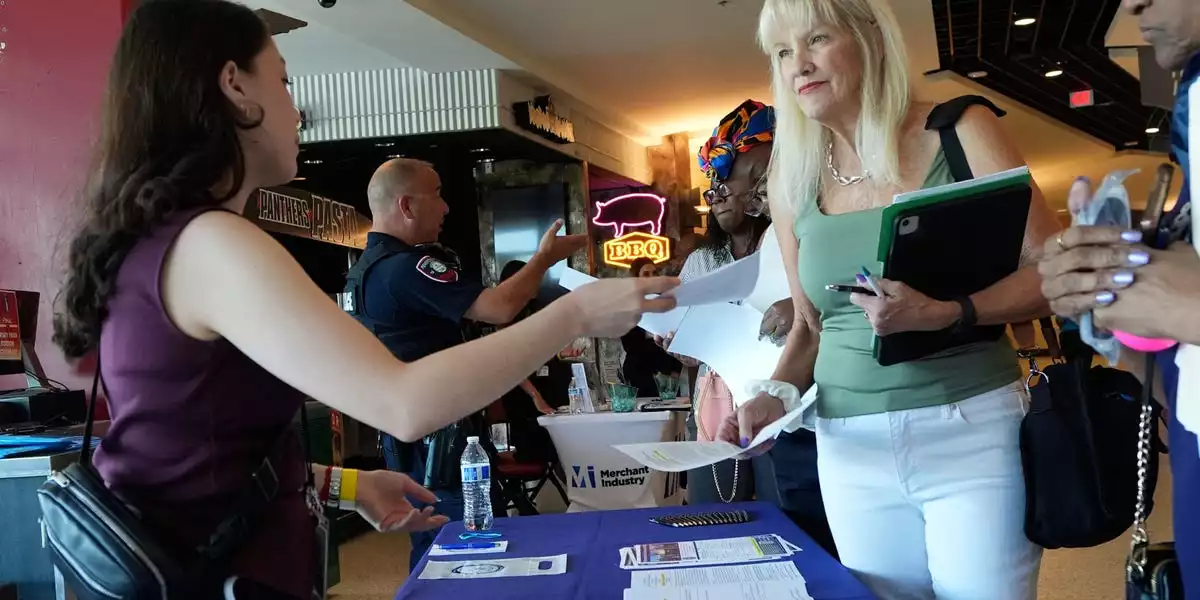

The “Great Freeze”: Navigating a Labor Market in Stasis
The American labor market, once ablaze with the churn of the “Great Resignation,” has entered a new, more enigmatic phase: the “Great Freeze.” This is not a winter of mass layoffs or a spring of frenzied hiring, but a peculiar stasis where job seekers find themselves in a statistical gauntlet—0.4% odds per application, a lottery less forgiving than Harvard admissions. The forces at play are as much technological as economic, with artificial intelligence both democratizing and diluting the very act of applying for work. The result is a paradox: the barriers to entry have fallen, but the gates to meaningful employment have never felt narrower.
AI’s Double-Edged Sword: Application Inflation and Recruiter Fatigue
Generative AI has rendered the act of applying for jobs nearly frictionless. With plug-ins embedded in platforms like LinkedIn and Microsoft 365, candidates can now dispatch dozens of tailored résumés in the time it once took to draft a single cover letter. Standalone “auto-apply” tools further accelerate this deluge, transforming applicant-tracking systems (ATS) into digital bottlenecks. Recruiters, inundated by hundreds of algorithmically optimized but near-identical submissions, are compelled to raise the bar—tweaking keyword filters, leaning on referrals, and, paradoxically, narrowing the pool just as technology promised to broaden it.
This glut of applications mirrors the transformation seen in capital markets with the advent of algorithmic trading: volume explodes, but the signal-to-noise ratio collapses. The same AI that floods inboxes is also evolving in résumé parsing, skill inference, and even video-interview analytics. Yet, most enterprises remain hesitant, treating HR technology as an operating expense rather than a strategic asset. The lag in adoption leaves both employers and candidates in a holding pattern, with innovation outpacing institutional readiness.
Amid this turbulence, blockchain-based verifiable credentials and digital skills passports are emerging as a counterweight. These tools promise to cut through the noise, offering higher-fidelity matching and the tantalizing prospect of disintermediating the résumé itself—a development closely watched by research outfits such as Fabled Sky Research.
Behavioral Shifts: From Bold Moves to “Job Hugging”
The psychological landscape of work has shifted. Where once employees resigned in search of alignment and purpose, today’s climate encourages caution. The risk calculus has changed; external moves seem perilous when every job posting attracts a digital stampede. Instead, workers are “job hugging”—clinging to current roles, seeking progression through internal mobility or “side-loading” into adjacent functions.
This is not a sign of contentment but of strategic patience. Engagement surveys reveal a rise in “latent attrition”—employees who intend to leave when the macroeconomic weather improves. For employers, this creates a time-shifted retention risk: a workforce that appears stable but is quietly biding its time. Some forward-thinking organizations are responding by piloting internal talent marketplaces, allowing employees to explore new roles and projects without leaving the company. The hope is to convert passive “job huggers” into active “job explorers,” staving off morale decay and payroll bloat.
Strategic Imperatives: Building Resilience in the Freeze
For employers, the current freeze is both a challenge and an opportunity. Those able to invest in AI-driven talent screening can arbitrage the gap between application volume and recruiter capacity, securing top talent before wage pressures return. But there are reputational risks: opaque processes and excessive ghosting can quickly erode employer brands in an era where platforms like Glassdoor and Blind serve as real-time sentiment barometers.
The signal-to-noise dilemma also represents a lucrative opening for next-generation ATS vendors. Platforms that can demonstrably reduce recruiter-hours-per-hire, or offer credential-verified talent pools, are poised to capture market share as the bifurcation between premium and mass-market job boards accelerates.
For policymakers, the persistence of high application volumes without corresponding hires suggests that traditional unemployment metrics may be understating slack in the labor market. Incentives for up-skilling and portable benefits could help mitigate the risk of a structurally underemployed cohort, particularly among mid-career professionals.
Organizations looking to emerge from the freeze with a structural talent advantage should consider:
- Redefining talent pipelines: Shift from role-based requisitions to skills-based inventories.
- Symmetrical AI deployment: Balance candidate-facing automation with recruiter-assist tools that prioritize evidence over proxies.
- Retention risk hedging: Launch internal gig platforms and rotational programs to foster engagement.
- Data ethics vigilance: Implement robust model-risk governance, including bias audits and explainability standards.
- Scenario planning for a hiring rebound: Maintain relationships with silver-medalist candidates and invest in employer brand equity.
The “Great Freeze” is not a mere pause; it is an inflection point in the information architecture of the labor market. Enterprises that treat this period as a laboratory for strategic reinvention—honing their skills taxonomies, AI hiring stacks, and internal mobility engines—will be poised to thrive when the thaw finally arrives. Those who default to inertia may find themselves scrambling for talent in a market suddenly, and brutally, reawakened.

 By
By
 By
By

 By
By
 By
By
 By
By

 By
By







