

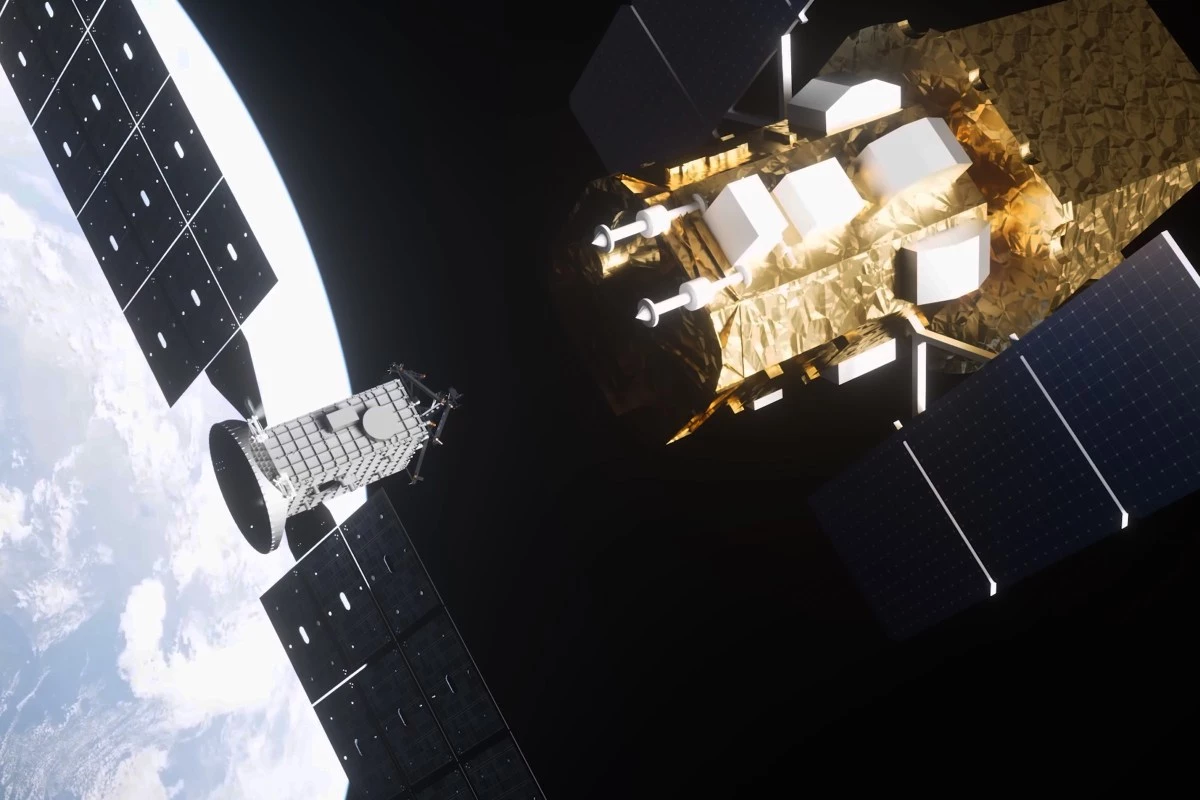

Solar-driven orbital decay forces a new kind of NASA intervention
NASA’s Swift observatory—a workhorse of high-energy astrophysics since 2004—was built for discovery, not for rescue. Yet the satellite’s growing vulnerability to accelerated orbital decay has pushed the agency toward an operational pivot: preserving a still-productive science asset not by replacing it, but by servicing it in orbit.
The proximate driver is space weather. As the Sun moves through a more active phase, Earth’s upper atmosphere expands, increasing drag in low-Earth orbit (LEO). For older spacecraft like Swift, that drag becomes a compounding tax: more frequent orbit maintenance, tighter fuel margins, and a shrinking window to keep instruments pointed and productive. Swift’s value is not merely historical; it continues to deliver unique gamma-ray burst and transient-event data that is difficult—sometimes impossible—to replicate quickly with a new mission, given development timelines, budgets, and launch constraints.
Against that backdrop, NASA’s partnership with Katalyst Space Technologies to deploy the autonomous servicing spacecraft “Link” reads as both a contingency plan and a strategic bet. The intent is straightforward but ambitious: rendezvous with Swift, grapple it, and raise its orbit from roughly 224 miles to 373 miles, using Link’s propulsion in concert with Swift’s own thrusters. The implications, however, extend far beyond one satellite.
—
Link’s autonomy and robotics: a stress test for next-generation in-orbit servicing
If the mission succeeds, it will validate a cluster of technologies that space operators increasingly view as foundational infrastructure for a more crowded, more commercially active LEO.
Key technical pillars include:
- Autonomous Rendezvous and Proximity Operations (ARPO): Link must close a gap of many kilometers and transition into precise station-keeping near Swift with minimal human intervention. That requires robust guidance, navigation, and control (GNC), resilient sensor fusion, and fault-tolerant decision logic—capabilities that become more critical as orbital lanes densify with constellations and mixed-operator traffic.
- Robotic capture of a non-cooperative target: Swift was not designed with modern servicing fixtures or standardized grapple points. Capturing a “passive” spacecraft demands compliant robotic manipulation, careful force/torque control, and real-time adaptation to subtle motion, structural flex, and attitude dynamics. Link’s dual robotic arms are not just tools; they are a referendum on whether microgravity robotics can be dependable enough for routine operations.
- Software-first mission adaptability: The mission’s uncertainty is not only mechanical—it is computational. Swift’s attitude behavior, thermal state, and structural response may differ from models built years after launch. Link’s software must adjust approach trajectories, capture strategies, and contingency behaviors in real time, reinforcing a broader industry trend toward updatable autonomy stacks that evolve post-launch, similar to how terrestrial autonomous systems iterate through software.
This is why the “multi-month chase and boost sequence” matters as much as the final orbit raise. The operational arc—detection, approach, inspection, capture, stabilization, and propulsion-assisted reboost—creates a template for how future servicing missions may be planned, insured, regulated, and priced.
—
The business case: turning replacement economics into a service market
Swift’s predicament highlights a widening gap between replacement cost and life-extension value. A new flagship-class science mission can run into the $1–2 billion range when development, instruments, integration, and launch are included. By contrast, a successful servicing mission reframes the equation: preserve capability at a fraction of replacement cost, while avoiding years of schedule risk.
That shift has several economic consequences:
- CapEx to OpEx rebalancing: If life extension becomes reliable, operators—public and private—can treat servicing as a recurring operational expense rather than a rare, bespoke intervention. This changes procurement logic from “build-and-fly” to lifecycle management, with service-level expectations around uptime, repositioning, and end-of-life handling.
- A scalable orbital servicing market: A successful Link mission would strengthen the case for “life-extension as a service”—not only for NASA but for commercial satellite operators, insurers, and national agencies. As constellations age, the demand for refueling, repositioning, inspection, and selective upgrades could become a durable revenue category.
- Supply chain acceleration in autonomy and robotics: Servicing missions pull forward demand for specialized components—robotic arms, proximity sensors, docking mechanisms, propulsion subsystems, and onboard AI. That can catalyze vertical integration and create new entrants in machine vision, simulation, autonomy verification, and digital twin tooling.
For executives, the strategic takeaway is that servicing is no longer a speculative add-on; it is becoming a credible lever for asset resilience and ROI preservation, especially under worsening solar-weather volatility.
—
Strategic signaling and the governance questions that follow
The Link-to-Swift mission also lands in a geopolitical and regulatory moment. China’s Shijian-21 demonstration sharpened global attention on space robotics and proximity operations—capabilities that are inherently dual-use. A system that can dock and maneuver a satellite can also inspect, interfere with, or reposition one. By moving decisively on a high-visibility NASA mission, the United States signals intent to remain competitive in on-orbit servicing and space robotics, not just for civil science but for the broader strategic ecosystem that includes communications, Earth observation, and national security payloads.
At the same time, NASA’s reliance on a commercial partner underscores a structural shift toward service procurement over bespoke government-owned hardware. That model can accelerate innovation cycles, but it also raises practical questions that the industry will need to answer with increasing specificity:
- Liability and risk allocation during close-proximity operations
- Standards for interfaces (grapple points, docking aids, refueling ports) to reduce bespoke engineering
- Orbital traffic management norms as servicing missions multiply
- Debris mitigation and end-of-life responsibilities when multiple actors interact with a single asset
Swift’s rescue attempt is therefore more than a mission—it is a live demonstration of how space operations may evolve under pressure from physics, economics, and geopolitics. If Link can safely grapple a 1.6-ton satellite never meant to be captured and lift it into a more sustainable orbit, the industry will have crossed a threshold: satellites will look less like disposable hardware and more like maintained infrastructure, with autonomy and robotics as the enabling layer that keeps critical capabilities alive.


 By
By
 By
By
 By
By

 By
By
 By
By







