

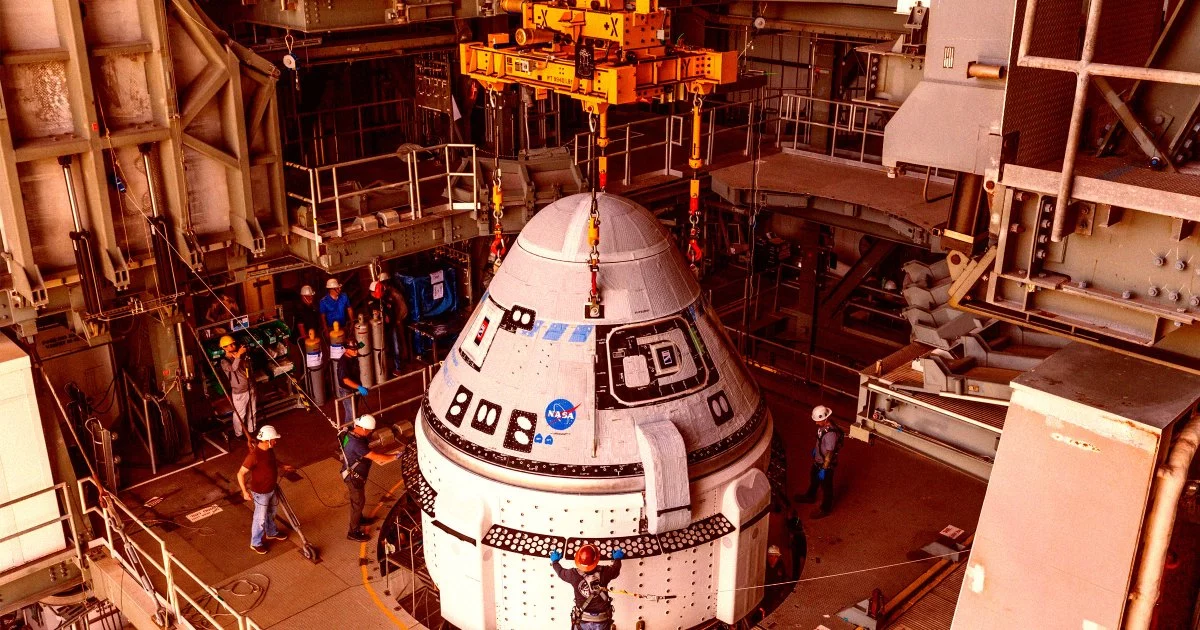

Starliner’s Recast Mission: A Pivotal Moment in America’s Human Spaceflight Ambitions
NASA’s recent amendment to Boeing’s Commercial Crew Transportation Capability (CCtCap) contract marks a watershed in the ongoing saga of U.S. crewed spaceflight. By redesignating the long-delayed Starliner-1 as an uncrewed cargo demonstration—pushing any crewed rotation to at least 2026—the agency has signaled both a recalibration of risk tolerance and a tacit admission of the formidable technical and economic headwinds facing legacy aerospace giants. In the shadow of SpaceX’s relentless cadence, Boeing’s Starliner stands as a case study in the perils and promise of adapting heritage engineering to the unforgiving demands of modern orbital logistics.
Engineering Hurdles and the Limits of Legacy Integration
The Starliner program’s persistent propulsion and software integration woes are not mere footnotes—they are emblematic of a deeper structural challenge. The recurring thruster valve malfunctions and hydrazine leak risks expose the friction between time-tested chemical-propulsion hardware and the digital nervous systems that now govern spacecraft autonomy. NASA’s insistence on an uncrewed cargo test before any further crewed missions reflects a profound lack of confidence that the root causes have been fully understood or mitigated.
Key technical pain points include:
- Valve Corrosion and Hydrazine Compatibility: The reliance on hydrazine-compatible alloys, sourced from a dwindling supplier base, has introduced schedule and reliability risks that ripple across all hydrazine-class systems.
- Software-Fault Detection and Isolation: The challenge of integrating legacy hardware with new flight software—often developed under rigid, waterfall-style life cycles—has proven less adaptable than the DevOps-driven approaches favored by emergent “NewSpace” firms.
- Iterative Certification Burden: Starliner now faces a verification regime reminiscent of Apollo-era post-accident protocols. However, unlike the open-ended budgets of yesteryear, Boeing must navigate these hurdles within the constraints of a fixed-price contract, eroding program margins and slowing system maturation.
Shifting Economics and the Strategic Chessboard
The economic calculus behind Starliner’s trajectory is as unforgiving as orbital mechanics. Every delay chips away at the already tenuous return on investment, with the ISS’s looming retirement around 2030 compressing the window for meaningful commercial operations. The original CCtCap vision—two redundant U.S. crew transport providers—has, in practice, become a tale of one company’s dominance (SpaceX) and another’s Sisyphean struggle.
Contractual and Market Dynamics:
- Fixed-Price Incentive Misalignment: Boeing’s cost overruns have transformed what was intended as a risk-sharing mechanism into a source of corporate liability, prompting NASA to rethink future procurement—expect milestone-based payments and dynamic pricing tied to demonstrated performance.
- Redundancy and Geopolitics: The subtext behind NASA’s insistence on a second provider is not just safety, but strategic autonomy. Should Starliner fail to qualify before the ISS sunset, SpaceX would hold a de facto monopoly on U.S. crewed access to low Earth orbit, strengthening its negotiating position across lunar and defense contracts.
Emerging Competition:
- Market Openings: Starliner’s delays have created a vacuum. Sierra Space’s Dream Chaser, Axiom’s capsule derivatives, and international entrants like India’s Gaganyaan are poised to capture both investor attention and market share. The industry’s center of gravity is shifting toward agile, vertically integrated, software-centric players.
The Broader Industry Reckoning and Forward Trajectories
Starliner’s tribulations are not isolated—they echo across the aerospace sector, where the tension between legacy processes and new paradigms is reshaping the competitive landscape.
Industry-Wide Implications:
- Supply Chain Modernization: Inflation and ESG-driven retrenchment from hazardous propellants are tightening the screws on traditional supply chains, accelerating the need for next-generation propulsion solutions.
- Capital Efficiency Gap: The contrast between Boeing’s cumulative losses and SpaceX’s rapid, cost-effective development mirrors trends seen in electric vehicles and semiconductors, where vertical integration and agile manufacturing are rewriting the rules of engagement.
- Policy and Regulation: Expect NASA and the FAA to tighten software-assurance standards, potentially raising the bar for new entrants while incentivizing modular, certifiable architectures.
Strategic Adaptations:
- Portfolio Realignment: Boeing may be compelled to reposition Starliner as a platform for national security or cislunar applications, seeking to amortize sunk R&D costs across defense and orbital outpost initiatives.
- Investor Sentiment: The Starliner experience will reverberate through capital markets, reinforcing the premium placed on iterative prototyping and integrated hardware-software stacks. Companies able to demonstrate flight heritage within five years of program kickoff will command a valuation advantage.
As the ISS’s operational horizon narrows, the Starliner program stands at an inflection point. The path forward—whether through technological triage, strategic partnerships, or a bold reimagining of the incumbent aerospace model—will determine not only Boeing’s fate, but the contours of American leadership in human spaceflight. In this crucible of innovation and accountability, the lessons of Starliner will echo far beyond the gantries of Cape Canaveral.

 By
By
 By
By

 By
By
 By
By


 By
By







