

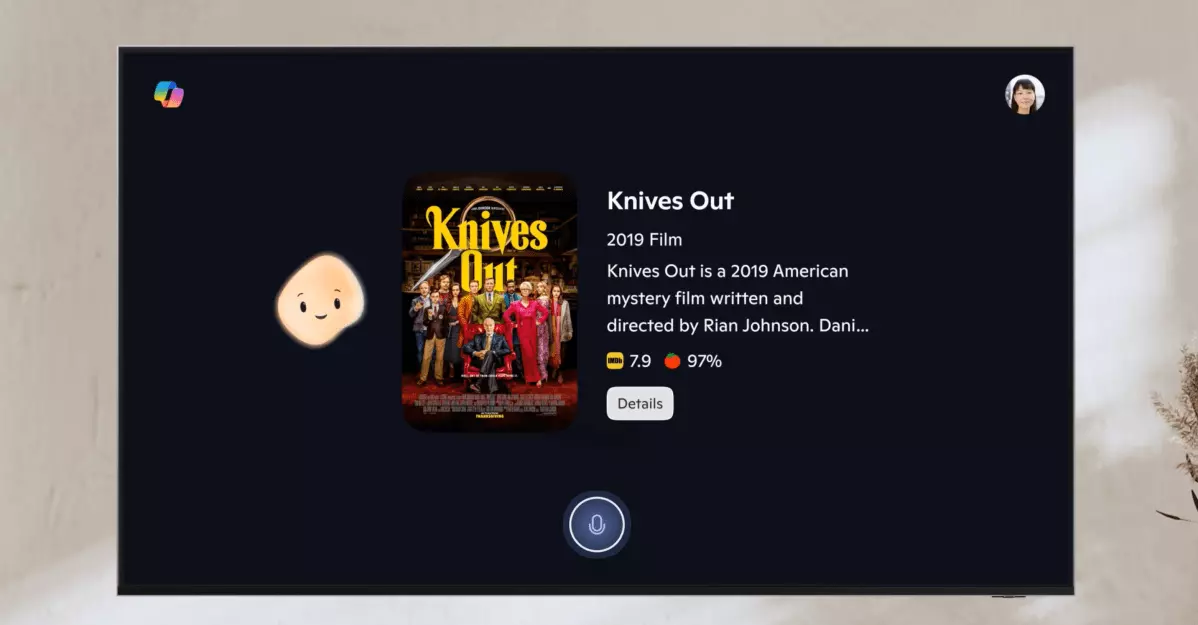

The Living Room as AI’s New Frontier: Microsoft Copilot’s Foray into Samsung’s 2025 TVs
In a move that reverberates across the technology and media landscapes, Microsoft’s Copilot generative-AI assistant is poised to become a fixture in Samsung’s 2025 television and smart-monitor lineup. This integration marks a pivotal shift, extending Microsoft’s AI presence from the productivity suites of the desktop and mobile world into the communal heart of the modern home: the living room screen. With LG TVs on the horizon, the implications for how consumers interact with content, devices, and even commerce are profound.
Edge Intelligence Meets Cloud: The Technical Alchemy Behind Copilot’s TV Debut
At the heart of this alliance lies a sophisticated edge-to-cloud AI architecture. Real-time voice interaction—summoning Copilot from the Tizen home screen or by voice—necessitates on-device wake-word detection and low-latency inference. The heavier computational lifting, including natural language understanding and multimodal reasoning, is deftly offloaded to Azure’s cloud infrastructure. This hybrid model not only showcases the maturation of energy-efficient AI silicon but also accelerates the demand for neural processing units (NPUs) in display SoCs, signaling a new era for consumer electronics hardware.
The integration is not merely about voice commands. Copilot’s ability to interact with on-screen imagery via “Click to Search” hints at a near future where voice, image, and metadata fuse into seamless multimodal prompts. With access to rich electronic program guide (EPG) and streaming app data, Copilot transforms static content catalogs into dynamic, conversational knowledge graphs. The animated chickpea avatar—an anthropomorphic interface—heralds a broader UI trend, where AI agents unify voice, gesture, and traditional remote inputs, all while maintaining persistent identity and memory across sessions. This foreshadows a world where session continuity and personalization transcend device boundaries, laying the groundwork for mixed-reality experiences.
Strategic Realignment: Platform Power Plays and Economic Stakes
For Samsung, embedding Copilot delivers a marquee AI feature without surrendering strategic control to Google TV or Amazon Fire. By preserving the Tizen OS data moat, Samsung maintains a critical differentiator in a fiercely competitive market. For Microsoft, the move is a masterstroke—sidestepping mobile OS gatekeepers and inserting the Microsoft Account into the last great household screen. This not only opens new upsell vectors for Xbox Cloud Gaming, Game Pass, and Microsoft Advertising but also positions Azure to capture a predictable, recurring revenue stream from cloud inference workloads generated by millions of connected TVs.
The economic ripple effects are manifold:
- Advertising & Commerce: Conversational recommendations can collapse the gap between discovery and transaction, boosting attach rates for AVOD, FAST channels, and premium content. The behavioral data harvested through Copilot conversations could feed Microsoft’s retail media ambitions, challenging incumbents like Roku and Amazon in the connected TV ad stack.
- Supply Chain: OEM demand for AI-capable chipsets should lift average selling prices for silicon providers, even as panel margins remain tight.
- Content Negotiation: If Copilot becomes the default discovery layer, it could intermediate between viewers and streaming services, diluting app-level brand equity and shifting bargaining power toward the platform owner—a dynamic reminiscent of Amazon’s Fire TV ad inventory negotiations.
Navigating Privacy, Metadata, and the Ambient Future
Yet, the promise of personalized, conversational AI in the living room is shadowed by the complexities of privacy and regulatory compliance. Persistent conversational memory on a shared device introduces fresh challenges under frameworks like Europe’s GDPR and California’s CPRA. Both Microsoft and Samsung must pioneer granular household-member profiles and robust consent workflows to maintain trust and avoid legislative scrutiny.
For stakeholders across the value chain, the implications are clear:
- Device OEMs: Early adoption of NPUs and negotiation of co-branding terms are essential to avoid commoditization by upstream cloud partners.
- Media Companies: Enriching metadata—scene, character, and sentiment tags—will be crucial for maximizing visibility in conversational search.
- Advertisers: The TV becomes the nexus of omnichannel attribution, with interactive, voice-native ad formats leveraging Copilot’s identity linkage.
- Cloud and Semiconductor Providers: Edge-optimized AI inference chips and flexible consumption-based pricing models will become table stakes.
- Policymakers: Transparent AI explainability and multi-user consent management must be prioritized in this new, shared-screen context.
The Copilot–Samsung collaboration is not just about the novelty of animated avatars or spoiler-free recaps. It is a strategic annexation of the living-room screen as the next battleground for AI-mediated engagement. As device makers, cloud giants, and content ecosystems converge on this ambient, multimodal paradigm, those who align their roadmaps, metadata strategies, and privacy frameworks accordingly will be best positioned to capture the lion’s share of value in the coming hardware refresh cycle.

 By
By
 By
By


 By
By
 By
By
 By
By
 By
By







